Are Hammocks Meant for Swinging? How to Rock Without Flipping
Gentle rocking is part of the deal. Here is how to start it, keep it going, and stop before the hammock flips you out.

Yes, hammocks are meant for gentle swinging. A slow side to side rock is one of the reasons people love them. They are not built for hard, playground-style swinging. Big swings add force to the straps, trees or stand and can flip you out, especially in spreader-bar hammocks. Keep the motion small, stay centered, and let a pull cord do the work.
Does a hammock swing?
Every hammock moves, because it hangs from two points with nothing below it. The natural motion is side to side, across the hammock. A two-point hammock does not swing front to back the way a playground swing does, and it should not spin.
How much it moves depends on the setup:
| Setup | Swing feel | Flip risk |
|---|---|---|
| Gathered-end fabric, good sag | Gentle, cradled | Low |
| Spreader-bar rope or fabric | Wide, open | Higher |
| Hammock on a stand | Moderate, depends on stand | Stand can rock or walk |
| Hammock chair, one point | Moves in all directions | Low when seated upright |
| Tight, flat hang | Twitchy | Higher |
What about hammock chairs?
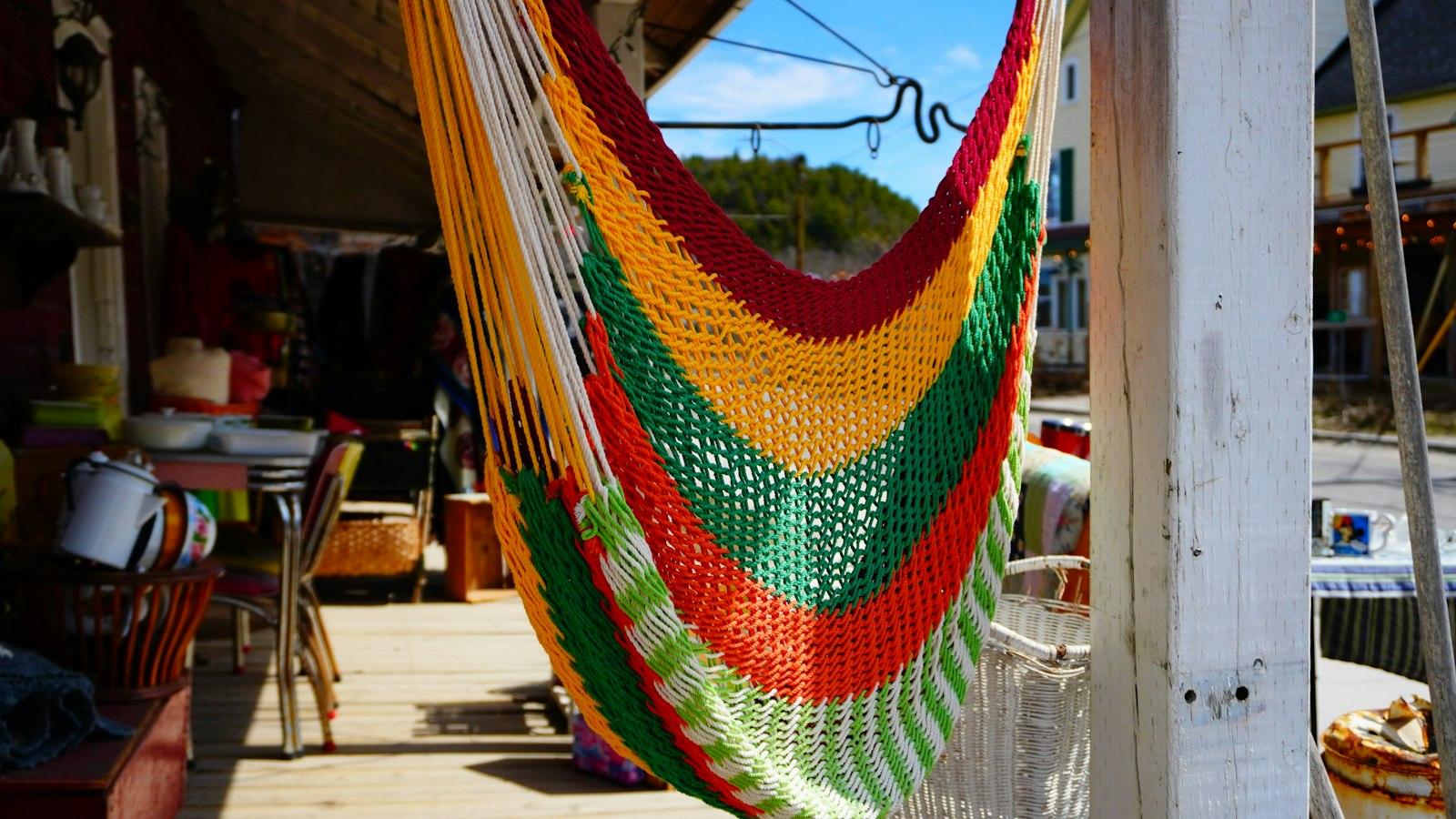
A hammock chair hangs from one point, so it moves in every direction and can turn. That makes it more like a swing seat. Swing gently with your feet, and use a swivel at the top if you want it to rotate without twisting the rope or strap. The same rule applies: small motion, and stay under the weight rating.
How to swing in a hammock
- Get in safely. Sit in the middle first, then swing your legs in and lie back. See how to get in and out of a hammock.
- Lie on a slight diagonal in a gathered-end hammock. You sit lower in the fabric and feel more stable.
- Start the rock. Push off the ground gently with one foot or hand, sideways to the hammock.
- Keep it small. A swing of a foot or two each way is plenty. Let it slow down on its own.
- Stay centered. Do not lean out over the edge to push harder.
How to keep a hammock swinging
The trick people use most is a pull cord.
- Pull cord: tie a cord to a nearby tree, post or stand leg, off to one side. Lie back and give it a light tug now and then to keep the rock going.
- Foot push: hang low enough that a foot can tap the ground. Each tap adds a little motion.
- Hand push: reach to a nearby trunk or post if it is within easy reach.
- Breeze: in an open spot, wind keeps a light hammock moving with no effort.
A good sag also helps. A hammock hung with the 30 degree rule swings more smoothly than a tight one.
How to set up a pull cord
- Use a soft cord at least as long as the distance from the hammock to the anchor, plus a few feet.
- Tie one end to a tree, post or stand leg off to the side of the hammock, at about hip height.
- Leave the other end loose, or tie a small loop you can hold.
- Lie back and pull gently, then let go. Small, rhythmic pulls work better than one hard yank.
- Untie and coil the cord when you are done, so nobody trips on it or gets tangled. This matters around kids.
How fast should you rock?
Slow. In a small 2011 study in Current Biology, 12 healthy men napped on a bed that rocked about once every 4 seconds (0.25 Hz). The rocking made the move from waking to sleep easier and lengthened a stage of light sleep. See the study record from the University of Geneva. It was a small nap study on a rocking bed, not a hammock, so treat it as a hint rather than proof. A slow, steady rock feels best for most people anyway.
Why hammocks flip when you swing
A hammock flips when your weight ends up above the line between the two anchors and to one side. Three things make that more likely:
- Spreader bars. They hold the bed flat and open, which raises you up and makes the hammock tippier. Our spreader bar hammock pros and cons explains the trade-off.
- A tight hang. A straight, flat hammock leaves you sitting on top of it instead of in it.
- Big, uneven pushes. Pushing hard on one side adds a roll on top of the swing.
To stop a flip, slow the swing, lower your center of gravity by lying back, and loosen the hang. More fixes in how to keep a hammock from flipping.
Is swinging safe for trees, straps and stands?
Gentle rocking is normal use. Hard swinging adds force each time you reach the end of a swing, more than you put on the hammock lying still. That extra load goes into straps, carabiners and anchors.
- Trees: keep straps wide and the hang loose. Leave No Trace recommends straps at least 1 inch wide and one loose wrap. See their hammock camping guidelines.
- Straps and hardware: stay well under the rated capacity, especially if two people swing together.
- Stands: big swings can make a stand rock, lift a foot or slowly walk across a deck. Keep it gentle and set it on level ground. If you are shopping, our best hammocks with a stand list shows each stand's rated capacity.
- Indoor anchors: a joist or wall stud takes the same extra force. Check hardware often.
Signs you are swinging too hard:
- The straps creak or slip on the tree
- The hammock rolls at the end of each swing
- A stand foot lifts or the stand shifts on the ground
- You have to hold the edge to stay in
- The tree trunk visibly moves with you
Any of these means slow down, and if it keeps happening, check the hang angle and hardware.
Swinging with kids
Kids will swing harder than adults. Set a few rules: sit or lie down, no standing, no flips, one or two kids under the weight limit, and an adult close by. Hang it low over soft ground. More in hammocks for kids.
Hammock vs swing: which to pick
The two look similar but are built for different motion.
If you want big, active swinging, a porch swing, a swing seat or a hammock chair on a swivel is a better tool. If you want to rest, read and nap with a gentle rock, a hammock is the better choice.
Next step
Hang it right first with how to hang a hammock, then find a shady spot for a slow afternoon rock with Find a Hang. For the nap itself, read the art of the hammock nap.
Frequently asked questions
Are hammocks meant for swinging?+
Yes, for gentle swinging. A slow side to side rock is normal hammock use and part of why they feel relaxing. They are not built for hard, playground-style swinging, which adds force to straps, trees or stands and can flip you, especially in spreader-bar hammocks.
How do you keep a hammock swinging?+
Tie a pull cord to a nearby tree, post or stand leg off to one side, and give it a light tug to keep the rock going. You can also hang low enough to tap the ground with a foot. A loose hang with a good sag swings more smoothly than a tight one.
Why does my hammock flip when I swing?+
Flips happen when your weight rises above the line between the anchors and shifts to one side. Spreader bars, a tight flat hang and hard, uneven pushes all make it more likely. Slow down, lie back to lower your center of gravity, and loosen the hang so you sit in the hammock.
Can you swing in a hammock on a stand?+
Yes, gently. Big swings can make a stand rock, lift a foot or slowly walk across a deck. Set the stand on level ground, stay under its weight rating, keep the motion small and check the joints and hardware from time to time.



Find a hammock-friendly spot near you.