Hammocks for Kids: Ages, Safety and the Best Setups
What age makes sense, the safety rules that matter, and the best setups for backyards, bedrooms and camping trips.
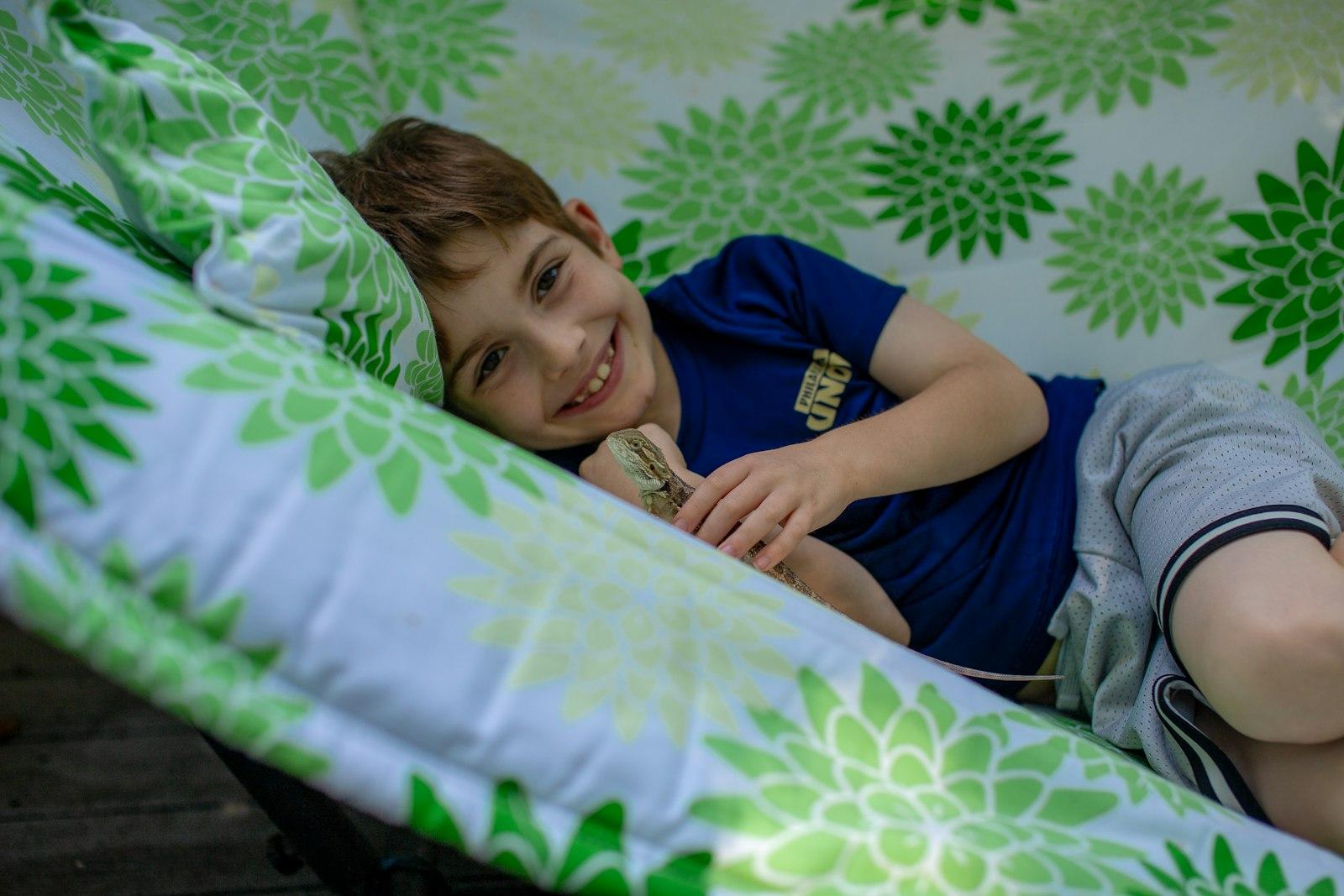
Hammocks are good for kids who can climb in and out on their own, with an adult nearby. Hang it low, about 18 inches of sit height, over a soft surface. Avoid net hammocks without spreader bars, take the hammock down when nobody is watching, and never let a baby sleep in one. Infants belong on a firm, flat sleep surface.
That covers the short answer. Here are the details by age and setup.
Are hammocks good for kids?
For most kids, yes. A hammock is a reading spot, a quiet place after school and a fun part of a camping trip. Kids also tend to like the gentle swing, which is why so many parents look at hammocks next to sensory swings. We compare the two in sensory swing vs hammock.
The risks are real but manageable: falls from height, flipping out, and entanglement. Every safety rule below targets one of those three.
What age can a child use a hammock?
There is no official minimum age for hammocks. The practical answer depends on whether your child can get in and out safely and follow simple rules. Use this as a starting point, not a rule.
| Age | What makes sense | Key caution |
|---|---|---|
| Under 1 | No hammock sleep | Infants need a firm, flat surface |
| 1 to 3 | Supervised sitting with an adult, very low | Climbing in and out, falls |
| 3 to 6 | Low backyard or bedroom hammock, supervised | Flipping, twisting the fabric |
| 6 to 12 | Own hammock, camping with a parent setting up | Rough swinging, hanging too high |
| Teens | Can learn to hang their own | Tree choice, knots, straps |
On babies, the American Academy of Pediatrics says infants should sleep on a firm, flat surface and lists hammocks among alternative sleep products that are only acceptable if they meet the 2021 federal safety rule. See the AAP safe sleep guide on HealthyChildren.org. If your baby falls asleep in a hammock, move them to a crib or bassinet. More in are hammocks safe for babies and toddlers. When in doubt, ask your pediatrician.
Hammock safety rules for kids
These are the rules worth teaching before the first hang:
- Hang it low. Around 18 inches of sit height, so feet touch the ground.
- Soft surface under it. Grass, mulch or a mat. Not concrete or rocks.
- No net hammocks without spreader bars. In 1996 the U.S. Consumer Product Safety Commission recalled more than 3 million net mini-hammocks without spreader bars after reports of 12 children ages 5 to 17 who died from entanglement. Read the CPSC recall notice.
- Take it down when unattended. Leave No Trace recommends taking a hammock down whenever you leave camp so animals or small children do not get tangled. See their hammock camping guidelines.
- No standing, no flips, no spinning the hammock into a twist.
- Stay under the weight limit. Two kids plus a parent can exceed a single hammock's rating fast. Check the label.
- No cords around necks. Keep drawstrings, lanyards and loose ridgelines away from little kids.
Best kids hammock chair and indoor hammocks for kids
For a bedroom or playroom, a hammock chair or a low hammock on a stand is the easiest setup. Look for:
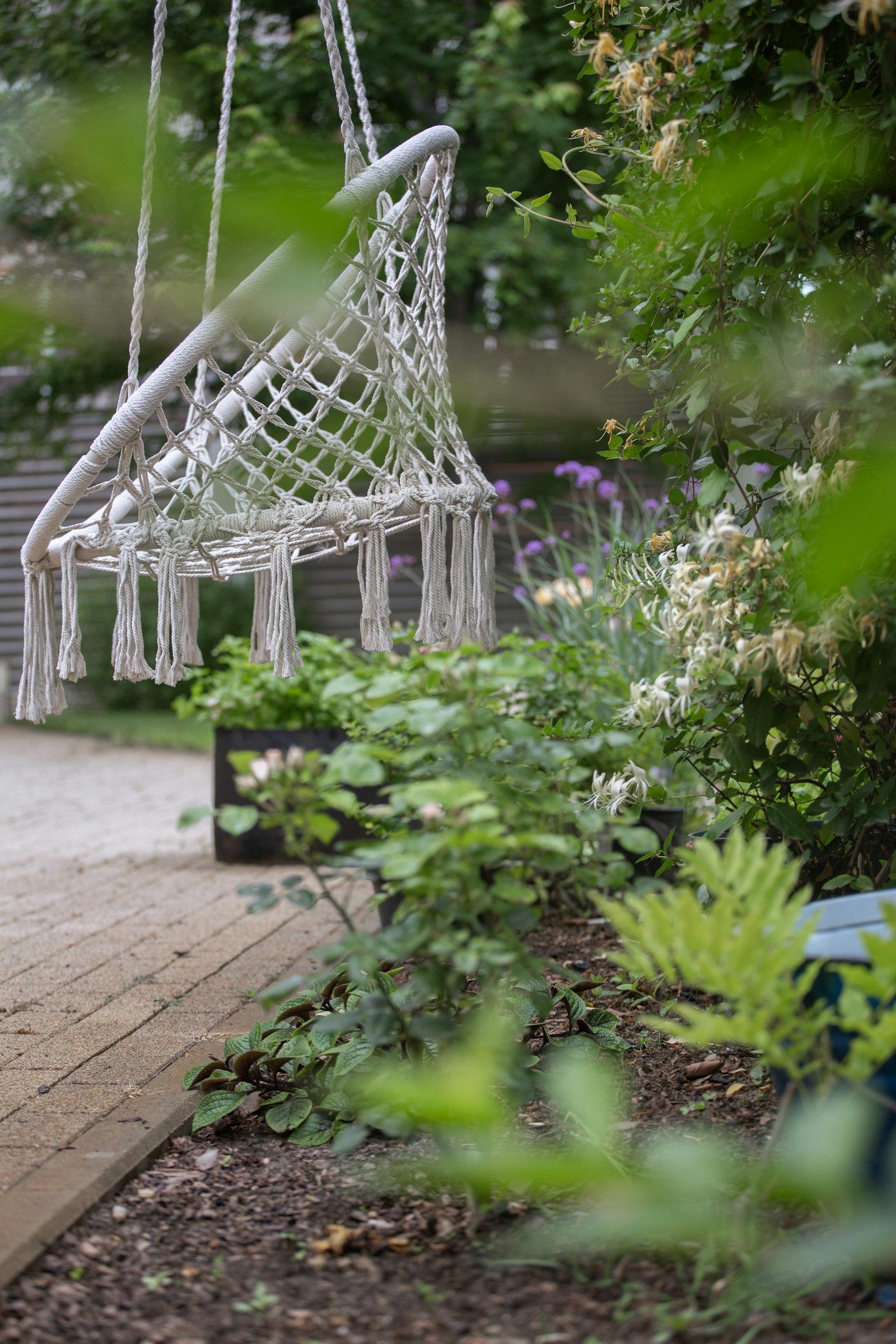
- A fabric seat, not an open net
- A single anchor in a ceiling joist or a chair stand with a wide base
- A seat height low enough for your child to sit down without help
- Washable fabric
A hammock on a stand avoids drilling and can sit over a rug. Our best hammocks with a stand list includes stands and stand kits. Measure the room first and leave about 2 feet of clearance on each side.
Best camping hammock for kids
Kids do not need a special kids camping hammock. A regular single hammock fits them, weighs little and will still fit when they grow. The ENO SingleNest is rated to 400 lb at 16 oz, so a child and a parent sitting together stay well under the limit. Straps are sold separately.
What matters more on a camping trip:
- You set up, they help. Pick the trees and tie the suspension yourself, and teach the steps as you go.
- Warmth. Kids get cold faster, and a hammock is cold underneath. Add a pad or underquilt. See how to stay warm in a hammock.
- Bugs. A bug net matters more for kids who will not lie still under one. See best hammock bug nets.
- A tent backup. For a first night out, bring the tent. If the hammock does not work, everyone still sleeps.
Full packing help is in the hammock camping gear list.
Teaching kids to hang their own hammock
Older kids and teens can learn to set up their own hammock, and it is a good skill for camping trips. Teach it in this order, with you checking each step:
- Pick the trees together. Living, at least 6 inches across, no dead branches above. Our guide to which trees are safe for hammocks has a quick checklist.
- Wrap the straps. Once around the trunk, at about head height for an adult, with the webbing flat.
- Clip in. Show how a carabiner gate closes fully, and check it every time.
- Check the sag. The hammock should hang like a smile, not a tight line.
- Sit test. Sit in the middle first, then lie back.
- Take it down. Unclip, roll the straps, pack it away. No hammock left hanging when you leave.
Let them do it a few times in the backyard before the first trip. Kids who set up their own hammock tend to take more care with it.
Backyard setups that work for families
A family backyard hang has different needs than a solo nap spot:
- A double hammock gives a parent and a child room to read together. Stay under the rated capacity.
- Pick a spot you can see from the kitchen window.
- Use a stand if your only trees are far from the house.
- Store the hammock or tie it up out of reach when nobody is using it.
What weight limit does a family hammock need?
Add up everyone who will be in it at once, then leave a margin, because swinging and climbing in add force. Published ratings vary a lot. The ENO DoubleNest is rated to 400 lb, the Vivere Double Cotton Hammock with Stand to 450 lb, and the Kammok Roo Double to 500 lb. An adult and two kids can get close to some of those numbers, so check the label before a family pile-in.
Next step
Find a calm spot for a first family hang with Find a Hang, or browse the best double hammocks for room to share.
Frequently asked questions
Are hammocks safe for toddlers?+
Toddlers can sit in a hammock with an adult, hung very low over a soft surface. They should not be left alone in one, and they should not sleep in one. Avoid net hammocks without spreader bars, and take the hammock down when no adult is around. Ask your pediatrician about sleep.
What is the best camping hammock for kids?+
Most kids do well in a regular single camping hammock rather than a special kids model. It weighs about 1 lb, fits as they grow and has a high weight rating. Add a pad or underquilt for warmth and a bug net, and have an adult choose the trees and set up the suspension.
Can a baby sleep in a hammock?+
No. The American Academy of Pediatrics says babies should sleep on a firm, flat surface and treats hammocks as unsafe unless the product meets the 2021 federal safety standard for infant sleep products. If your baby falls asleep in a hammock, move them to a crib or bassinet on their back.
How high should a kids hammock be hung?+
Hang it so the seat sits about 18 inches off the ground, low enough that a child's feet touch the ground when sitting. Put grass, mulch or a mat underneath. A low hang turns most falls into a short drop and makes getting in and out easier.
Are net hammocks safe for kids?+
Net hammocks without spreader bars are a known strangulation risk. In 1996 the CPSC recalled over 3 million of them after 12 children died from entanglement. If you use a rope or net hammock, pick one with spreader bars, supervise closely, or choose a fabric hammock instead.
Find a hammock-friendly spot near you.