Spreader Bar Hammocks: Pros, Cons and Who Should Buy One
The classic backyard hammock with wooden bars looks great and sits well. Here is the honest trade-off before you buy one.

Hammocks with spreader bars are not better, they are different. The bars hold the bed open and flat, so they look tidy, are easy to sit on and suit a backyard stand. The trade-off is a tippy feel, less cocoon and a poor fit for sleeping or camping. For lounging at home, a spreader bar works well. For napping, overnights or the trail, go without.
What is a hammock spreader bar?
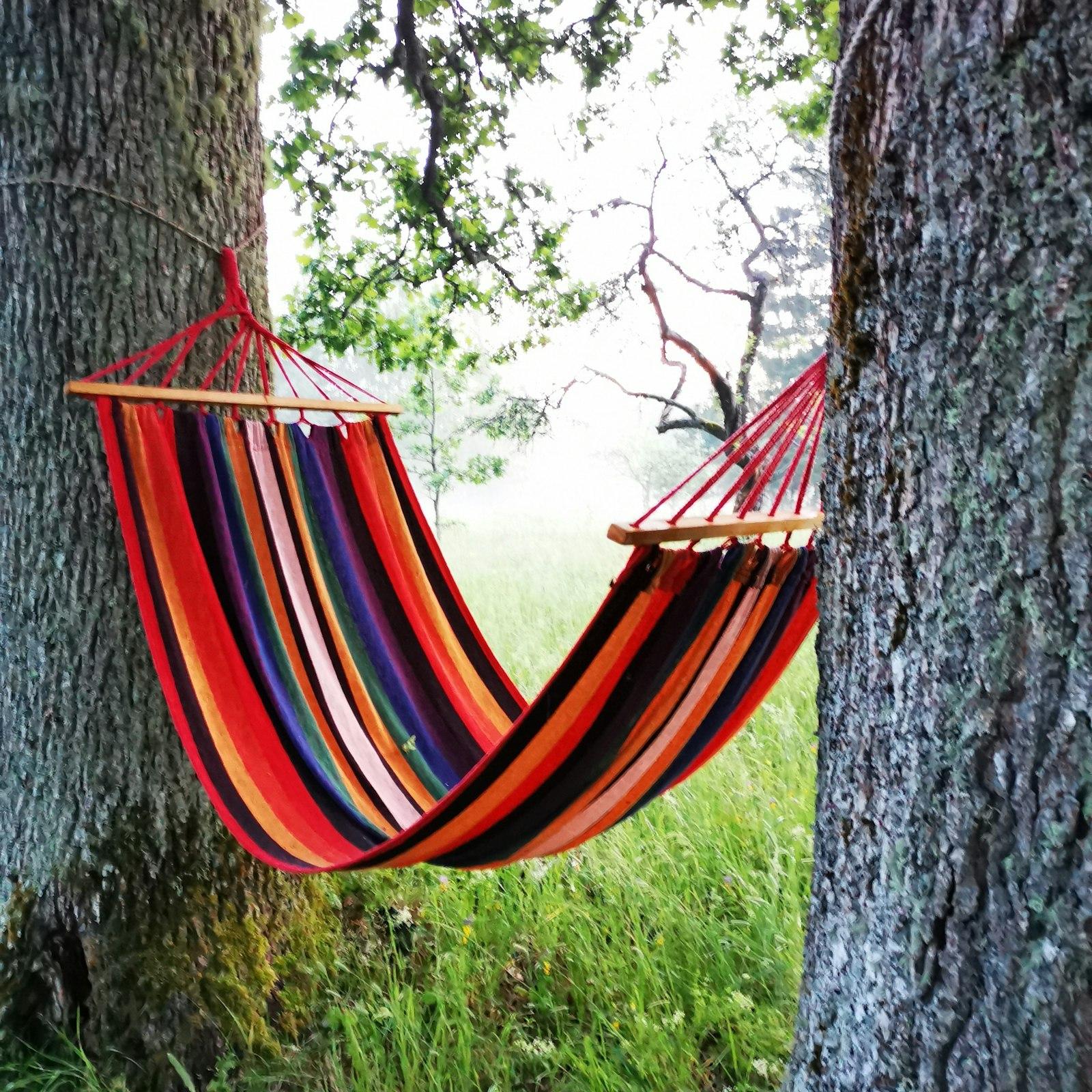
A spreader bar is a rigid bar, usually wood or metal, fixed across each end of the hammock bed. The suspension cords run from holes along the bar to a ring at each end.
The bars hold the bed at its full width instead of letting it gather. That gives the classic look of a backyard rope hammock: flat, open and wide. The Pawleys Island Original Cotton Rope Hammock is a well-known example, with varnished oak spreader bars on a 55 inch wide bed.
Do not confuse these with the short bars on a bridge hammock. Bridge bars sit at the head and foot of a camping hammock and are designed to work with a curved, stable lay. Our post on bridge vs gathered-end hammocks covers that design.
Pros of a spreader bar hammock
- Easy to get on. The open bed lets you sit down and swing your legs up without the fabric closing in.
- Flat, open look. It looks good on a porch or in a garden, which matters for a lot of backyard buyers.
- Air flow. Rope versions in particular let air pass through, which helps in the heat.
- Room to sit side by side. Two people can sit across the bed like a swing more easily than in a gathered hammock.
- Pairs well with stands. Many freestanding backyard stands are sized for spreader-bar hammocks.
Cons of a spreader bar hammock
- They flip more easily. The bed is held flat and high on the suspension, so your center of gravity sits above the pivot points. Lean too far and it rolls. Owners often mention getting dumped at least once. Our post on how to keep a hammock from flipping has more on this.
- No diagonal lay. You lie straight, and the bed cannot curve around you, so it is less comfortable for long naps or a full night.
- Heavier and bulkier. Wooden bars do not fold, so these are not travel hammocks.
- Tighter hang. They are designed to hang fairly taut, which puts more load on anchors than a slack gathered hammock.
- Rope catches. On rope versions, buttons, zippers and small fingers catch in the weave.
With or without spreader bar: side by side
| With spreader bar | Without (gathered end) | |
|---|---|---|
| Feel | Flat, open, on top of the bed | Cocooned, inside the hammock |
| Stability | Tippy if you lean | Hard to flip when hung with sag |
| Best for | Lounging, sitting, reading | Napping, sleeping, camping |
| Portability | Low | High (packs into a small sack) |
| Typical use | Backyard, porch, stand | Trees, travel, trail |
| Setup | Usually on a stand or between posts | Two straps |
Who should buy a spreader bar hammock?
A spreader bar hammock makes sense if you:
- Want a backyard or porch hammock for short sessions.
- Like the look of a classic rope or quilted hammock.
- Have a stand or posts sized for it.
- Mostly sit in it rather than sleep.
Skip it if you:
- Plan to nap for hours or sleep overnight.
- Want to take the hammock camping, to the beach or on trips.
- Have young kids who climb in and out quickly, since a gathered hammock is harder to tip.
Rope, quilted or fabric?
Spreader-bar hammocks come in three common beds, and each changes the feel:
- Rope. Cotton or synthetic rope woven into an open net. Cool and airy in summer, classic look, but the weave presses into bare skin and snags buttons. Cotton rope needs to dry out between rains.
- Quilted fabric. Two layers of fabric stitched with padding, often reversible. Softer and more cushioned than rope, but it holds water and takes longer to dry.
- Single-layer fabric. Woven cotton, polyester or acrylic. Lighter than quilted, smoother than rope, and the outdoor yarns handle sun better.
If it will live outside, the material matters as much as the bars. Our best hammock material post compares them.
What to check before buying
- Bar length and wood. Longer bars mean a wider, flatter bed but more tippiness. Hardwood like oak holds up better than soft or untreated wood.
- Capacity. Many spreader-bar doubles list around 450 lb, the figure the Pawleys Island rope hammock gives. Check the stand or posts too.
- Overall length. A 13 foot overall hammock needs posts or a stand built for that length.
- Hardware. Look for solid rings and S-hooks or chains rated for the load, not decorative hardware.
Spreader bars on camping hammocks
Searches for "camping hammock spreader bar" usually mean one of three things:
- Bridge hammocks, which use short bars at each end for a flatter lay.
- Small foot-end spreaders, offered as add-ons on modular hammocks such as the Dutchware Chameleon, to open up the foot box.
- Lay-flat hammocks like the Haven Tent, which combine spreader bars and arcs to create a flat sleeping surface.
None of these are the full-width wooden bars of a backyard hammock. If you see a "camping" hammock with wide bars at each end, treat it as a lounger.
Tips if you already own one
- Hang it lower. A sit height of about 18 inches (46 cm) means a flip ends in a short drop.
- Get in from the middle, sitting first, then swing your legs up.
- Keep your weight centered and avoid leaning over the edge to grab things.
- Check the bar holes and cords each season. Wood can split and rope frays where it rubs.
- For rope or cotton models, bring it in during long wet spells and let it dry fully before storing.
- Do not let kids stand on the bed or swing it hard. The flat bed makes falls more likely than in a gathered hammock.
- If it tips too easily, try shorter suspension so the bed hangs a little deeper, or move to a stand designed for that hammock length.
Next step
If you want the bar look without the trees, read how to choose a hammock stand, then compare options in best backyard hammocks and hammocks with stands.
Frequently asked questions
Are hammocks with spreader bars better?+
Not better, different. Spreader bars hold the bed open and flat, which makes the hammock easy to sit on and good looking in a backyard. They are also easier to flip, less comfortable for long naps and too bulky for travel. For lounging at home they work well. For sleeping and camping, choose a gathered-end hammock.
What is a spreader bar on a hammock?+
A spreader bar is a rigid wood or metal bar fixed across each end of the hammock bed. Suspension cords run from holes in the bar to a ring at each end. The bars keep the bed at full width so it hangs flat and open, which is the look of a classic backyard rope or quilted hammock.
Why do spreader bar hammocks flip over?+
The bars hold the bed flat and high on the suspension, so your weight sits above the points where the hammock pivots. Leaning or shifting to one side lets it roll. Hanging it lower, getting in from the center and keeping your weight in the middle reduce the chance of being tipped out.
Can you sleep in a spreader bar hammock?+
You can nap in one, but most people find them less comfortable overnight. The bars keep the bed flat and taut, so it cannot curve around you and you cannot lie diagonally. They are also more likely to tip as you turn. For overnight sleeping, a gathered-end or bridge hammock works better.

Find a hammock-friendly spot near you.