Can You Sleep in a Hammock Every Night?
What it takes to swap your bed for a hammock, from size and indoor anchors to the first two weeks.
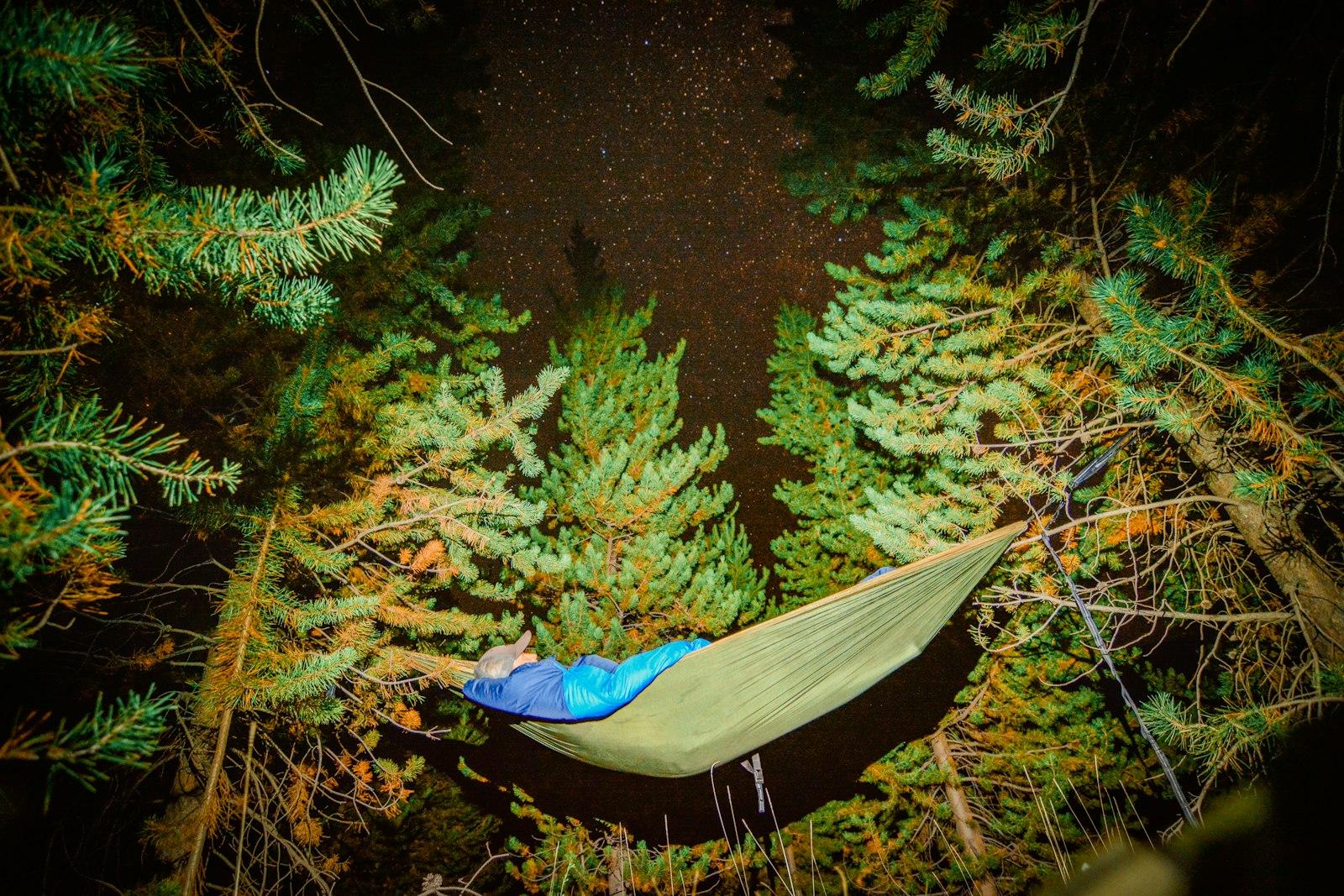
Yes. Plenty of people sleep in a hammock every night, at home and on long trails, without trouble. The key is a hammock long and wide enough for a diagonal lay (about 10 to 11 feet long and 55 inches or wider), a 30 degree hang, solid anchors and something warm underneath you. Expect a one to two week adjustment period.
Is sleeping in a hammock every night bad for you?
There is no research showing nightly hammock sleep is harmful for healthy adults, and there is not much research on it at all. What we do know is that the problems people report are almost all setup problems: a tight hang, a short hammock, cold air underneath or anchors that move.
Long-distance hikers often spend months sleeping in hammocks, and plenty of people at home have replaced their bed with one. Others try it and go back to a mattress. If you have a back, hip or joint condition, ask your doctor before you make the switch.
A few groups should think twice before going full time:
- Stomach sleepers. A gathered-end hammock does not let you lie face down without arching your back.
- People who get up often at night. Climbing out of a deep sag several times a night gets old, and it is harder half asleep.
- Anyone with balance or mobility issues. Getting in and out is the riskiest moment in any hammock.
- Pregnant people and anyone with a medical condition affecting sleep. Ask your clinician first.
Can a hammock replace a bed?
For one person, often yes. For couples, rarely. A shared hammock pushes two people into the middle, so most couples who hang at home run two hammocks side by side or keep a bed for one partner.
| Hammock | Bed | |
|---|---|---|
| Floor space | Folds away during the day | Fixed footprint |
| Pressure points | Weight spread across fabric | Pressure at hips and shoulders |
| Sleep positions | Back and diagonal side sleeping are easiest | Any position |
| Sharing | Hard for two adults | Easy |
| Temperature | Cooler, needs insulation in cold rooms | Warmer by default |
| Setup | Needs strong anchors or a stand | Just put it down |
What you need to sleep in a hammock every night
- A long, wide hammock. About 10 to 11 feet long and 55 inches or wider. The ENO DoubleNest is 76 inches wide; a single-width hammock is harder to lie flat in night after night.
- A structural ridgeline. It sets the same sag every time you rehang. See the ENO Microtune ridgeline.
- Real anchors. Indoors that means hardware screwed into structural framing, or a freestanding stand. Drywall anchors are not an option.
- Insulation underneath. Even indoors, air moving under the fabric pulls heat from your back. A light underquilt or a pad fixes it.
- A pillow that stays put. A small camp pillow or a folded fleece works better than a big bed pillow.
How to sleep in a hammock long term without problems
- Hang it the same way every night. A ridgeline and marks on your straps remove the guesswork.
- Lie on the diagonal. Head 15 to 20 degrees to one side, feet to the other. Our guide on how to sleep in a hammock covers the details.
- Raise the foot end 8 to 10 inches. It stops the slow slide toward the middle.
- Support your knees. Some long-term sleepers get a stiff feeling behind the knees on a tight diagonal. A small pillow under them helps.
- Move a little. Sleeping in one position every night can leave you stiff. Shift between back and side, and stretch in the morning.
- Check your gear monthly. Look for frayed straps, worn stitching, loose hardware and cracks in a stand.
- Wash the hammock now and then. Nightly use means skin oils and sweat in the fabric. Most nylon hammocks can be hand washed or machine washed on gentle; check the maker's care instructions first.
Setting up a hammock for nightly use at home
Anchor spacing and height
Indoors, the same geometry applies as between trees. For a typical 10 to 11 foot hammock, anchor points about 12 to 15 feet apart work well, mounted roughly 5 to 6 feet up so the hammock ends up about 18 inches off the floor at its lowest point. Closer anchors mean higher mounting points; wider ones mean lower.
What the anchors go into
Every anchor must go into solid structure: a wall stud, a ceiling joist or a post, with hardware rated well above your body weight. At a 30 degree hang each anchor carries about your full body weight, and every time you drop into the hammock it carries more for a moment. If you cannot find framing where you need it, a freestanding stand is the safer answer.
The room
Leave clear floor under and around the hammock so you are not climbing out onto furniture in the dark. A small side table or a hanging organizer on the ridgeline keeps your phone, water and glasses in reach without leaning over the edge.
What the first two weeks feel like
Most people adjust within a week or two. The first nights can feel odd: you notice the sway, you wake when you roll and your calves or knees may feel the fabric. Start with naps, then weekends, then full weeks. If you are still waking sore after two or three weeks of a good setup, a hammock may not suit your body, and that is fine.
Many full-time hammock sleepers keep a bed or a mattress on the floor as a backup for sick days, guests or nights when they just want to sprawl. There is no rule that it has to be all or nothing.
If you rent, or your ceiling joists are not where you need them, a stand-based setup removes the anchor question entirely. Our guide to hanging a hammock without trees covers stands and other options.
Indoor or outdoor every night?
Indoors is easier: stable temperature, no rain, no bugs. Even so, a room that feels warm on a mattress can feel cool in a hammock, because air moves under you. Many hangers find they want something under their back once the room drops into the 60s F (below about 21 C). Outdoors every night is how a lot of thru-hikers live, but it adds a tarp, a bug net and real insulation. For the outdoor version, start with how to hammock camp and how to stay warm in a hammock.
For the side-by-side comparison with a mattress, read hammock vs bed. Side sleepers should also read can side sleepers sleep in a hammock. Planning an indoor setup? See how to hang a hammock indoors.
Next step
Shortlist hammocks with the length and width for nightly use in the gear comparison tool, then try a weekend of nights before you move the bed out.
Frequently asked questions
Is it healthy to sleep in a hammock every night?+
For most healthy adults, a well-set-up hammock is a reasonable place to sleep every night. There is little research either way. The common problems, like back stiffness or cold, come from setup. If you have a back, hip or joint condition, check with your doctor before you switch full time.
Can you sleep in a hammock long term?+
Yes. Thru-hikers sleep in hammocks for months, and some people use one instead of a bed for years. Long term comfort comes from a hammock about 10 to 11 feet long, a consistent 30 degree hang, a diagonal lay and insulation under you. Give yourself one to two weeks to adjust.
Can a hammock replace a bed?+
For one person, often yes, as long as you have strong anchors or a stand and a long, wide hammock. It saves floor space and removes pressure points. For couples it is harder, because two adults slide together, so most people who share a room use two hammocks or keep a bed.
What kind of hammock is best for sleeping every night?+
A gathered-end hammock about 10 to 11 feet long and at least 55 inches wide, with a structural ridgeline so the sag stays the same. Add an underquilt or pad. Bridge and lay-flat hammocks are options if you want a flatter lay or sleep mostly on your side.



Find a hammock-friendly spot near you.