The Hammock Guide
How to Hammock Camp
The perfect setup, from tree to underquilt, plus a first-night checklist so you actually sleep.
Beginner · 7 min read
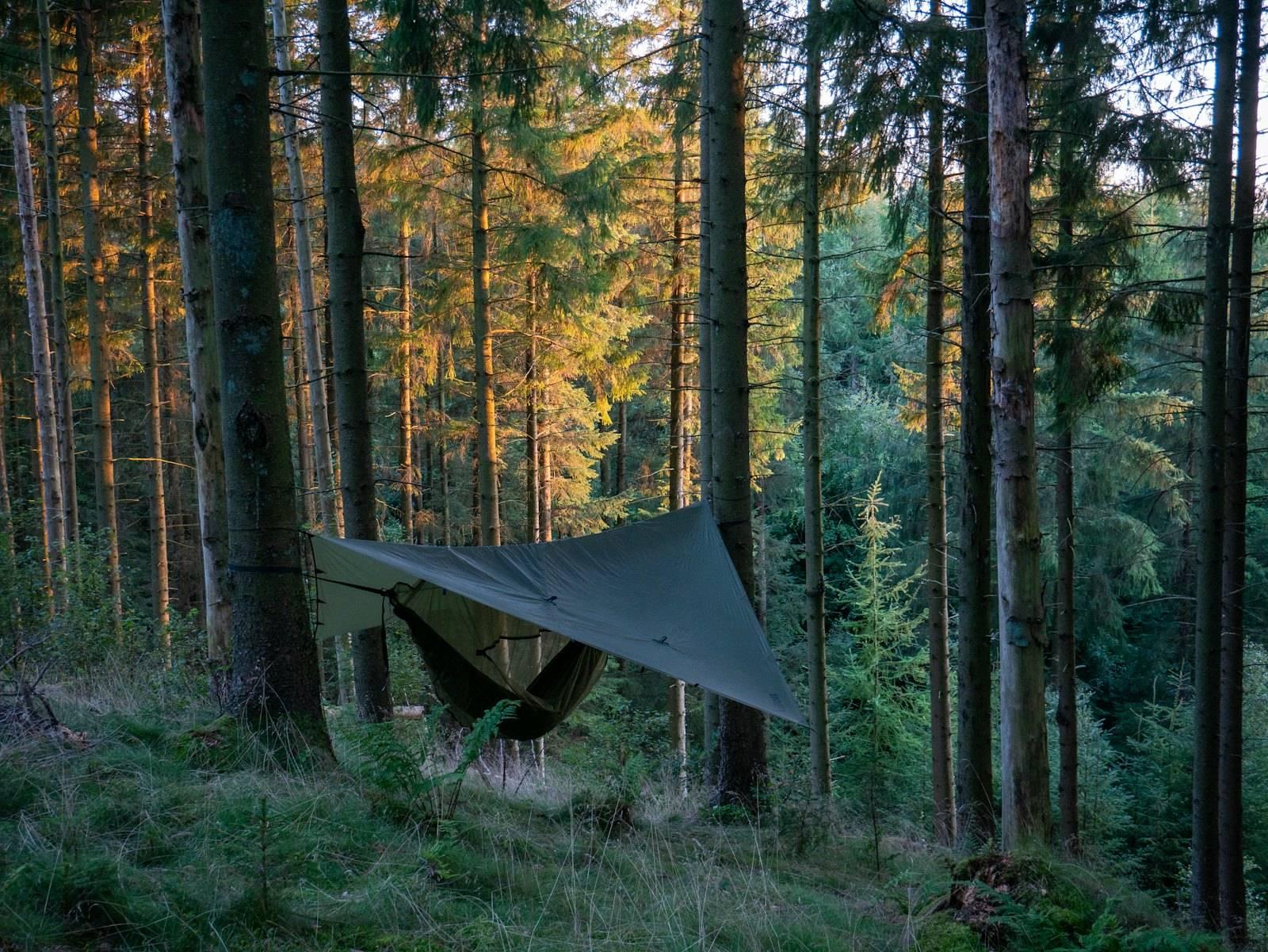
Sleeping in a hammock is one of the best ways to camp. No rocks under your back, no hunting for a flat spot, and you wake up already looking at the view. A good night just takes a little planning.
The perfect hammock setup
Think of it as layers, from the tree inward:
- Trees: two healthy trees, 12 to 15 feet apart.
- Straps: at least 1 inch wide to protect bark.
- Suspension: carabiners, whoopie slings or buckles that connect straps to hammock.
- Hammock: 10 to 11 feet long for sleeping.
- Ridgeline: a cord running end to end that sets the same sag every time. Bonus: a place to hang your headlamp.
- Bug net: zips around you or comes built in.
- Tarp: hangs above on its own line, pitched low when rain is coming.
- Underquilt: hangs under the hammock to keep cold air off your back.
Pick your site
- Never hang from dead trees or under dead limbs.
- Check the rules. Some parks only allow hammocks inside designated campsites. Our Can I Hang Here? tool covers popular spots.
- Stay at least 200 feet from lakes and streams where Leave No Trace rules apply.
- Watch for slopes downhill of you. Cold air pools in valleys at night.
Visual guide
The perfect hammock setup
1Tree
Healthy, 6"+ across
Healthy, 6"+ across
2Straps
1"+ wide
1"+ wide
3Suspension
Clips or buckles
Clips or buckles
4Hammock
10 to 11 ft
10 to 11 ft
5Ridgeline
Same sag, every time
Same sag, every time
6Bug net
Seals underneath
Seals underneath
7Tarp
Its own line, above
Its own line, above
8Underquilt
Warmth below
Warmth below
Stay warm
Your sleeping bag compresses under you and loses most of its warmth. That is why hammock campers feel cold even on 60 degree nights. Use an underquilt or a closed-cell foam pad. See how to stay warm in a hammock.
First-night checklist
- Hammock, straps, carabiners
- Ridgeline (or a hammock with one built in)
- Bug net
- Tarp with guylines and stakes
- Underquilt or pad
- Sleeping bag or top quilt
- A small pillow or stuff sack with clothes
- Headlamp clipped to the ridgeline
Practice at home first. Set everything up in the backyard or a local park before your first trip. Figuring out a tarp in the dark is nobody's idea of fun.
Keep learning
Ready to hang?
Find a hammock-friendly spot near you.