Bridge Hammock vs Gathered End: Which Should You Buy?
One is simple fabric gathered at the ends. The other uses spreader bars to lie flatter. The right pick depends on how you sleep.
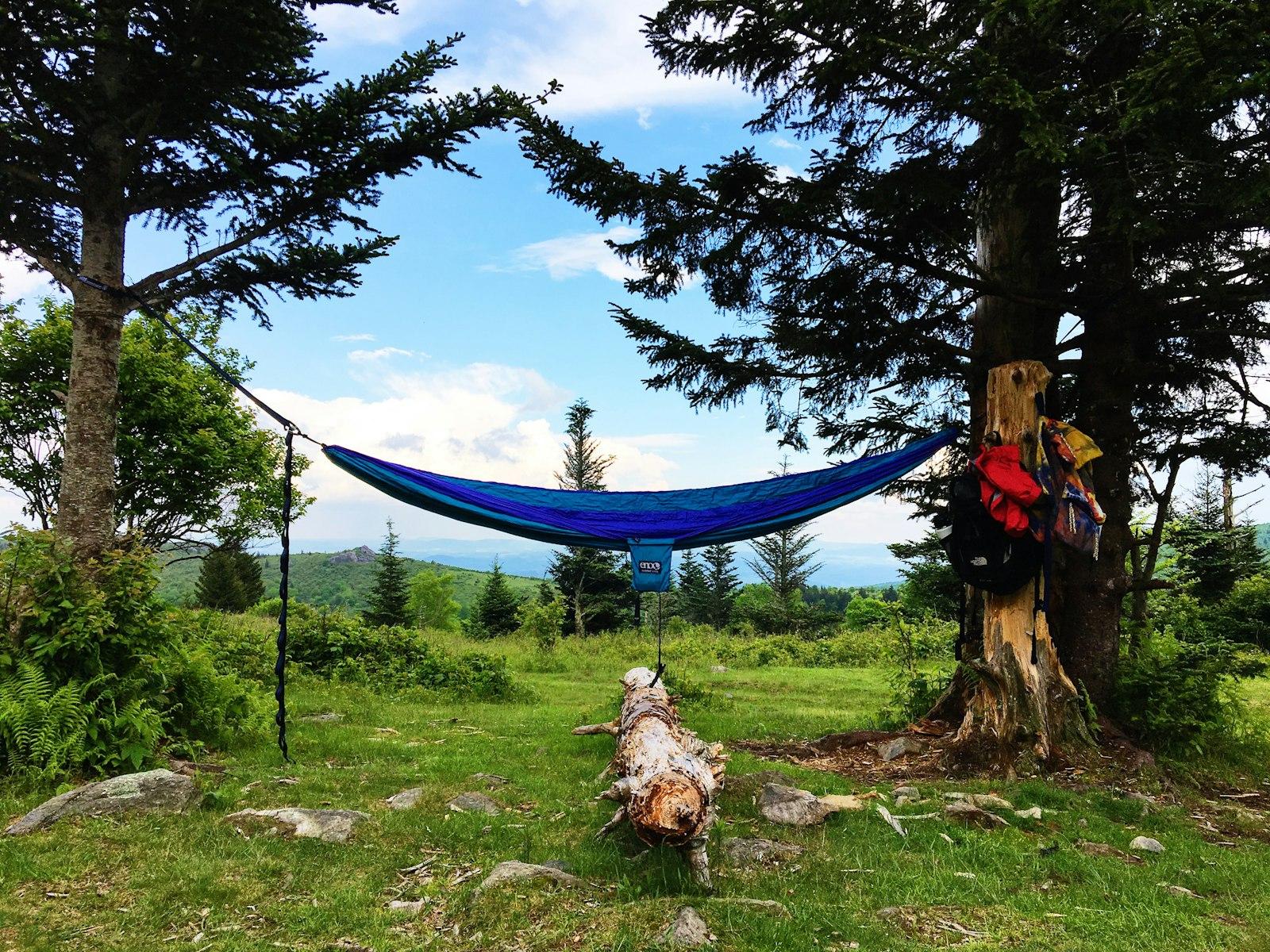
A gathered-end hammock is the classic camping hammock: a rectangle of fabric bunched at each end, light, cheap and easy to hang. A bridge hammock uses short spreader bars at the head and foot so the bed hangs like a suspension bridge, giving a flatter lay that many side sleepers prefer. Most people should start with a gathered end. Pick a bridge if you cannot get comfortable lying diagonally.
What is a gathered-end hammock?
A gathered-end hammock is a long piece of fabric whose short ends are bunched together and tied into a loop or whipping. Every hammock in the ENO Nest line, the Kammok Roo Double and most backyard nylon hammocks are gathered end.
The shape is a deep banana when you lie straight. The trick is to lie on a diagonal, about 15 to 20 degrees off center. That flattens the fabric under you and is why gathered-end hammocks can be comfortable for a full night. Our guide on how to sleep in a hammock covers the diagonal lay.
What makes them popular:
- Light. The ENO SingleNest is 16 oz. The ENO SuperSub is 9.8 oz.
- Simple. No poles or bars. Two straps and you are done.
- Affordable. Many full-size models sit between $40 and $100.
- Flexible. Huge choice of underquilts, bug nets and tarps fits them.
What is a bridge hammock?
A bridge hammock has a short spreader bar (often a trekking pole, aluminum pole or rigid rod) at each end. The fabric bed hangs between the bars, and the suspension runs from each bar's ends to the tree, so from the side it looks like a small suspension bridge.
The bars hold the ends open, so you lie straight down the middle and the bed is closer to flat. There is less fabric pressing on your shoulders, which is the main reason side sleepers seek them out.
The trade-offs come with the bars:
- More weight and more parts to carry.
- A tighter hang. Bridge hammocks need a flatter suspension than gathered ends, which puts more force on the anchors.
- A narrower, more specific fit for accessories. A bridge needs a bridge-cut underquilt and a bug net made for its shape.
- A higher center of gravity, so they feel less locked in when you get in and out.
Bridge vs gathered end compared
| Gathered end | Bridge | |
|---|---|---|
| Lay | Diagonal, slight curve | Straight, flatter |
| Best sleepers | Back sleepers, many side sleepers | Side sleepers, people who hate the diagonal |
| Weight | Lighter | Heavier (bars and extra suspension) |
| Setup | Quick, forgiving | More parts, needs a flatter hang |
| Underquilt | Wide choice | Needs a bridge-specific underquilt |
| Shoulder squeeze | Possible if hung too tight | Little to none |
| Price | Lower | Usually higher |
| DIY friendly | Very | Possible, more sewing and design |
What about lay-flat hammocks?
There is a third group worth knowing. Lay-flat designs such as the Haven Tent use spreader bars plus suspension arcs and an air pad to create a flat bed. They solve the same problem as a bridge, aimed at side and stomach sleepers, but weigh more: the Haven Tent body alone is 2 lb 15 oz. Our post on what a hammock tent is explains that category.
Some gathered-end hammocks can also take a small spreader. The Dutchware Chameleon is a modular gathered-end body that accepts an optional spreader bar, which opens up the foot end without turning it into a full bridge.
Which one should you buy?
Start with a gathered end if:
- You are new to hammock camping.
- You care about pack weight and simplicity.
- You sleep on your back, or on your side and can get used to the diagonal.
- You want the widest choice of quilts, nets and tarps.
Look at a bridge hammock if:
- You have tried a well-hung gathered end for several nights and still wake up with shoulder squeeze or calf pressure.
- You sleep on your side and turn often.
- You do not mind a little more weight and setup.
If you are on the fence, a wide gathered end, a structural ridgeline for consistent sag, and the right hang angle fix most comfort complaints before you spend on a bridge. The hammock ridgeline post covers why sag matters so much.
Common comfort problems and what fixes them
Most people look at bridge hammocks because something hurts in a gathered end. Before you buy, match the problem to the fix:
| Problem | Likely cause in a gathered end | Fix to try first | When a bridge helps |
|---|---|---|---|
| Shoulder squeeze | Hung too tight, or too narrow | More sag, wider hammock | You still feel it with a wide, slack hang |
| Calf pressure (a ridge under your knees) | Not enough diagonal | Lie more diagonal, raise the foot end a little | Your legs never settle |
| Rolling to the middle | Banana lay from lying straight | Diagonal lay, structural ridgeline | You must lie straight for medical or comfort reasons |
| Side sleeping feels twisted | Deep curve at the hips | Longer hammock, pad or underquilt adjusted under hips | You turn often through the night |
| Hammock feels unstable | Hung high, lying off center | Lower the hang, center your weight | Rarely; bridges feel less locked in |
Notice that most fixes cost nothing. A longer, wider gathered end hung at about 30 degrees with a consistent sag solves a large share of comfort complaints.
How a bridge hammock hangs differently
If you do try a bridge, expect a different routine:
- Flatter suspension. The bed only stays flat if the hammock hangs more taut than a gathered end. That puts more force on straps and trees, so check ratings.
- Spreader bars first. Seat the bars in their pockets or end fittings before you hang it, or the bed twists.
- Level the ends. A bridge is less forgiving of one end hanging higher. Adjust until the bed sits level.
- Hang it lower. With the bed held open, you sit higher on the hammock than in a gathered end, so a lower sit height feels steadier.
Accessories for a bridge hammock
If you do go bridge, budget for gear that fits it:
- Bridge underquilt. A standard underquilt is cut for a gathered-end curve and leaves gaps on a bridge. Get one cut for the shape.
- Bridge bug net. Many bridges include one, since the shape is harder to fit.
- Tarp. Any hammock tarp works, but the flatter, higher bridge can benefit from a slightly wider tarp for side coverage.
- Spreader bars. Some bridges use trekking poles, which saves weight if you already carry them.
Next step
Compare gathered-end models in our best camping hammock list, or put two hammocks side by side with the gear compare tool.
Frequently asked questions
What is a gathered-end hammock?+
A gathered-end hammock is a rectangle of fabric with each short end bunched together and tied into a loop for the suspension. It is the most common camping and backyard hammock style. You lie on a diagonal to flatten the fabric. They are light, simple to hang and work with the widest range of underquilts, tarps and bug nets.
What is a bridge hammock?+
A bridge hammock uses a short spreader bar at each end, so the fabric bed hangs between the bars like a small suspension bridge. You lie straight down the middle on a flatter surface. They suit side sleepers who dislike the diagonal lay, but they weigh more, need a tighter hang and use bridge-specific underquilts.
Are bridge hammocks better for side sleepers?+
Many side sleepers find them more comfortable because the bed is flatter and there is little fabric squeezing the shoulders. That said, plenty of side sleepers do fine in a wide gathered-end hammock hung with enough sag and a diagonal lay. Try a well-hung gathered end first before buying a bridge.
Can you use a regular underquilt on a bridge hammock?+
Usually not well. Standard underquilts are cut to follow the curve of a gathered-end hammock. On a bridge, they tend to leave gaps along the sides and at the ends, which lets cold air in. Look for an underquilt made specifically for bridge hammocks, ideally from the same maker as your hammock.



Find a hammock-friendly spot near you.