Underquilt vs Sleeping Pad: Which Keeps You Warmer?
Both stop the cold air under your hammock. One does it better, the other does it cheaper. Here is how to choose for your nights.
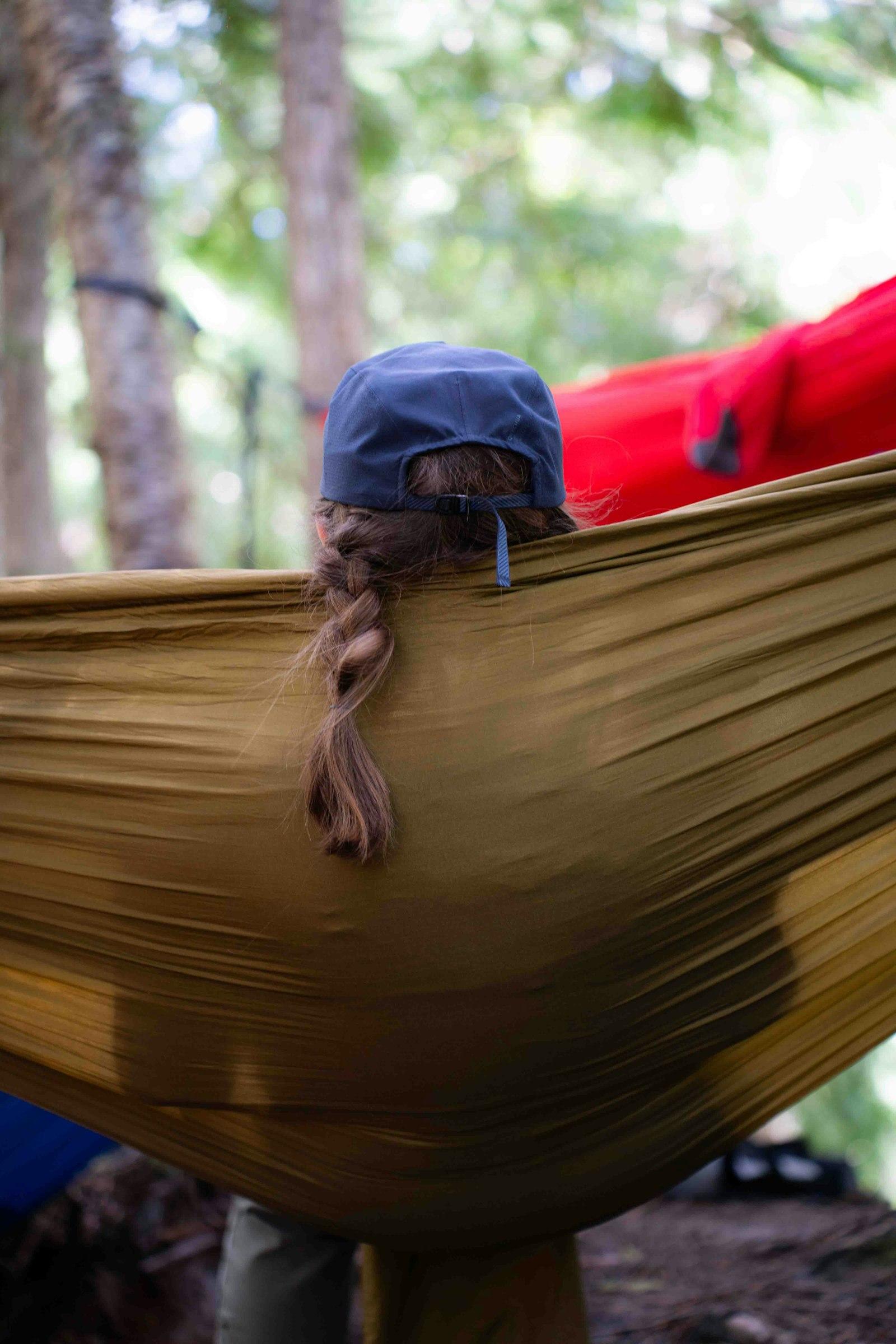
An underquilt keeps you warmer and more comfortable in a hammock than a sleeping pad. It hangs outside the hammock, so your weight never crushes the insulation, and it wraps your shoulders and hips. A sleeping pad is cheaper, doubles as ground insulation and works fine for many three-season nights, but it slides, sweats and leaves your shoulders exposed.
Why you get cold underneath in a hammock
A hammock puts a layer of moving air under your body instead of the ground. Air carries heat away all night, and it does it from every side at once.
Your sleeping bag cannot help much here. When you lie on it, you compress the insulation under you to almost nothing, and flat insulation does not trap air. Hammock campers call the result "cold butt syndrome". Many hangers report feeling it once nights drop into the 60s F (around 15 to 20 C), even when the rest of them feels fine.
So you need something under you that stays lofty. That is the whole job of both an underquilt and a pad, and they solve it in different ways.
What is a hammock underquilt and how does it work?
An underquilt is a quilt that hangs on the outside bottom of the hammock. Elastic or cord suspension at each end and along the sides pulls it up against the fabric, so it hugs you from below without being under your weight.
Because nothing presses on it, the down or synthetic fill keeps its full thickness. That is the trick. A 2 inch underquilt under you behaves like 2 inches of insulation, while a 2 inch sleeping bag under you behaves like a few millimeters.
A few things decide how warm an underquilt is:
- Temperature rating. The ENO Vulcan UnderQuilt is rated 30 to 50 F with synthetic fill. The Hammock Gear Incubator is built to order with down and ratings from 40 F down to 0 F.
- Length. Full length (about 72 to 80 inches) covers you head to toe. Three-quarter length saves weight but leaves your feet on a pad or sit pad.
- Fit. Gaps between quilt and hammock let cold air in. Most of the warmth comes from getting the side tension right.
How does a sleeping pad work in a hammock?
A pad goes inside the hammock, under you. Closed-cell foam and inflatable pads both resist compression, so they keep insulating even with your weight on them.
The catch is shape. A flat rectangle does not sit well in a curved, diagonal hammock. Common complaints from owners:
- The pad slides out from under you during the night.
- Your shoulders hang off the edges and get cold, since a 20 inch pad is narrower than your shoulders in the hammock curve.
- Your back sweats against the plastic surface, then that moisture chills you.
- Inflatable pads can feel like lying on a pool float and fight the hammock's shape.
Fixes exist. A double-layer hammock lets you slide the pad between layers. Wider pads (25 inches) or pads with side wings help the shoulder problem. Letting a bit of air out of an inflatable pad makes it conform better.
Underquilt vs sleeping pad compared
| Underquilt | Sleeping pad | |
|---|---|---|
| Warmth in a hammock | Wraps sides and shoulders, full loft | Flat under your back, shoulders exposed |
| Comfort | Nothing between you and the fabric | Can slide, crinkle and sweat |
| Price | Usually the more expensive option (the two quilts in our gear list sit at $179.95 and $219.95) | A basic foam pad costs far less |
| Weight | 20 to 30 oz is common for three-season | Foam pads often similar or lighter, inflatables vary |
| Ground use | No | Yes, works in a tent or shelter too |
| Setup | Needs adjusting each hang | Throw it in |
| Wind | Can be chilled by wind under the hammock | Less affected |
Which one should you buy?
Pick based on how you camp, not on what forums swear by.
Get an underquilt if:
- You hang most nights and want the warmest, most comfortable setup.
- You camp below about 50 F (10 C) regularly.
- You sleep on your side, since side sleepers lose more heat at the shoulders and hips.
- You already know hammock camping is your thing.
Start with a sleeping pad if:
- You are trying hammock camping for the first time.
- You sometimes sleep on the ground, in a shelter or in a tent with a partner.
- Your nights are mostly above 60 F.
- Budget matters more than comfort right now.
A lot of hammock campers end up with both. The pad comes along on cold trips as backup, or as a ground option when trees run out.
Can you use both together?
Yes, and it is the standard move for winter. A thin closed-cell foam pad inside the hammock with an underquilt outside adds warmth and protects against wind stripping heat off the quilt.
A few tips if you combine them:
- Use foam, not a slippery inflatable, so it stays put.
- A pad in the hammock reduces how much the underquilt loft touches your back, so do not count both ratings as additive.
- Add an underquilt protector or a tarp pitched low on the windward side when it is breezy.
Our guide on how to stay warm in a hammock covers the full layering approach, and the winter hammock camping for beginners post goes deeper on cold nights.
How to hang an underquilt so it actually works
Most "my underquilt is cold" complaints come from fit, not from the quilt. A few minutes of adjusting on the first night pays off.
- Hang the hammock first. Get your sag and diagonal lay right before you touch the quilt.
- Clip the end suspension to the hammock's end loops or suspension, so the quilt sits centered under you.
- Raise it until it touches. Tighten the end cords until the quilt sits right against the hammock fabric, with no air gap under your back.
- Do not over-tighten. If the quilt is pulled so tight it compresses, it loses loft. You want contact, not squeeze.
- Shift it toward your shoulders. If you lie diagonally, slide the quilt a little toward your head end so your shoulders sit over the thickest part.
- Check from inside. Lie down, reach under the hammock and feel for gaps along the sides. Snug the side cords where you feel cold air.
On a breezy night, wind can strip warmth from the outside of an underquilt. Pitch your tarp lower on the windward side or add an underquilt protector.
As for a plain sleeping bag underneath, it is the weakest option for the compression reason above. Some people unzip an old bag and hang it under the hammock as a makeshift underquilt, which works on mild nights. On top, a bag or a top quilt does the job.
Next step
Browse the best underquilts side by side, or check the hammock camping gear list to see where your insulation fits in a full kit.
Frequently asked questions
Is an underquilt warmer than a sleeping pad?+
Yes, in a hammock an underquilt is usually warmer. It hangs outside the fabric, so your weight never compresses the insulation, and it wraps your shoulders and hips. A pad insulates only the flat strip under your back, and it can slide out of place. On cold nights many hammock campers use both together.
How does a hammock underquilt work?+
An underquilt hangs on the outside bottom of the hammock and is pulled snug with cords or elastic at the ends and sides. Because it sits under the fabric instead of under your body weight, the down or synthetic fill keeps its full loft and traps warm air. The fit matters: gaps let cold air in.
Can I use a sleeping pad in a hammock?+
Yes. Closed-cell foam or inflatable pads both work, and they are the cheaper way to stay warm underneath. Expect the pad to slide around and your shoulders to sit off the edges. A double-layer hammock with a pad sleeve, a wider pad, or slightly deflating an inflatable pad all help it stay put.
Do I need an underquilt for summer hammock camping?+
Often not. On nights above about 70 F (21 C), many people sleep fine with nothing underneath. In the 60s F, many report a chill on their back even when the air feels warm. A thin foam pad is a cheap way to cover those nights before you decide whether an underquilt is worth it.
Is a sleeping bag enough underneath in a hammock?+
Usually not below mild temperatures. When you lie in a sleeping bag, your weight flattens the insulation under you, so it traps little warm air. The top half keeps you warm while your back gets cold. Pair the bag with a pad or underquilt, or hang an unzipped bag outside the hammock as a makeshift underquilt.

Find a hammock-friendly spot near you.