Hammock Camping by Bike, Canoe or Kayak
Why hammocks suit bikepacking and paddle trips, how to pack them, and how to hang when the only trees are on a riverbank.
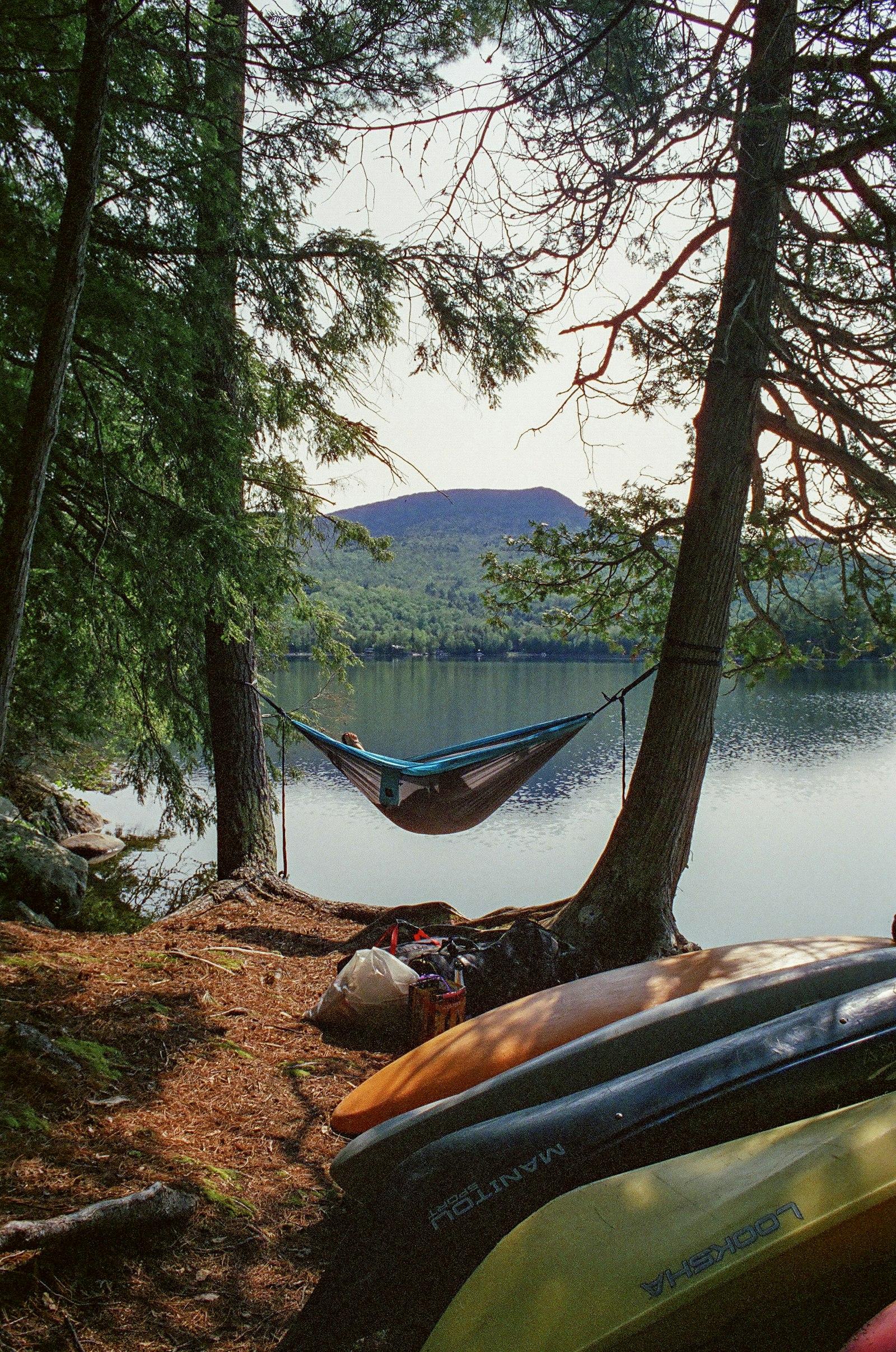
Hammocks work well for bikepacking and paddle camping. A full hammock system packs into a handlebar roll or a dry bag, needs no flat ground, and doubles as a camp chair at the end of the day. The tradeoff is trees: you need two healthy ones 12 to 15 feet apart, which riverbanks and forest routes usually have and open plains do not.
Hammock vs tent for bikepacking
The bike decides more than you might think. Space on a bike is long and thin (handlebar roll, frame bag, seat pack), not boxy like a backpack. A hammock suits that shape.
| Factor | Hammock | Tent |
|---|---|---|
| Packing on a bike | Rolls into a long narrow shape, good for a handlebar bag | Poles are awkward unless short-segmented |
| Campsites | Any two trees, slopes and roots do not matter | Needs a flat, clear spot |
| Bike storage | Lean the bike under the tarp, out of rain | Bike stays outside |
| Treeless routes | Needs a ground backup | Works anywhere |
| Cold nights | Needs an underquilt | A pad is simpler |
For forest gravel routes and rail trails, a hammock is a strong choice. For prairie, desert or alpine routes, a tent or bivy is easier. If you are weighing a ground backup, see hammock vs bivy.
Bikepacking hammock setup: how to pack it
The trick is splitting the system by shape and how often you need it.
- Handlebar roll: hammock, bug net and top quilt. These are long and soft and fill the roll well.
- Seat pack: underquilt and sleep clothes, which you only need at camp.
- Frame bag: straps, carabiners, stakes and guylines. Heavy, small items sit lowest and most centered.
- Outside the bag: tarp in its own stuff sack, strapped on top so it comes out first when it rains.
Keep the tarp easy to reach. On a wet evening you want the roof up before anything else gets unpacked.
Bikepacking hammock setup at camp, step by step
When you roll into camp tired, a set routine saves time and stops mistakes:
- Walk the site before unpacking. Find two healthy trees 12 to 15 feet apart, look up for dead limbs and check the ground slopes away from you.
- Tarp first. Pull the tarp from its outside strap and pitch it, even if the sky looks clear. Dew alone can soak a quilt.
- Straps and hammock. Pull the handlebar roll, hang the hammock under the tarp and add drip lines if rain is likely.
- Underquilt and top quilt. Clip the underquilt on and leave the top quilt in the hammock to loft while you cook.
- Bike under cover. Lean it under the tarp edge or lock it to a tree.
- Kitchen away from the hammock. Cook a short walk downwind and store food by the local rule.
The whole sequence takes 10 to 15 minutes with practice. Owners on multi-day bike trips often say the hammock becomes the best part of the evening, because it is a seat as soon as it is up.
Using your bike at camp
A hammock camp gives the bike a dry spot. Pitch the tarp a little wider on one side and park the bike under the edge. A few more bike-specific tricks:
- Use the bike as a tarp anchor. A guyline to the frame or a wheel works if the ground is too hard for stakes.
- Hang your helmet and gloves from the ridgeline to dry.
- Lock the bike to one of your hammock trees, around the trunk below the strap, so you would feel it move.
Canoe and kayak camping with a hammock
Paddle trips are some of the best hammock trips there are. Rivers and lakes are often lined with trees, and many campsites on the water have sloped or rocky ground that is miserable for a tent.
Things that change on the water:
- Pack in dry bags. Hammock, quilts and sleep clothes go in a dry bag every day, even if the forecast is clear.
- Watch tree health on banks. Trees along eroding banks and in wet ground can have shallow roots. The Leave No Trace hammock guide says to avoid trees in wet areas because they can uproot.
- Stay back from the water. Where you are not at a designated site, Leave No Trace guidance is to camp at least 200 feet (60 m) from lakes and streams. On many paddle routes you must use designated sites, so follow the route's rules.
- Secure the boat. Pull it well above the waterline and tie it off. Water levels can rise overnight.
- Pitch for wind. Open water brings steady wind. Turn the narrow end of your tarp into it and pitch lower.
Paddlers post trip reports from places like the Adirondacks and Ozark rivers, where wooded shores make hanging easy. If you want a river trip close to good hanging, our page on the Buffalo National River is a good example to start from.
What to choose for bike and boat trips
Not every hammock suits a bike or boat equally. Things to weigh:
- Integrated bug net. One less item to pack and lose, and a zip-in net goes up with the hammock.
- Built-in ridgeline. Gives the same sag at any tree spacing, which helps at unknown riverbank sites.
- Synthetic or treated fabrics. They dry faster after a wet morning than heavy cotton or canvas.
- Tarp with enough guy points. You may need to pitch it on the ground on treeless stretches, using the bike or a paddle as a pole.
Our list of best ultralight hammocks and the gear compare tool help narrow it down.
Weight and size: what a hammock kit takes up
Bikes and boats are forgiving about weight but not always about bulk. Some practical numbers from products in our gear database:
- Tree straps such as the ENO Atlas weigh 9 oz and run 9 feet each.
- A hex tarp like the ENO ProFly is 22 oz and packs to about 8 by 4.5 by 4.5 inches.
- A synthetic underquilt like the ENO Vulcan is 28 oz in a 12 by 7 by 7 inch stuff sack.
Down quilts pack smaller than synthetic, but synthetic holds warmth better if it gets damp, which matters on a river.
Safety notes for bike and boat trips
- Leave a trip plan with someone at home. The National Park Service recommends sharing where you will go and when you expect to return. See the NPS hiking safety article.
- Store food properly at night, even on short trips. Riverbanks and campgrounds attract raccoons and, in some areas, bears.
- Never hang over water or from trees on undercut banks.
Your next step
Find a route with trees using Find a Hang or the hang map, then build your list with the hammock camping gear list.
Frequently asked questions
Is a hammock or tent better for bikepacking?+
On forested routes a hammock is often better. It packs into a long, narrow handlebar roll, needs no flat ground, and lets you park the bike under the tarp. On prairie, desert or alpine routes with few trees, a tent or bivy is easier. Some riders carry a hammock plus a tarp that pitches on the ground.
How do you pack a hammock for bikepacking?+
Put the hammock, bug net and top quilt in the handlebar roll, the underquilt and sleep clothes in the seat pack, and straps, carabiners and stakes in the frame bag. Strap the tarp outside in its own sack so it comes out first if it rains.
Can you hammock camp on a kayak or canoe trip?+
Yes, and wooded shorelines often make it easy. Pack the hammock and quilts in dry bags, hang from healthy trees away from eroding banks, camp at least 200 feet from water where you are not at a designated site, and pull the boat well above the waterline overnight.
What is the best way to stay dry hammock camping on a river trip?+
Pack everything soft in dry bags every day, put the tarp up before the hammock, add drip lines to both suspension lines, and choose a site on higher ground back from the water. A synthetic underquilt holds warmth better than down if it gets damp.
Find a hammock-friendly spot near you.