Whoopie Slings, Straps and Rope: Hammock Suspension Explained
What each piece of a hammock suspension does, how straps, whoopie slings, buckles and rope compare, and what to hang a hammock with.
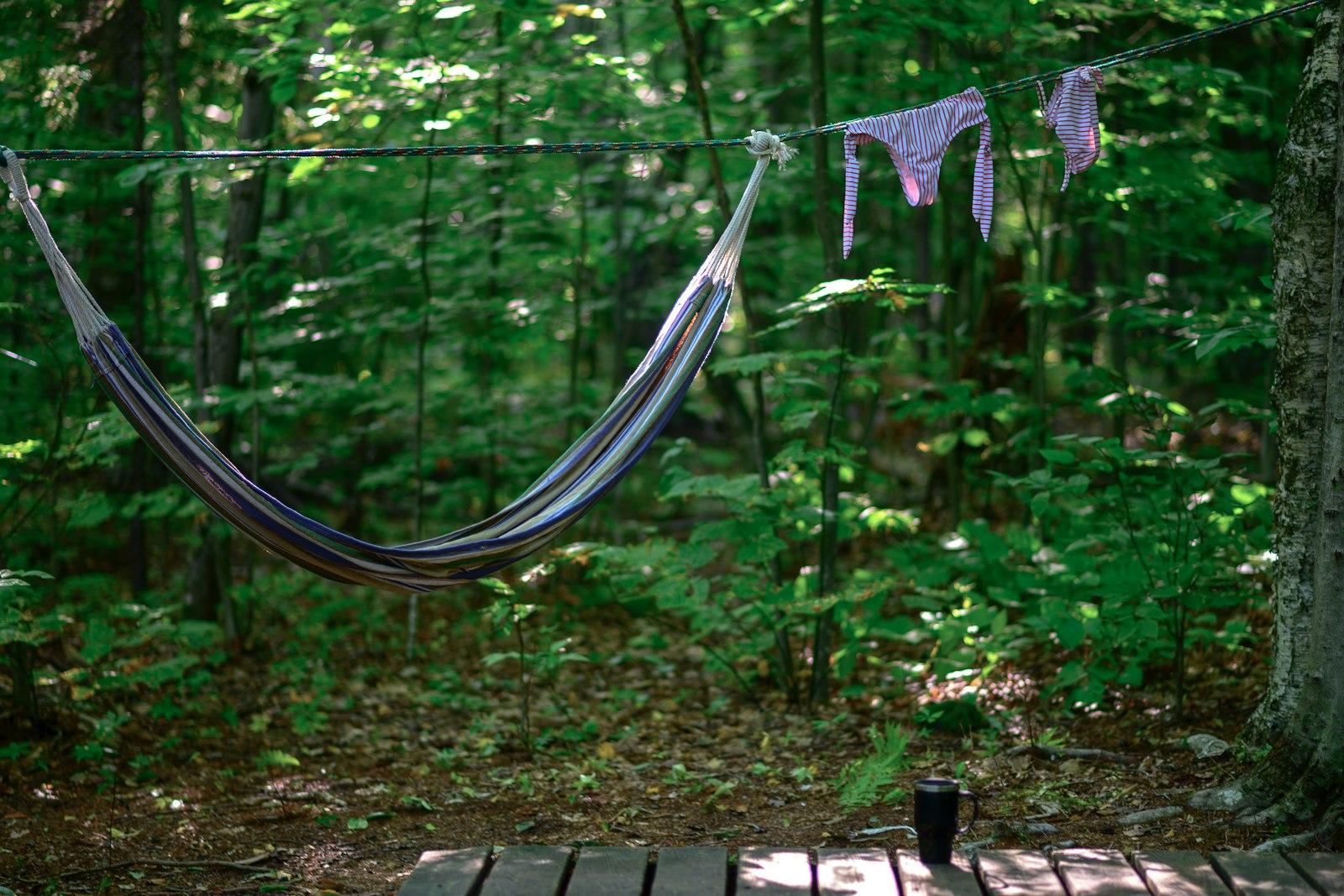
Hammock suspension is everything that connects the hammock to the tree. Most setups are a wide tree strap plus an adjuster: daisy-chain loops and carabiners (easiest), a whoopie sling (lightest), a cinch buckle (fast) or rope and knots (cheapest). For most people, daisy-chain straps with carabiners are the right first system.
The parts of a hammock suspension
From the tree to the fabric:
- Tree strap. Flat webbing at least 1 inch wide around the trunk, per Leave No Trace's hammock camping guidance. Protects bark and spreads the load.
- Adjuster. The bit that sets the length: loops, a whoopie sling, a buckle or a knot.
- Connector. A carabiner, a toggle, a soft shackle or a hitch that joins the adjuster to the hammock.
- End of the hammock. On camping hammocks this is a continuous loop or a whipped end. On rope and Mayan hammocks it is a ring or loop.
You can mix and match. Many people run the same tree strap with different adjusters as they get more into it, and the strap is usually the last piece anyone replaces.
What is a hammock cord called?
It depends on the hammock:
- Continuous loop: a short, closed loop of cord threaded through the gathered end of a camping hammock. Your suspension attaches to it.
- Clews: on rope, Mayan and Brazilian hammocks, the fan of strings at each end is usually called the clew. The individual strings are sometimes called nettles. They meet at a ring or loop that you hang from.
- Whoopie sling: an adjustable hollow-braid Dyneema cord, explained below.
- Ridgeline: a cord from end to end that sets the sag. See what is a hammock ridgeline.
Hammock suspension options compared
| System | Adjustability | Weight | Speed | Tree friendly | Best for |
|---|---|---|---|---|---|
| Daisy-chain straps + carabiners | Step by step, by loop | Moderate (8 to 9 oz for popular straps) | Fast | Yes | First hammock, backyard, parks |
| Plain straps + whoopie slings | Very fine, slide to adjust | Light | Fast once learned | Yes | Backpacking, ultralight |
| Straps + cinch buckles | Fine | Light to moderate | Fast | Yes | Campers who want no knots |
| Webbing + cord adjuster (ENO Helios style) | Fine | Light (4.3 oz) | Fast | Yes | Day hikers, travel |
| Rope or paracord on its own | Retie to adjust | Varies | Slow | No, if tied around the tree | Emergencies, posts and hooks |
| Chains or hooks | Fixed | Heavy | Slow | Not for trees | Permanent porch or post hangs |
Weights from our gear pages: the ENO Atlas is 9 oz, the Kammok Python 10 is 8.2 oz, and the ENO Helios is 4.3 oz.
What is a hammock whoopie sling?
A whoopie sling is a length of hollow braided Dyneema cord with a long section of the cord buried inside itself. Pull the free end and the sling gets shorter. Load it and the outer braid squeezes the inner one tight, so it locks in place. Take the load off and you can slide it again.
How it is used:
- One end has a fixed loop that attaches to the hammock (often through the continuous loop).
- The adjustable loop attaches to a plain tree strap, often with a toggle or a soft shackle.
- You slide it to set the hang, then sit down. No knots, no loop counting.
The upside is weight and fine adjustment. The downside is a learning curve, and the cord is thin and slick, so it needs to be made correctly or bought from a known maker. Owners commonly report they love whoopies once set up and find them fussy the first few times.
Hammock straps vs rope
This is the question most beginners ask, and the short answer is straps on the tree, rope only where it does not touch bark.
- Tree impact. Straps spread pressure. Rope concentrates it into a thin line that can cut bark. Some parks set a minimum strap width; Texas state parks, for example, require straps at least two inches wide.
- Adjustment. Daisy chains and whoopies adjust in seconds. Rope means retying.
- Stretch. Nylon rope stretches, so the hammock sags lower over a night. Polyester stretches less.
- Cost. Rope is cheaper. A pair of good straps costs about $30 to $40 at the list prices on our gear pages.
If you already own rope, a good compromise is a wide strap on the tree and rope from the strap to the hammock. Details in how to hang a hammock with rope.
What to hang a hammock with
A practical guide by situation:
- Backyard trees: daisy-chain straps and two load-rated carabiners.
- Backpacking: plain straps and whoopie slings, or a webbing-and-cord system like the Helios.
- Posts, beams or a porch: eye bolts or hanging hardware rated for the load, plus chain or rope. See how to hang a hammock between posts.
- No anchors at all: a stand. Browse hammocks with stands or read how to hang a hammock without trees.
Whatever you choose, every part needs a rating above your weight with margin, because a flat hang can put nearly three times your weight on each end.
Carabiners, toggles and soft shackles
The connector is the smallest part of the system and the one people pay least attention to.
- Carabiners: use ones with a load rating stamped on the spine. Keychain and accessory carabiners are not meant for body weight. Load them along the long axis, with the gate fully closed.
- Toggles: a short rod used with a marlinspike hitch or with whoopie slings. Strong and light, but a stick from the ground is only a stopgap.
- Soft shackles: a loop of Dyneema cord that closes on itself with a knot. Very light and quiet, common with whoopie slings.
- Cinch buckles: metal buckles that grip flat webbing under load. They release when you lift the buckle.
If you are not sure what a piece is rated for, do not hang from it. Replace anything with cracks, bent gates, sharp edges or fraying.
Next step
Start with daisy-chain straps and carabiners. If you later want to cut weight, swap the daisy chains for plain straps and whoopie slings. Compare options in our best tree straps list and read how to use hammock straps for the setup.
Frequently asked questions
What is a hammock whoopie sling?+
A whoopie sling is an adjustable loop of hollow braided Dyneema cord with a section buried inside itself. You slide it to change length, and under load the braid locks. It connects a plain tree strap to the hammock and is popular with backpackers for its low weight and fine adjustment.
Are hammock straps better than rope?+
For the part that goes around the tree, yes. Straps at least 1 inch wide spread pressure and protect bark, and many parks require them. Straps also adjust faster than retying rope. Rope still works between the strap and the hammock if it is rated well above your weight.
What is the cord on a hammock called?+
On a camping hammock, the short cord through each gathered end is a continuous loop. On rope, Mayan and Brazilian hammocks, the fan of strings at each end is usually called the clew, and individual strings are sometimes called nettles. The cord from end to end is a ridgeline.
What should I hang my hammock with?+
For most people, daisy-chain tree straps and two load-rated carabiners. Backpackers often switch to plain straps with whoopie slings to save weight. Posts and porches need rated hardware and chain or rope, and a stand works when there are no anchors at all.
Find a hammock-friendly spot near you.