Are Hammocks Good for Posture and Sciatica?
What a hammock does to your spine, why some people with sciatica like the curve, and the warning signs that need a doctor, not a new setup.
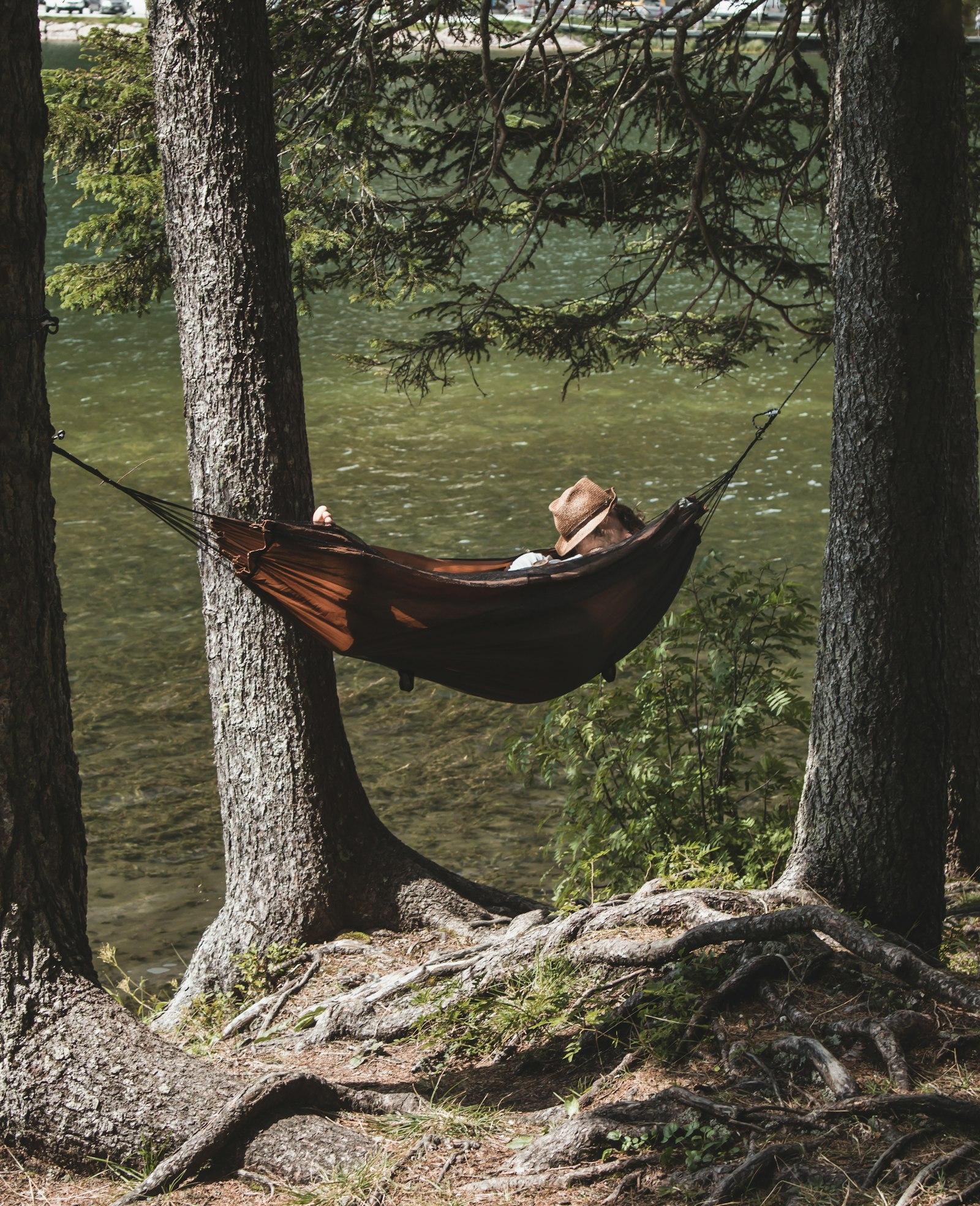
A hammock is not bad for your posture when it is hung with a deep sag and you lie on the diagonal, because that keeps your spine close to neutral. It is bad when you lie straight in a tight hammock and curl into a banana shape. For sciatica, some people find the slight hip bend eases pain, but there is no solid research, so follow your doctor's advice.
This article is general information, not medical advice. If you have a diagnosed spine condition or nerve pain, ask your doctor or physical therapist.
Are hammocks good for posture?
Posture while you rest is about the shape your spine holds for a long time. In a hammock, that shape depends almost entirely on how you hang it and how you lie in it.
- Banana lay. Lying straight down the middle of a tight hammock rounds your upper back, pushes your chin toward your chest and curls your hips up. That is the position people mean when they say hammocks are bad for posture.
- Diagonal lay. Angling your body 15 to 20 degrees across a well-sagged hammock pulls the fabric taut and flattens you out. Your spine sits much closer to how it would on a firm surface, with a slight bend at the hips and knees.
Are hammocks good for your spine?
There is very little published research on hammocks and spinal health. Most claims online, good or bad, are opinion. What can be said:
- A diagonal lay removes the pressure points a mattress puts on your hips and shoulders.
- A slight bend at the hips and knees is a position many people with lower back discomfort find easier than lying dead flat.
- A tight or short hammock forces a curve most spines will complain about by morning.
For more on back pain specifically, read is sleeping in a hammock bad for your back.
Are hammocks good for sciatica?
Some people with sciatica say lying in a hammock feels better than a mattress, often because the gentle curve at the hips takes pressure off. Others find the curve aggravates their pain. No published studies test hammocks for sciatica, so there is no honest yes or no.
What the UK's National Health Service does say about sciatica is useful here: keep up your normal activities as much as you can, start gentle movement when you are able, and do not sit or lie down for long periods (NHS sciatica guidance). A long afternoon in a hammock is still lying down for a long period, so use it in shorter stretches if you are in a flare.
When to see a doctor instead of adjusting your hammock
The NHS advises seeing a GP if sciatica has not improved after a few weeks of home treatment, is getting worse or stops you doing normal activities. It lists these as reasons to get emergency help:
- Sciatica in both legs
- Severe or worsening weakness or numbness in both legs
- Numbness around the genitals or bottom
- New trouble peeing or controlling your bladder
- New loss of bowel control
None of these are hammock problems. Get help first.
If your doctor says a hammock is fine
Use it the way the NHS describes for general sciatica care: as one of several positions in a day that also includes walking and gentle movement. Some practical notes from people who hang with nerve pain:
- Short sessions beat long ones. Twenty to forty minutes, then get up and walk around.
- Get out carefully. Sit up, put both feet on the ground and stand with a straight back. Twisting out sideways is the move people most often blame for a flare.
- Watch which side you favor. If lying with the painful side down makes it worse, angle your diagonal the other way.
- Keep warm. Cold, tense muscles around the lower back and hips rarely help. An underquilt or a blanket underneath is worth it even on mild evenings.
Are hammocks ergonomic? Setups compared
| Setup | Spine position | Verdict |
|---|---|---|
| Tight hang, straight lay | Rounded back, chin forward | Poor for posture |
| Good sag, diagonal lay | Close to neutral, slight hip bend | Good for most people |
| Diagonal with a knee pillow | Neutral, knees relaxed | Often most comfortable |
| Hammock chair, upright | Seated, depends on back support | Fine for reading, not sleeping |
| Bridge or lay-flat hammock | Flattest | Good if curves bother you |
Hammock posture for reading, lounging and screens
Most hammock time is not sleep. It is an hour with a book or a phone, and that is where posture slips. Sitting up in a gathered-end hammock folds you in half: your lower back rounds, your head juts forward and your arms hold the book up with nothing to rest on.
A few habits keep it comfortable:
- Recline rather than sit up. Lie on the diagonal with a pillow behind your upper back, so your head is raised but your spine is not folded.
- Bring the book or phone to your eyes. Rest your elbows on the fabric and hold the screen higher, rather than dropping your chin to look down at it.
- Change position every 20 to 30 minutes. Shift from your back to a slight side lean, or sit sideways across the hammock with your feet on the ground.
- Sit sideways for short sessions. Sitting across the hammock like a bench, feet flat on the ground, is a neutral seated position for a coffee or a chat.
- Use a hammock chair for long reading. An upright chair with a back gives your spine more support than a lounging hammock. See hammock vs hammock chair.
None of this is special to hammocks. A slumped hour on a couch causes the same stiffness. The difference is that a hammock makes slumping easy, so it pays to set up a little more deliberately. Our list of books to read in a hammock is a good excuse to practice.
How to set up a hammock for better posture
- Hang at about 30 degrees. See how to hang a hammock.
- Choose a long, wide hammock. About 10 to 11 feet long. Compare models in the best camping hammocks.
- Lie 15 to 20 degrees off center. Details in how to sleep in a hammock.
- Use a thin pillow. A thick pillow pushes your chin to your chest.
- Put a small pillow under your knees. It stops the knees locking straight.
- Use a structural ridgeline so the sag is the same every time.
- Get up and move. After an hour, stand, walk and stretch.
If curves bother you, a bridge or lay-flat hammock like the Haven Tent keeps you flatter. Read gathered-end vs bridge hammocks. For general discomfort fixes, see why is my hammock uncomfortable.
Next step
Get the hang angle right with the hanging guide, then test short sessions and see how your back responds.
Frequently asked questions
Are hammocks bad for your posture?+
Only when set up poorly. Lying straight in a tight hammock rounds your back into a banana shape. Hang it at about 30 degrees and lie 15 to 20 degrees off center, and your spine sits close to neutral with a slight bend at the hips and knees, which most people find comfortable.
Are hammocks good for sciatica?+
Some people with sciatica find a hammock comfortable because of the gentle hip bend, while others find it worse. There is no research on it. NHS guidance for sciatica is to stay active and avoid lying down for long periods, so use a hammock in short stretches and follow your doctor's advice.
Are hammocks good for your spine?+
A well-hung hammock with a diagonal lay keeps the spine close to neutral and removes pressure points, which many people find comfortable. There is little published research on hammocks and spinal health. If you have a spine condition, ask your doctor or physical therapist before sleeping in one regularly.
Are hammocks ergonomic?+
They can be. A long, wide hammock at a 30 degree hang, with a diagonal lay, a thin pillow and support under the knees, puts most people in a relaxed, near-neutral position. A short, tight hammock does not. Bridge and lay-flat hammocks are the flattest option.




Find a hammock-friendly spot near you.