Indoor Hammock Ideas for Bedrooms, Living Rooms and Kids' Rooms
Where an indoor hammock actually fits, which anchors are safe, and which hammock style works best in a bedroom.

The best indoor hammock ideas use one of three anchors: ceiling joists, wall studs, or a freestanding stand. In a bedroom, a hammock chair in a corner or a hammock on a stand along one wall works in most rooms. In a living room, a beam-hung hammock chair or a stand you can move does the job. Never anchor to drywall alone.
Here is how to fit one into each room, and how to pick the right style.
Can you put a hammock in your room?
Yes, if the room has the space and a safe anchor. Before you buy anything, measure three things:
- Length: a gathered-end hammock wants about 12 to 15 feet between anchors. Many bedrooms are shorter than that wall to wall.
- Clearance: leave about 2 feet on each side for getting in and out and for a gentle swing.
- Anchors: find the ceiling joists or wall studs with a stud finder, or plan for a stand.
If the room is under 12 feet long, skip the full-length hammock and look at a hammock chair or a short stand. Renters can do most of these ideas with a stand and no holes. For the hardware details, see how to hang a hammock indoors and how to hang a hammock from the ceiling.
Hammock in bedroom ideas
The corner hammock chair
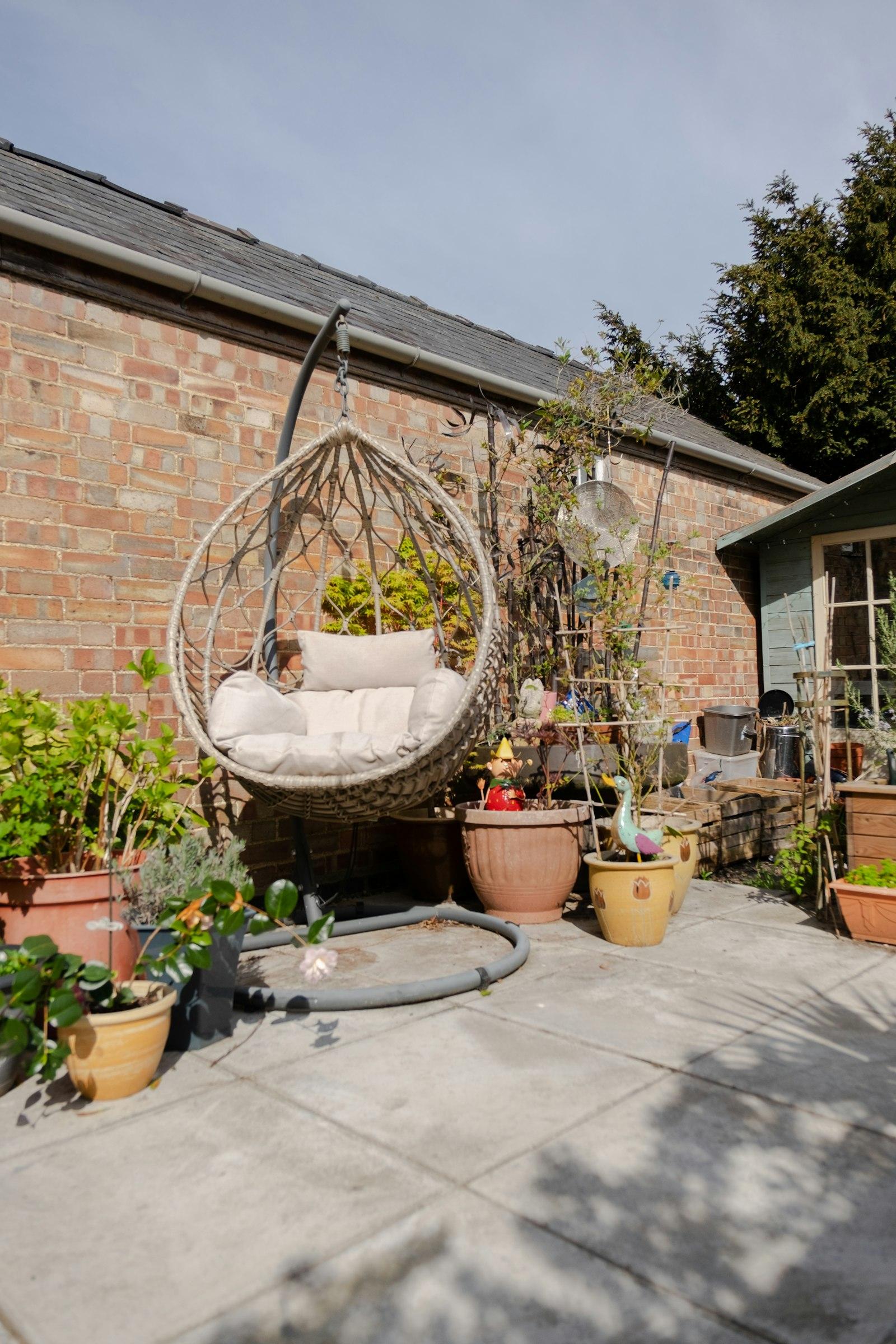
A hammock chair hung from a single ceiling joist in a corner is the most common bedroom setup. It needs about a 4 foot circle of clear space. Add a floor cushion under it and a small shelf for a book and a lamp.
The hammock along the long wall
If one wall is 13 feet or longer, a hammock on a stand fits along it like a daybed. A stand avoids drilling and comes apart when you move. Measure the stand footprint, not just the hammock.
The hammock instead of a bed
Some people do sleep in a hammock every night. It works best with a long gathered-end hammock hung with a deep sag so you can lie on a diagonal. Read can you sleep in a hammock every night before you sell the mattress.
The window nook
A hammock or hammock chair near a window gets you daylight for reading. Keep it out of the direct line of a hot afternoon sun, which fades fabric.
Living room hammock ideas
Living rooms usually have more length and sometimes exposed beams, which makes them easier than bedrooms.
- Beam-hung chair: an exposed structural beam is a strong single anchor for a hammock chair. Confirm it is structural, not a decorative box beam.
- Stand as a reading seat: a hammock on a stand by the TV or a bookshelf gets used more than one hidden in a back room.
- Hang across an open plan: two joists or studs at the far ends of an open room can hold a full hammock. This is a permanent install, so plan the walking path around it.
- A double for movie nights: a wide double hammock on a stand fits two adults sitting across it like a sofa.
Hammock ideas for kids' rooms
Kids love a hammock in their room, and parents searching "indoor hammock kids room" usually want something low and safe.
- Hang it low, so a child's feet reach the floor when they sit in it.
- Put a rug or foam mat underneath.
- Choose fabric hammocks or chairs, not net hammocks without spreader bars.
- A small hammock net in a corner makes a storage spot for stuffed animals, which is a popular kids' room idea that holds no weight.
Infants should not sleep in a hammock. The full safety rundown is in hammocks for kids.
What is the best indoor hammock for a bedroom?
The best indoor hammock for a bedroom is the one that fits the floor plan. Here is how the main styles compare indoors.
| Style | Space needed | Anchor | Best for |
|---|---|---|---|
| Hammock chair | About 4 ft circle | One joist or beam | Reading, small rooms |
| Hammock with stand | 9 to 15 ft long | None | Renters, daybed use |
| Gathered-end fabric | 12 to 15 ft span | Two joists or studs | Napping, sleeping |
| Rope with spreader bars | 12 ft or more | Two anchors | Looks, sitting across |
| Folding frame hammock | Around 8 ft | None | Rooms used for other things |
Owners on Reddit often ask for the most comfortable indoor sleeping hammock. The common answer is the same as outdoors: a long, wide gathered-end hammock with a good sag beats a short spreader-bar hammock for sleep.
An all-in-one folding frame like the GO Hammock lists a 94.5 inch length and 20.9 lb total weight, so it fits rooms that are too short for a full span. A stand-and-hammock kit like the Vivere Double Cotton Hammock with Stand is longer, with a 110 inch stand footprint. Browse more in best hammocks with a stand.
Indoor hammock mistakes to avoid
Most indoor hammock problems come from a few repeat mistakes:
- Hanging from drywall or trim. Drywall, crown molding and decorative beams are not anchors. Use joists, studs or a stand.
- Ignoring the swing zone. A hammock moves. Keep lamps, glass tables and shelves with corners out of its path.
- Hanging too high. Indoors, aim for about 18 inches of sit height. Higher only adds a longer fall onto a hard floor.
- Hanging it tight. A flat, tight hammock is uncomfortable and pulls harder on the anchors. Let it sag.
- Blocking a doorway or walkway. If you have to duck under it to cross the room, it will come down within a month.
- Forgetting the floor. A rug or mat under the hammock protects the floor from stand feet and makes falls softer.
- Skipping the check. Look at hooks, chains and carabiners every few weeks, especially on a hammock chair that gets daily use.
A hammock that is easy to get into and out of gets used. One that feels fussy turns into a laundry rack.
How to hang a hammock indoors without drilling
If you cannot drill, you still have options:
- Use a freestanding hammock stand or a hammock chair stand.
- Use a folding frame hammock that packs away.
- Use a door frame or wall product only if it is rated for a person's weight by the maker. Most over-the-door products are not.
Drywall anchors and tension rods are not made to hold a person swinging. If you are unsure what is behind the wall, use a stand.
Indoor anchors take the same forces as outdoor ones. A tight hang multiplies the pull on the joist, so leave a deep sag indoors too.
Next step
Measure the room, then compare stands and kits in Compare. If you want an outdoor hang too, browse the best backyard hammocks.
Frequently asked questions
What is the best indoor hammock for a bedroom?+
For most bedrooms, a hammock chair hung from a ceiling joist or a hammock on a stand works best. Both fit in rooms under 12 feet long. If you want to sleep in it, pick a long, wide gathered-end hammock and a room or stand that gives it a 12 to 15 foot span.
Can you hang a hammock in your room without drilling?+
Yes. A freestanding hammock stand, a hammock chair stand or a folding frame hammock needs no holes at all. Avoid drywall anchors, tension rods and over-the-door hangers unless the maker rates them for a person's weight. Most are not made for that load.
How much space do you need for an indoor hammock?+
A full gathered-end hammock needs about 12 to 15 feet between anchors plus about 2 feet of clearance on each side. A hammock on a stand needs the stand's footprint, usually 9 to 15 feet long. A hammock chair needs roughly a 4 foot circle.
Is it safe to hang a hammock from the ceiling?+
It can be, if you anchor into a structural joist or beam with hardware rated for the load. Find the joist with a stud finder and never hang from drywall alone. If you are unsure about your ceiling, ask a contractor or use a stand instead.


Find a hammock-friendly spot near you.