Sensory Swing vs Hammock: What Kids Actually Need
How a hammock and a sensory swing differ, when a regular hammock is enough, and how to set either one up safely at home.
A hammock and a sensory swing both give rocking motion, but they are built for different input. A regular hammock hangs from two points and rocks side to side. A sensory swing usually hangs from one point, so it can spin and move in every direction, and many styles wrap the body for deep pressure. A hammock covers gentle rocking. It does not replace a swing an occupational therapist chose.
If your child has an OT, ask them first. They know which input your child needs.
What is a sensory hammock?
"Sensory hammock" is a shopping term, not a medical one. It usually means one of these:
- Stretchy lycra swing: a loop of stretchy fabric hung from one point. The child sits or lies inside and the fabric hugs them.
- Pod or cocoon swing: a closed, cone-shaped fabric seat from one point. Kids can curl up inside it.
- Platform or net swing: a flat base that a child lies on, often used in therapy clinics.
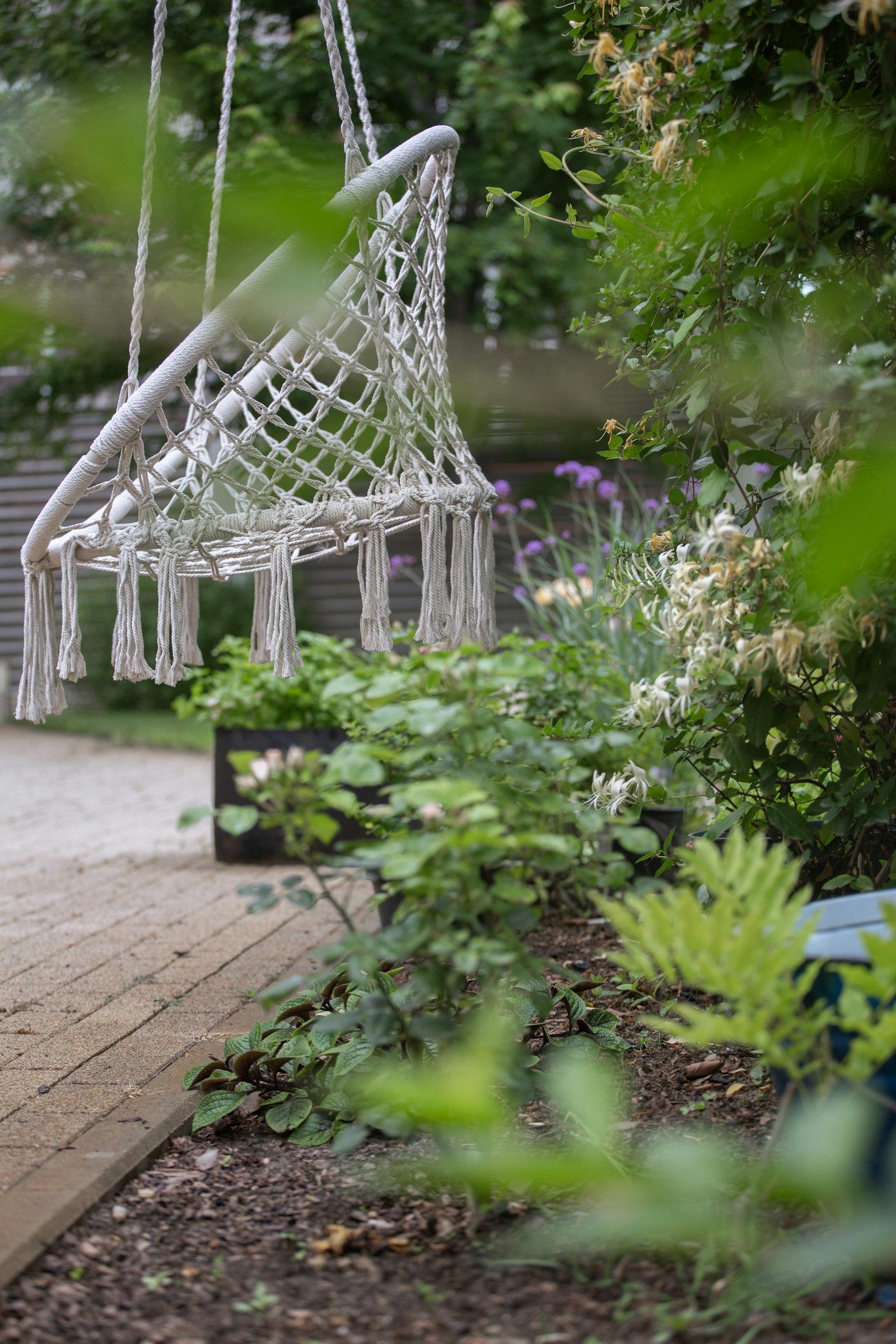
- Hammock chair: a seated hammock from one point. Owners often find it works as a calm-down spot.
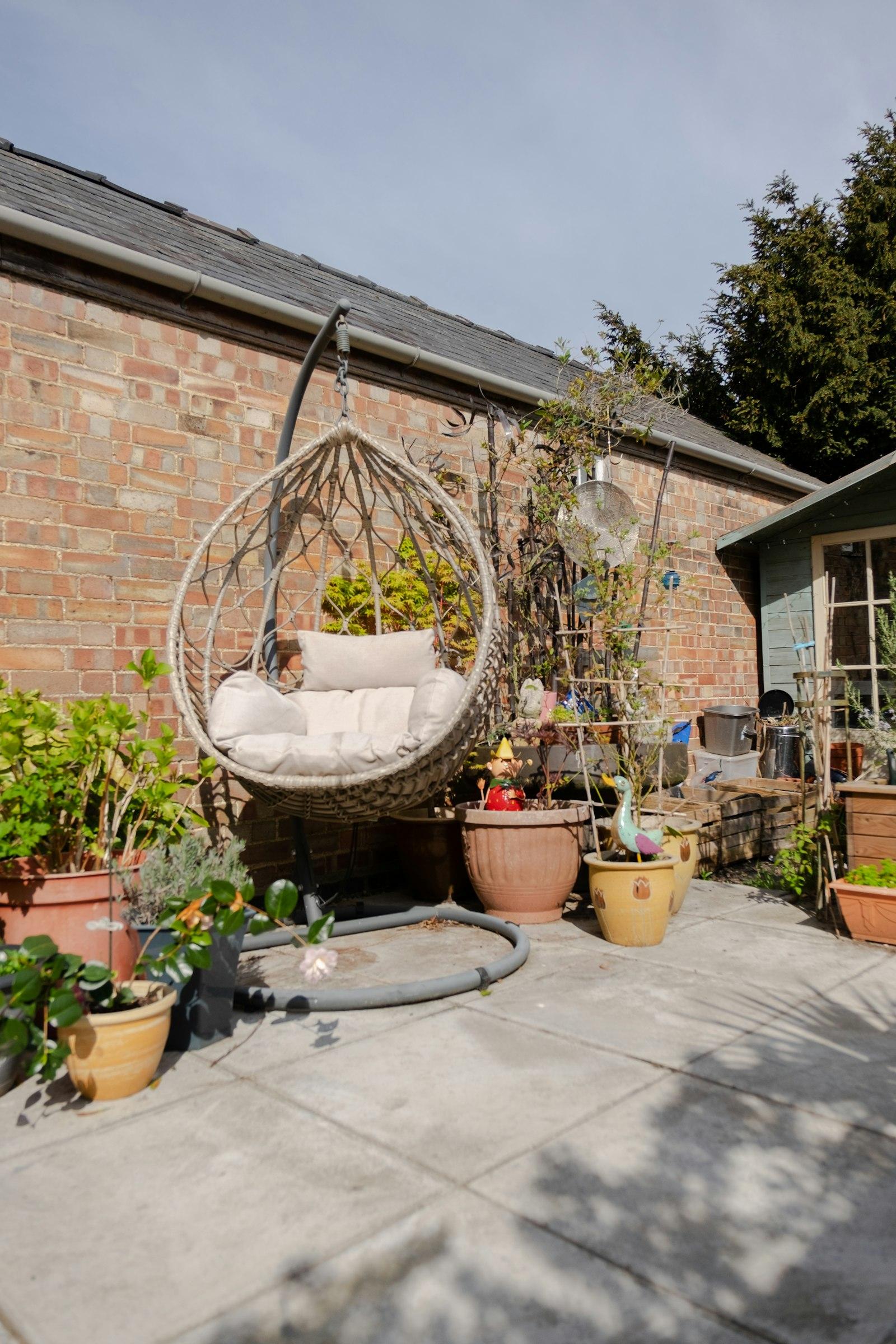
A Reddit post titled "Turns out my dream hanging egg chair was just a giant sensory swing" captures it well. A lot of adults find the same calm in a single-point chair that kids find in a therapy swing.
Hammock vs sensory swing: the differences
| Hammock (two-point) | Sensory swing (one-point) | |
|---|---|---|
| Motion | Side to side rocking | Spin, side to side, front to back, bounce |
| Body position | Lying, on a diagonal | Sitting, curled or lying, depends on style |
| Pressure | Light, open | Often wraps the body for deep pressure |
| Anchors | Two, 12 to 15 ft apart, or a stand | One overhead point, or a swing stand |
| Space | About 12 to 15 ft long | About a 4 to 6 ft circle |
| Best use | Rest, reading, sleep | Short, active sessions and calm-down time |
The anchor difference is the big one at home. A sensory swing needs one strong overhead point, usually a ceiling joist or a doorway bar rated for the use. A hammock needs two anchors far apart, which is harder to find indoors.
Can you use a hammock as a sensory swing?
Partly. A hammock gives the slow, side to side rocking that many kids find calming. A cocoon-style gathered-end hammock also wraps around the body a little when you lie in it.
What a two-point hammock cannot do is spin, bounce or move front to back. If your child seeks spinning or strong pressure, a hammock will not give them that. If your child likes slow rocking and a cozy spot, a low hammock or a hammock chair may be all they want.
Can a hammock be used for sensory regulation?
Many families use a hammock as a calm-down corner, and kids often settle in one on their own. That is a reasonable use at home.
Whether it helps your child regulate is a question for their occupational therapist. Sensory needs vary a lot from child to child, and the type, speed and length of swinging matter. An OT can tell you which motion to use, for how long, and what signs mean it is too much. We are not able to give therapy advice, and no hammock is a treatment.
How to set up a sensory swing or hammock at home safely
Whichever you choose, the setup rules are similar:
- Anchor to structure. Use a ceiling joist or beam with hardware rated for a person's weight and the extra force of swinging. Never anchor to drywall alone. Our how to hang a hammock from the ceiling guide covers finding joists.
- Use a swivel for one-point swings. A swivel lets the swing spin without twisting the rope or strap.
- Clear a full circle. Allow at least a few feet of open space in every direction from the swing's full range. Move furniture and anything with corners.
- Put a mat underneath. A foam mat or thick rug softens falls.
- Hang it low. A child should be able to get in and out with feet on the floor.
- Supervise. Especially with spin, and especially with younger kids.
- Check hardware often. Look at carabiners, swivels and fabric every few weeks.
No ceiling joists where you need them? A freestanding swing stand or a hammock on a stand avoids drilling. Compare options in best hammocks with a stand.
What to look for in a sensory swing or hammock
Whichever style you choose, check these before you buy:
- A published weight rating that covers your child now and in a few years. Swinging adds force, so leave room.
- Hardware included or specified. Good swings tell you exactly what ceiling hook, swivel and carabiner to use.
- Washable fabric. Kids sweat, spill and drag swings across the floor. Removable, machine washable fabric saves time.
- Adjustable height. A daisy chain strap or adjustable rope lets you lower the swing as you test it and raise it as your child grows.
- Smooth edges and no loose cords. Skip anything with long drawstrings or loops a child could put their head through.
- Fabric over open net. Fabric seats spread the load and avoid the entanglement risk of open net hammocks without spreader bars.
Sensory swings and hammock chairs for adults
Plenty of adults buy a hanging chair for the same reason kids get a sensory swing: it feels calming to sit in something that moves a little and holds you. A single-point hammock chair in a reading corner is a common way to get that at home. The setup rules above apply to adults too, with a higher weight rating.
Older kids and teens
Many kids outgrow a small lycra swing but still want a calm, moving spot. A hammock chair or a full-size hammock on a stand often makes the switch easy, because it looks less like therapy equipment and more like regular furniture. Check the weight rating again as they grow, since a swing bought for a 6 year old may not be rated for a teenager.
Which should you buy?
Use this quick guide:
- Your OT recommended a specific swing: buy that one.
- Your child likes slow rocking and a quiet spot: a low hammock or a hammock chair is a good, cheaper start. How to choose your first hammock covers sizes and fabrics.
- Your child seeks spinning or a tight hug: a lycra or pod swing on a swivel is closer to what they want.
- You need it to work for the whole family: a hammock on a stand doubles as an adult reading spot.
For more on age-appropriate setups and safety, read hammocks for kids. For layout ideas in a bedroom or playroom, see indoor hammock ideas.
Next step
If a hammock is the right fit, start with the low, easy options in best backyard hammocks and hang it with the 30 degree rule.
Frequently asked questions
Can you use a hammock as a sensory swing?+
Partly. A hammock gives slow side to side rocking, which many kids find calming. It cannot spin, bounce or move front to back, and it gives less deep pressure than a lycra or pod swing. If your child works with an occupational therapist, ask them which motion your child needs.
What is a sensory hammock?+
Sensory hammock is a shopping term for swings that hang from one point and wrap or hold a child, such as stretchy lycra swings, pod or cocoon swings, and hammock chairs. They allow spinning and multi-direction movement, unlike a regular two-point hammock that only rocks side to side.
Can a hammock be used for sensory regulation?+
Many families use a hammock as a calm-down spot and kids often settle in one. Whether it helps a specific child regulate depends on their sensory needs, so ask their occupational therapist. An OT can recommend the type of motion, how long to swing and which signs mean to stop.
Is a hammock or a sensory swing easier to set up indoors?+
A sensory swing is usually easier, because it needs one strong overhead anchor such as a ceiling joist, plus a swivel. A full hammock needs two anchors about 12 to 15 feet apart, which many rooms do not have. Both work on freestanding stands if you cannot drill.


Find a hammock-friendly spot near you.