15 Backyard Hammock Ideas for Any Size Yard
Fifteen ways to fit a hammock into a yard, from two trees and a lawn to a 10 foot patio with no anchors at all.
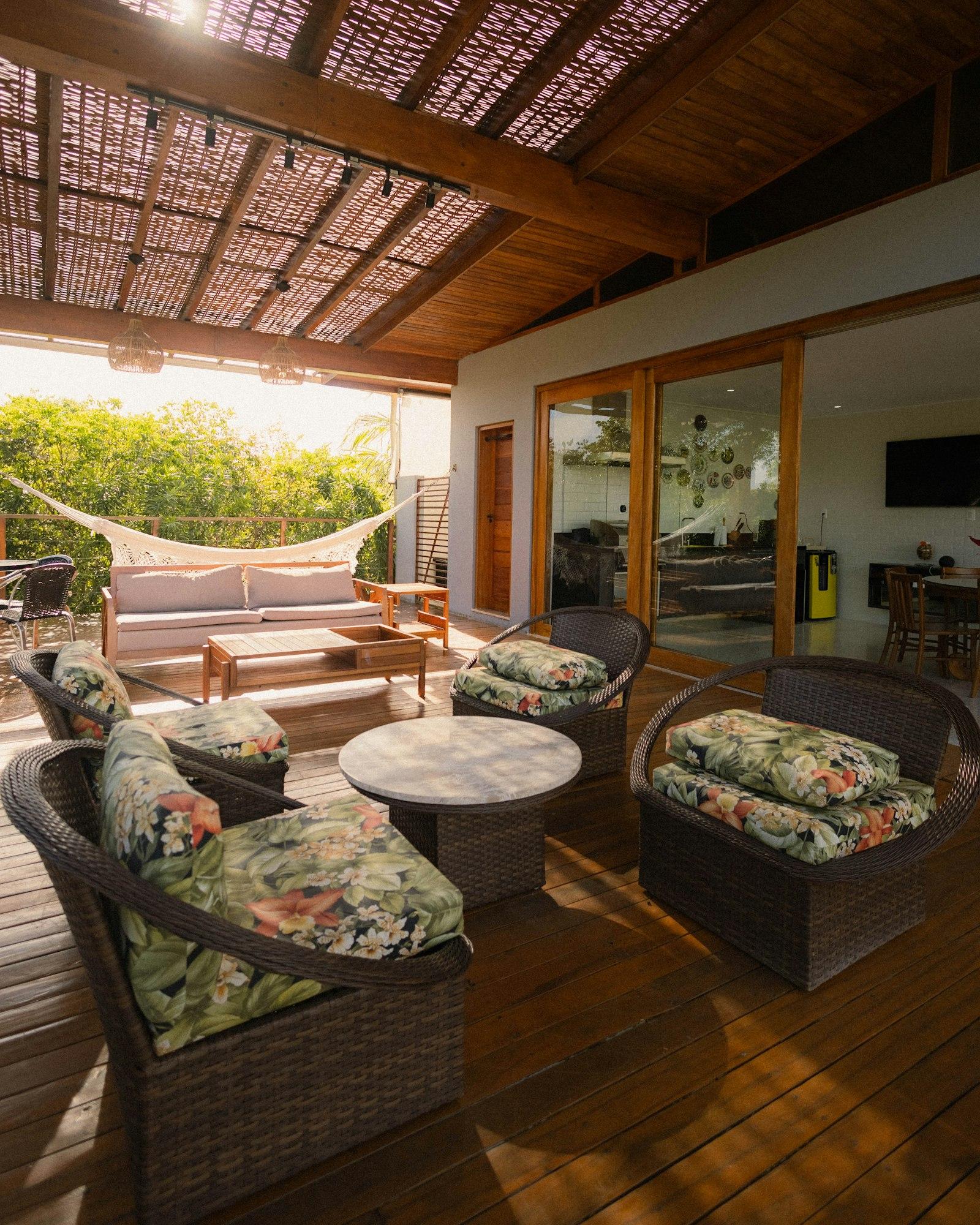
The best backyard hammock ideas start with your anchors. Two healthy trees 12 to 15 feet apart give you the easiest hang. No trees? Set two posts, use a freestanding stand, or hang from a pergola beam. Then add shade, a soft surface underneath and a spot for a drink, and you have a hammock area people actually use.
Below are 15 ideas grouped by what your yard already has. Pick the anchor first, then the comfort upgrades.
Backyard hammock ideas between trees
Trees are free anchors, and a backyard hammock between trees is still the most comfortable setup most people will ever have. The spacing guide in how to hang a hammock covers the 30 degree rule and strap height.
1. The classic two-tree hang
Find two living trees roughly 12 to 15 feet apart and use wide webbing straps, at least 1 inch wide. Hang with a deep, smiling sag, not a tight line. A gathered-end double hammock or a woven hammock both fit this spot.
2. The one-tree plus post hang
Only one good tree? Set a single post at the right distance and hang between the two. You get the tree's shade without needing a second trunk in the right place.
3. The stacked lounge
On two big trunks, a second hammock can hang above or beside the first for family lounging. Keep the lower one close to the ground and check the trees can take it. Not sure which trunks qualify? Read which trees are safe for hammocks.
Backyard hammock ideas without trees
A yard with no trees is not a dead end. These are the setups people search for most when the trees are missing or in the wrong place.
4. Two dedicated hammock posts
Two set posts give you a permanent, tree-like hang exactly where you want it. Posts need to be deep, braced and set in concrete, because a hammock pulls them inward and down. The full method is in how to hang a hammock between posts.
5. A freestanding steel stand
A stand is the no-dig option. It moves with the sun, comes inside for winter and works on a lawn or deck. The Vivere Universal Steel Hammock Stand is a 10 foot steel stand rated to 450 lb. See how to choose a hammock stand before you buy one.
6. The pergola beam
A solid pergola is a ready-made frame with built-in shade. Hang from the main beams, not the thin top slats, and make sure the posts are anchored. Hanging a hammock on a porch or pergola walks through hardware.
7. The covered porch corner
Two porch posts or framing members at a corner can hold a hammock out of the rain. It also means the hammock can stay up longer between storms.
8. A hammock chair from a branch or beam
Short on length? A hammock chair needs one anchor point and about 4 feet of clearance around it. It is the easiest win in a tight yard.
Small yard and patio hammock ideas
Small spaces need a plan for length. A typical gathered-end hammock wants 12 to 15 feet between anchors, and a stand needs 9 to 15 feet of floor.
9. A short stand on the patio
All-in-one hammock and stand kits are made for patios and decks. The Vivere Double Cotton Hammock with Stand lists a stand footprint of 110 x 47 inches. Measure your patio before you order.
10. The fold-away frame
If the patio does double duty, a folding frame that packs into a bag lets you set up on Saturday and clear the space on Sunday. Expect 20 lb or more for a sturdy one.
11. The corner hang
Two walls of a fenced corner, a post and a house beam, or a deck post and a tree can form a corner hang. Do not trust a fence panel by itself. Fence posts set in concrete are a different story than the boards between them.
Backyard hammock area ideas: shade, ground and comfort
The hammock is half of the idea. The area around it decides whether you use it twice or 200 times.
12. Shade overhead
A backyard hammock with shade gets used through July. Options are a tree canopy, a pergola, a shade sail tied off to separate anchors, or a stand with a canopy. Fabric also lasts longer out of direct sun.
13. A soft, dry surface underneath
Grass, mulch, pea gravel or an outdoor rug all work. Avoid hard pavers directly under a high hang, and keep the hammock low, around 18 inches of sit height.
14. A side table and storage
A small side table, a hook for a lantern and a waterproof bin for cushions and the hammock itself turn a hang into a hammock area. Bring the hammock in when it rains, unless it is made for weather.
15. Bug and light control
Evening hangs need a plan for mosquitoes. A bug net, a fan or a citronella setup helps. See how to keep bugs away in a hammock for what works.
What is the best backyard hammock?
The best backyard hammock depends on how you use it. Here is how the main styles compare for a yard.
| Style | Best for | Watch out for |
|---|---|---|
| Gathered-end fabric | Deep, cocoon-like naps, packing away | Needs 12 to 15 ft of span |
| Woven or rope with spreader bars | Sitting, looks, open lay | Tips more easily |
| Hammock with stand | Yards with no trees, decks | Footprint and weight |
| Hammock chair | Small spaces, reading | One person, upright |
| Cotton Brazilian style | Soft feel, wide bed | Mildews if left out wet |
Our ranked list of the best backyard hammocks uses published specs and review consensus, not hands-on testing. If you are choosing between two, put them side by side in Compare.
Backyard hammock ideas on a budget
A good backyard hang does not need a big spend. The cheapest upgrades are the ones that make you use the hammock more often.
- Start with straps, not hardware. If you have trees, a hammock and a pair of wide straps is the whole setup. Many budget doubles ship with straps included.
- Move the hammock, not the shade. A stand you can drag 10 feet beats a shade structure you have to build.
- Use what is on the porch. A solid porch beam or post pair can save you buying a stand. Check that it is structural first.
- Mulch instead of pavers. A few bags of mulch under the hang are cheap, soft and drain well.
- Store it dry. The cheapest way to make a hammock last is to bring it in when rain is coming. Cotton especially.
- Skip the extras until you know your habits. Pillows, canopies and cup holders are nice. Buy them after a month, once you know when and how you hang.
If you want a cheap way to test a spot, hang a basic camping hammock with straps for a few weekends before you commit to posts or a stand.
Backyard hammock setup checklist
- Anchors at least 12 feet apart, or a stand sized for your hammock
- Straps at least 1 inch wide on trees, never thin rope
- Sit height around 18 inches
- Shade from 1 p.m. to 5 p.m., the hottest stretch
- A soft surface under the hammock
- A dry place to store fabric and cushions
A tight hammock is the most common backyard mistake. A loose 30 degree hang is more comfortable and puts less force on the trees, posts or stand.
Next step
Measure the gap you have, then pick the anchor. If the numbers do not work for trees, start with the best hammocks with a stand.
Frequently asked questions
What is the best backyard hammock?+
For most yards, a double gathered-end fabric hammock between two trees gives the most comfortable lay for the money. If you have no trees, a hammock with a matching stand is the simplest choice. Rope and woven hammocks with spreader bars look great and are easy to sit in, but they tip more easily.
How do you set up a backyard hammock without trees?+
You have four options: set two posts in concrete, buy a freestanding hammock stand, hang from a solid pergola or porch beam, or use a hammock chair from a single overhead point. Stands are the only option that needs no digging or drilling, and you can move them with the shade.
How much space do you need for a backyard hammock?+
A typical gathered-end hammock needs anchors about 12 to 15 feet apart and a little side clearance to swing. Hammock stands range from roughly 9 to 15 feet long and about 4 feet wide. A hammock chair needs one anchor and about 4 feet of clear space around it.
Can you leave a backyard hammock outside?+
Some you can and some you should not. Cotton fades and mildews if left out wet, while acrylic and polyester hammocks handle weather better. Even weather-ready hammocks last longer if you bring them in during long rainy stretches and over winter, and steel stands should be checked for rust.

Find a hammock-friendly spot near you.