Which Trees Are Best (and Worst) for Hanging a Hammock?
What a good hammock tree looks like, which ones to skip, and a 60 second check before you clip in.
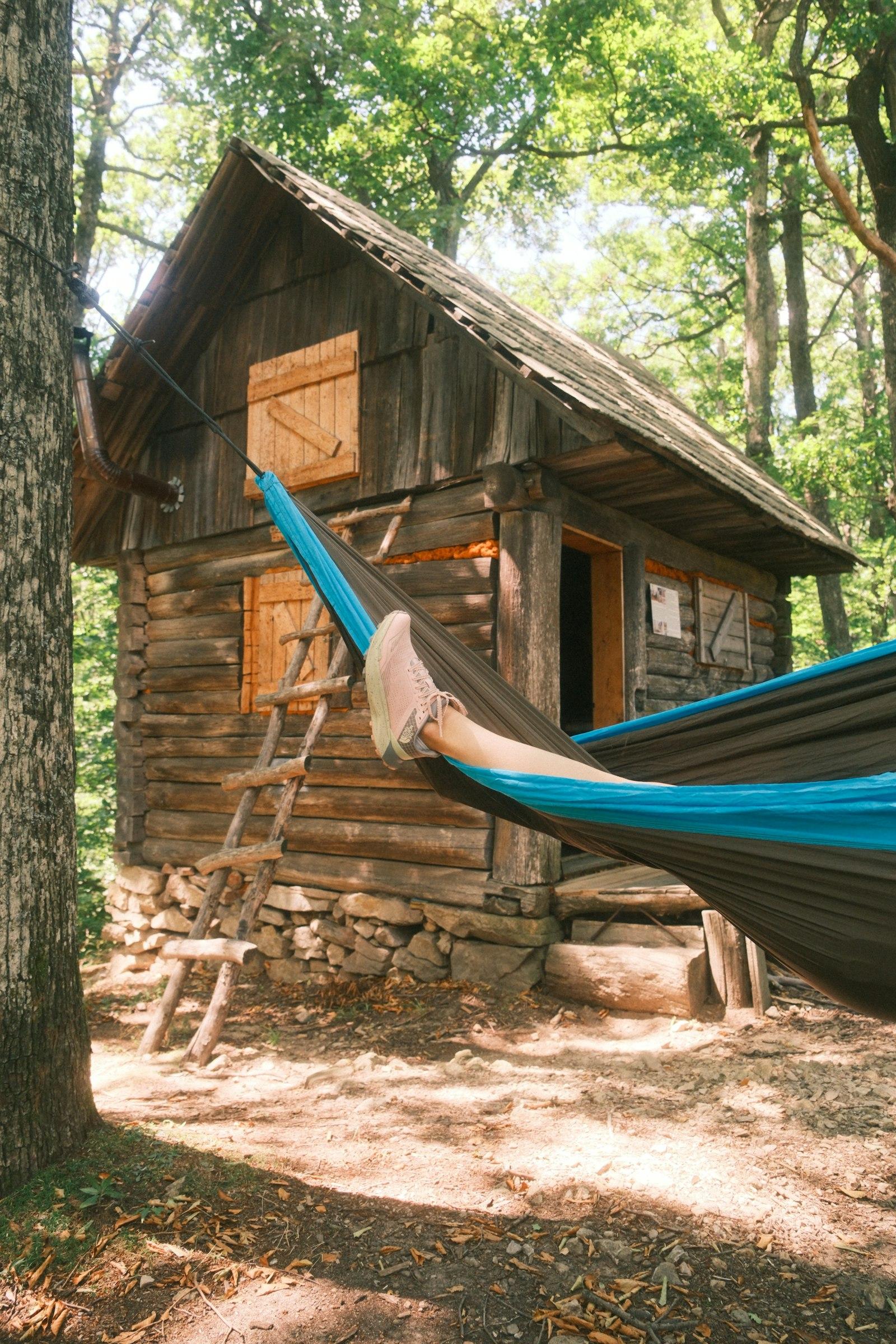
Safe trees for a hammock are living, healthy and at least 6 inches in diameter, ideally with hard bark and no lichen, according to Leave No Trace. Check above for dead branches, hang on the thickest part of the trunk, and skip trees that bend, lean, or grow in wet soil. Some parks set stricter limits, such as 12 inches.
Here is how to spot a good one fast.
What does a good hammock tree look like?
Use this checklist. A good hammock tree is:
- Alive. Leaves or needles in season, no large dead sections.
- Thick enough. At least 6 inches across where the strap goes, per Leave No Trace. That is about 19 inches around the trunk.
- Hard barked. Thick, firm bark handles strap pressure better than thin, soft bark.
- Free of lichen at the strap height.
- Upright and stiff. It should not bend when you push or lean on it.
- On firm ground. Not in wet or soggy soil, where roots can pull loose.
- Clear above. No dead or hanging branches over where you will lie.
Those points come from the Leave No Trace hammock camping guidelines, which also say never to hang from dead trees, because dead trees can be very hazardous.
The 60 second tree check
- Look up for dead branches.
- Push the trunk. It should not flex.
- Wrap your hands around it, or estimate about 19 inches around for 6 inches across.
- Check the bark for damage, softness and lichen.
- Look at the ground for wet soil or lifted roots.
Which trees are safe for hammocks? Good vs avoid
| Look for | Avoid |
|---|---|
| Living, healthy trunk | Dead, dying or hollow trees |
| 6 in diameter or more (more where parks require it) | Saplings and thin trunks that flex |
| Hard, thick bark | Thin, soft or peeling bark |
| No lichen at strap height | Lichen or moss you would crush |
| Firm, dry ground | Wet soil, stream banks |
| Clear canopy above | Dead branches overhead |
| Straight trunk | Leaning or cracked trunks |
Trees to skip, and why
Dead trees and dead branches. This is the big one. The Reddit thread "Remember why we don't use dead trees..." shows why people repeat it. A dead trunk or branch can fail without warning, and the hammock puts sideways force on the tree.
Thin, flexible trees. A trunk that bends under your push will bend more under your weight. You end up lower than planned, and the tree takes damage.
Thin-barked trees. Smooth, thin bark bruises more easily under a strap. If you must use one, use the widest straps you have and keep the hang short.
Trees with damage or disease. Deep cracks, large cavities, fungus growing on the trunk, oozing wounds or bark falling away are all reasons to move on. You cannot see inside a trunk, so skip anything that looks unwell.
Trees in wet ground. Leave No Trace warns that trees in wet areas could become uprooted, and wet soils take more damage.
Palm trees. Many beach hangs use palms, but rules vary a lot by beach and resort. Check local rules before you strap a palm. Our can I hang here tool covers rules by place.
Park rules can be stricter
Leave No Trace says 6 inches. Some land managers ask for more. Wisconsin state parks, for example, require trees greater than 1 foot in diameter at the attachment point, padding around the trunk, webbing at least 1 inch wide, and they do not allow hammocks on oak trees. See the Wisconsin DNR hammock rules.
On private land, ask the owner before you strap a tree. At camp, Leave No Trace also recommends hanging at least 200 feet from water sources to protect the plants along the bank.
Rules change and vary by park, so check the place you are going. Before a trip, look up the park's own rules page or call the visitor center.
How to hang a hammock without damaging the tree
- Use straps at least 1 inch wide. Leave No Trace says never use anything thinner. Wider spreads the load.
- Wrap once. Leave No Trace recommends one wrap and a loose hang, not multiple wraps or knots that twist and squeeze bark.
- Hang loose. A 30 degree sag means less force on the trunk than a tight line. See the 30 degree rule.
- No hardware in trees. Never hammer or screw anything into a tree.
- Stay low. Leave No Trace recommends hanging less than 5 feet off the ground.
More detail in do hammock straps hurt trees.
Spacing: what is the best distance between trees?
Distance matters as much as the trees themselves. Two perfect trunks 25 feet apart are less useful than two decent ones at 14 feet.
For most 9 to 11 foot gathered-end hammocks, look for two trees about 12 to 15 feet apart. You can make 10 to 20 feet work with strap height and length. Closer or wider than that, read trees too far apart or too close.
Backyard trees: young, fruit and ornamental trees
Backyard trees raise different questions than forest trees, because you care about these specific trees for years.
- Young trees. A trunk under 6 inches across is still growing and flexes under load. Give it a few more seasons.
- Fruit trees. Many are small, have soft bark and are pruned into open shapes with low branches. Most are a poor fit for a full-size hammock.
- Ornamental trees. Thin-barked and often small. A hammock chair from a strong low limb is usually a better match than a two-tree hang.
- Trees you just planted or transplanted. Roots are not established yet. Leave them alone.
- Big mature shade trees. Usually the best anchors in the yard. Use wide straps and move the strap position a little every few weeks so the same patch of bark does not take all the pressure.
If you hang in the same backyard spot every weekend, rotate the hang point and bring the straps in between uses.
What if you only have one good tree?
Pair it with a set post, a porch beam or a stand. See backyard hammock ideas for one-tree setups.
What to hang a hammock on if there are no good trees
If the trees fail the checklist, do not force it. Use posts, a stand, a vehicle rack or a structure rated for the load. How to hang a hammock without trees covers the options.
Fun fact: in Florida, "hammock" is also the name for a patch of hardwood forest. See what is a hammock in Florida.
Next step
Find places with good trees and clear rules on the map, or browse best forest hangs.
Frequently asked questions
Which trees are safe for hammocks?+
Leave No Trace recommends living trees at least 6 inches in diameter, ideally with hard bark and no lichen. Check overhead for dead branches, hang on the thickest part of the trunk, and avoid trees that bend or grow in wet soil. Some parks require thicker trees, such as 12 inches.
What does a hammock tree look like?+
A good hammock tree is alive, upright and stiff, at least 6 inches across at strap height, with firm bark and no lichen where the strap goes. It stands on dry, firm ground, and the canopy above is clear of dead or hanging branches. Two such trees about 12 to 15 feet apart are ideal.
Can you hang a hammock from a dead tree?+
No. Leave No Trace says never hang a hammock from a dead tree because dead trees can be very hazardous. A dead trunk or branch can break without warning, and a hammock adds sideways force. Even on a living tree, look up for dead branches before you hang.
How thick should a tree be for a hammock?+
Leave No Trace recommends at least 6 inches in diameter, about 19 inches around the trunk. Some land managers require more. Wisconsin state parks, for example, require trees greater than 1 foot in diameter at the attachment point, plus padding around the trunk.
Do hammock straps hurt trees?+
Thin rope and tight, multiple wraps can damage bark and the living layer beneath it. Leave No Trace recommends webbing straps at least 1 inch wide, wrapped once, with a loose hang, and never driving hardware into a tree. Used that way, straps leave little to no mark.


Find a hammock-friendly spot near you.