How to Choose a Hammock Stand (and Why Some Cost $400)
Length, capacity, steel versus wood, and why a 60 lb stand costs four times a basic one.
To choose a hammock stand, match the stand's length to your hammock first, then check the weight capacity, footprint and material. Most stands run about 9 to 15 feet long. Spreader-bar and Brazilian hammocks fit shorter stands, while long gathered-end camping hammocks need longer, taller ones. Price follows steel weight, coatings and shipping, which is why some stands cost $400.
Here is how to get each choice right.
How long is a standard hammock stand?
There is no single standard, but most backyard stands fall between 9 and 15 feet long. A few real examples from published specs:
| Stand | Listed length | Capacity | Price |
|---|---|---|---|
| Vivere Universal Steel Stand (10 ft) | 114 in listed | 450 lb | $109.99 |
| Vivere Double Cotton Hammock with Stand | 110 in footprint | 450 lb | $129.99 with hammock |
| ENO SoloPod | 10 ft 6 in footprint | 400 lb | $399.95 |
| GO Hammock folding frame | 94.5 in | 310 lb | $239 with hammock |
Prices are list prices on maker pages and change often.
The length you need depends on the hammock's total length, including the ropes or straps at each end. A stand that is too short pulls a long hammock tight, which is uncomfortable and puts more stress on the stand. Our gear notes flag this for the Vivere 10 foot stand: it can over-tension long gathered-end camping hammocks.
Match the stand to your hammock
| Hammock type | Stand to look for |
|---|---|
| Rope or woven with spreader bars | Standard 12 to 15 ft stands, sized to the hammock's total length |
| Brazilian or cotton fabric | Universal steel stands with adjustable hook positions |
| Gathered-end camping hammock | Longer, taller stands made for camping hammocks, or the maker's own stand |
| Hammock chair | A chair stand with a single arm, not a two-point stand |
| Hammock with matching stand | Buy the kit, it is already sized |
Check compatibility lists. ENO says the SoloPod works with most ENO hammocks but not the Sky-series or SuperNest. Other makers publish similar notes.
Why are hammock stands so expensive?
The Reddit thread "So I bought a really expensive hammock stand" sums up the sticker shock. The price gap usually comes from four things:
- Steel weight. A stand has to resist a person pulling both ends inward and down. Thicker steel costs more. The ENO SoloPod weighs 60 lb.
- Shipping. A 60 lb box costs a lot more to ship than a hammock.
- Finishes and hardware. Powder coating, stainless or galvanized hardware and rust protection add cost. ENO lists all three on the SoloPod.
- Wood arcs. Curved laminated wood stands take more labor than straight steel tubes.
The weight also explains a common surprise: a sturdy stand often weighs more than 10 times the hammock on it. An ENO DoubleNest is 19 oz. The SoloPod stand is 60 lb.
Cheaper stands are not automatically unsafe, as long as the rated capacity covers you. They often save money on finish, adjustability and weight. A thin coating rusts sooner if the stand lives outside.
Best metal hammock stand vs wood
| Steel | Wood (often an arc) | |
|---|---|---|
| Price | Lower at the entry level | Usually higher |
| Weight | Heavy, but breaks down | Heavy and bulky |
| Weather | Needs a good coating, check for rust | Needs sealing, can check or rot |
| Looks | Utilitarian | Furniture-like |
| Adjustability | Often several hook positions | Often fixed |
Steel is the practical choice for most yards. Wood is a looks decision. Either way, read the capacity and the hammock length range.
Portable vs permanent stands
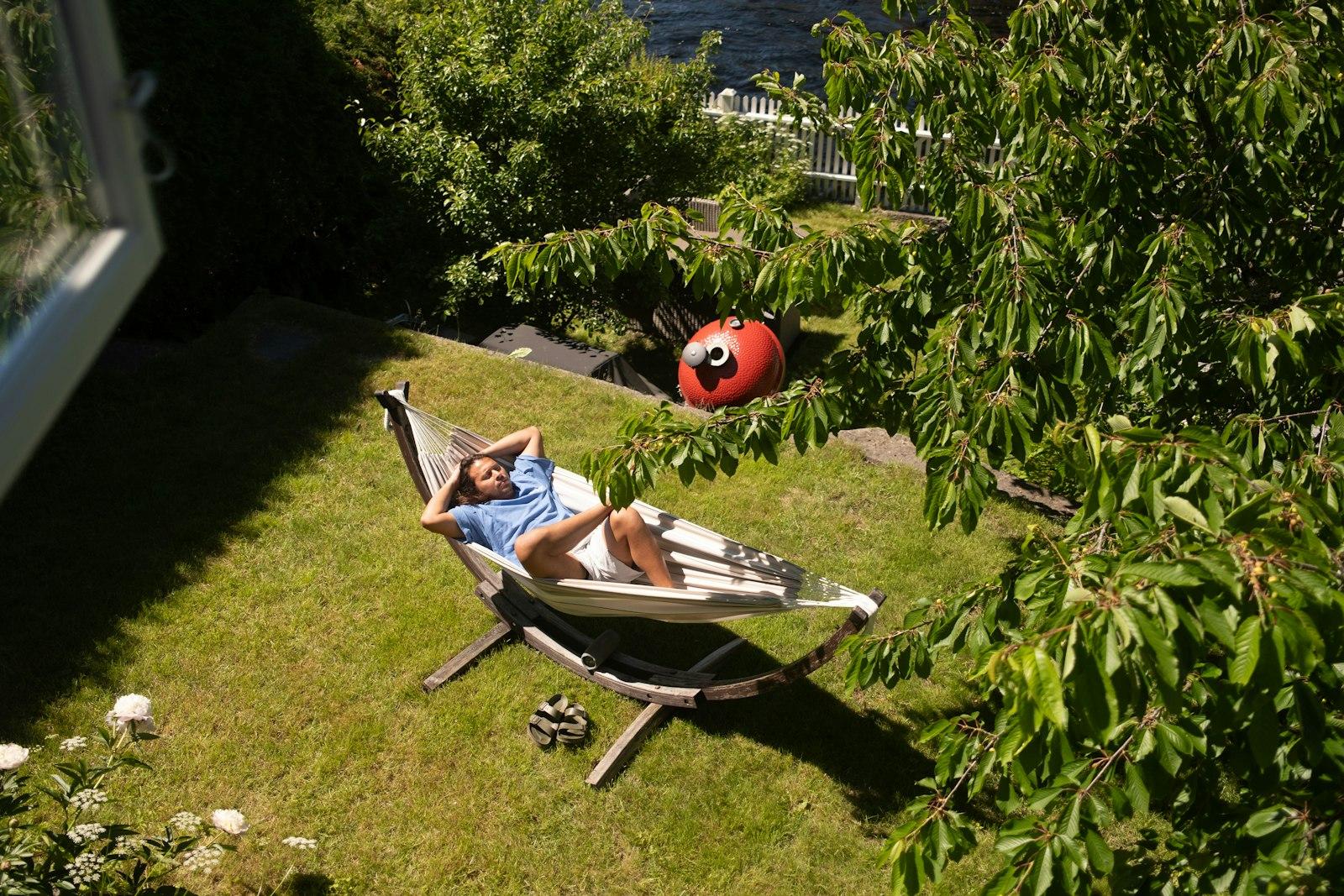
Think about where the stand lives between uses. A stand that stays up all summer on the lawn can be heavy and simple. A stand that goes into the garage every Sunday night needs tool-free assembly and parts light enough to carry one at a time. Be honest about which one you are, because a heavy stand you have to assemble with a wrench tends to stay in its box.
- Permanent backyard stand: heavy, stable, stays in one spot for the season.
- Breakdown steel stand: tool-free assembly, carry bag, moves between lawn and deck.
- Folding frame kits: a frame and hammock that fold into a case. The GO Hammock lists 20.9 lb and a 29.5 x 13.8 x 9.8 inch packed size, which makes it a car-trip option, not a backpacking one.
- Ultralight camping stands: rare and pricey. For camping, hanging without trees is often easier.
Caring for a stand so it lasts
A stand outlives several hammocks if you look after it:
- Check bolts and pins at the start of each season and after moving it.
- Touch up chips in powder coat before rust spreads. Scratches near the feet and joints go first.
- Store breakdown stands dry over winter, and keep the hardware in a labeled bag.
- Seal wood stands every year or two, and keep the feet off wet grass with pavers or a mat.
- Do not leave a hammock hanging on a stand in strong wind. It can act like a sail and tip the frame.
Best indoor hammock stand and hammock chair stands
Indoors, the footprint matters more than anything else. Measure the room, then subtract about 2 feet on each side for getting in and out.
- Rubber or capped feet protect hardwood and keep the stand from sliding when you swing.
- Tool-free assembly helps if the stand moves between rooms or goes into a closet between uses.
- A shorter stand suits Brazilian and spreader-bar hammocks in rooms that cannot fit a 15 foot frame.
- Folding frames suit rooms that do double duty, since they pack into a bag.
Hammock chairs need a different stand: one upright with a curved arm over the seat and a wide base or crossed legs underneath. Do not hang a chair from one end of a two-point hammock stand. The load is in the wrong place and the stand can tip.
For room layout ideas, see indoor hammock ideas.
What to check before you buy a hammock stand
- Capacity: at least your weight, plus a second person if you share
- Length range: fits your hammock's total length, ends included
- Hook height and positions: more positions means more ways to fine tune the sag
- Footprint: length and width against your deck or room
- Weight: can you move it alone
- Finish: powder coat and stainless or galvanized hardware if it lives outside
- Compatibility: the maker's list of hammocks that fit
Do you even need a stand? If you have two healthy trees or solid posts, maybe not. See do you need a hammock stand.
Next step
See every stand and stand kit we track in best hammocks with a stand, or line two up in Compare. Setting one up? Read how to set up a hammock stand. Handy with tools? Try building a wooden hammock stand.
Frequently asked questions
Why are hammock stands so expensive?+
A stand has to resist a person pulling both ends inward and down, so it needs thick steel or heavy wood. Heavy stands cost more to make and ship, and better ones add powder coating, stainless or galvanized hardware and more adjustment points. Wood arc stands also take more labor to build.
How long is a standard hammock stand?+
Most hammock stands are about 9 to 15 feet long. Shorter stands suit Brazilian and spreader-bar hammocks, while long gathered-end camping hammocks need longer, taller stands. Match the stand to the hammock's total length, including the ropes or straps at each end, rather than the bed length alone.
Can any hammock go on a stand?+
Most can, but not every hammock fits every stand. A stand that is too short pulls a long camping hammock tight, which is uncomfortable. Check the stand maker's compatibility list and the length range, and use straps or chains to adjust the fit when the stand allows it.
What is the best metal hammock stand?+
The best metal stand is one rated above your weight, long enough for your hammock and finished to resist rust if it lives outside. Look for powder coating, stainless or galvanized hardware and several hook positions. Our ranked list of hammocks with a stand uses published specs, not hands-on testing.

Find a hammock-friendly spot near you.