Nylon, Polyester, Cotton or Rope: The Best Hammock Material
Each fabric trades weight, comfort, weather resistance and care. Here is what hammocks are made of and which one fits how you use yours.
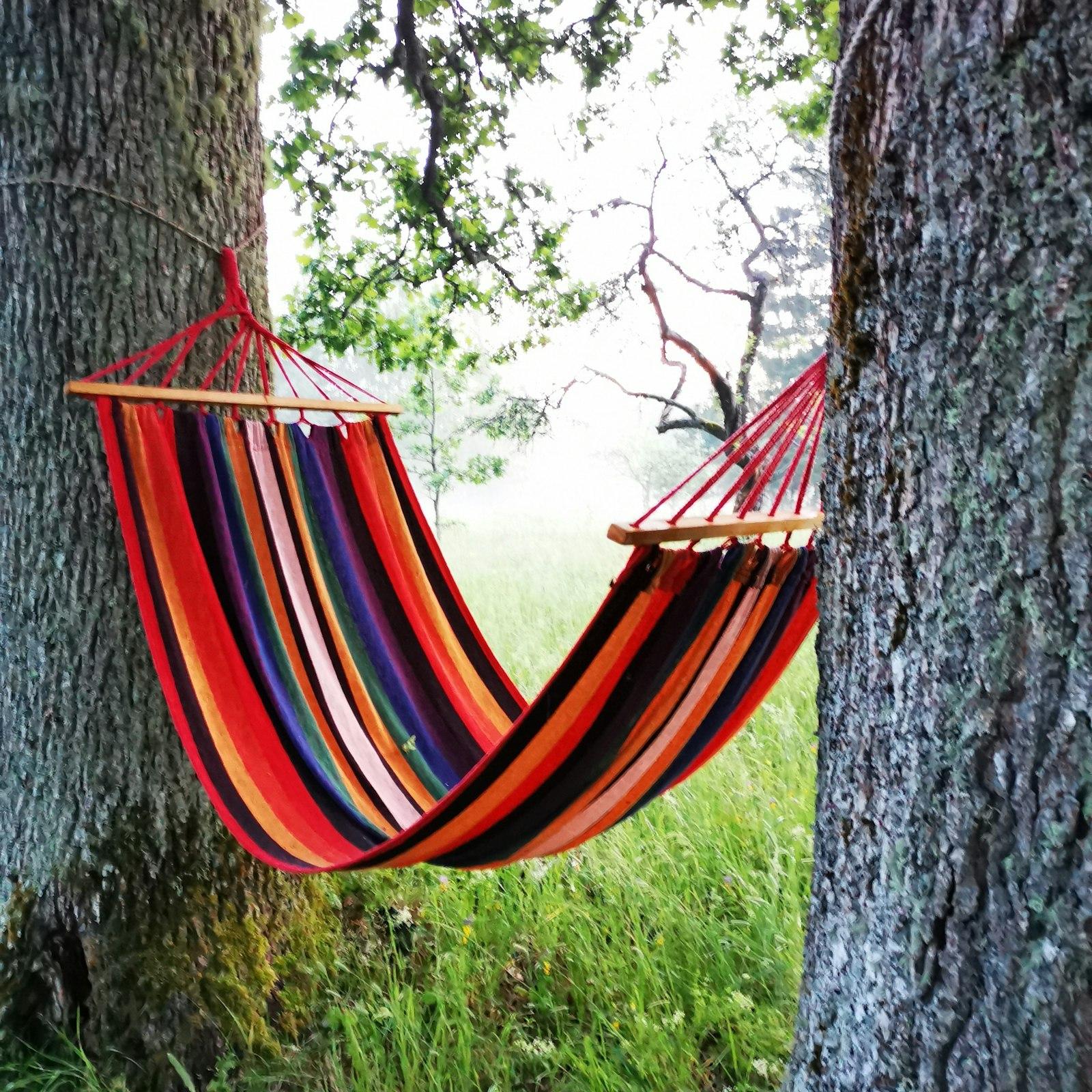
The best hammock material depends on how you use it. Nylon is best for camping and travel: light, strong and fast drying. Polyester stretches less and handles sun better, so it suits hammocks left outdoors. Cotton and cotton rope are the softest and coolest for lounging at home but absorb water. Solution-dyed acrylic is a durable option for hammocks that stay outside.
What are hammocks made of?
Most hammocks fall into a few groups:
- Nylon: parachute nylon and ripstop nylon, used in nearly all camping hammocks.
- Polyester: woven fabric or ripstop, used in some camping hammocks, many straps and outdoor backyard hammocks.
- Cotton: woven fabric hammocks, Brazilian styles and cotton rope hammocks.
- Rope: cotton or synthetic rope woven into an open net, often with spreader bars.
- Acrylic and other outdoor yarns: solution-dyed acrylic in some woven hammocks.
- Blends: poly-cotton fabrics that mix softness and durability.
Straps and suspension are a separate story: usually polyester or polyfilament webbing, plus cord such as the Silverlite used in ENO's ultralight gear.
Nylon hammocks
Nylon is the standard for camping, backpacking and travel hammocks. The ENO SingleNest and DoubleNest use 70D nylon. The Kammok Roo Double uses 40D diamond ripstop. The ENO SuperSub drops to 30D ripstop to hit 9.8 oz.
Are nylon hammocks good? For most uses, yes:
- High strength for the weight.
- Packs small and dries fast.
- Slight stretch adds give, which many people find comfortable.
- Easy to machine wash on gentle (check your maker's care label).
Downsides: nylon stretches more than polyester, especially when wet, so a hammock may sag more overnight. It also fades and weakens with long UV exposure, so it is not ideal left outside all season.
Polyester hammocks
Polyester behaves a lot like nylon with two differences: it stretches less and resists UV better. The Hennessy Expedition Zip uses a coated polyester ripstop, and the Kammok Python 10 straps use polyester webbing.
Choose polyester if you want a more consistent sag over the night, or if the hammock will spend a lot of time in the sun. It is also common in outdoor backyard hammocks for the same reason.
Cotton and rope hammocks
Cotton is the comfort pick for home use. It is soft, breathable and feels cool against skin, which is why classic backyard and Brazilian-style hammocks use it. The Vivere Double Cotton Hammock and the cotton rope Pawleys Island hammock are examples.
The trade-offs:
- Absorbs water and dries slowly.
- Prone to mildew and mold if left damp.
- Heavier and bulkier than synthetics.
- Loses strength faster outdoors.
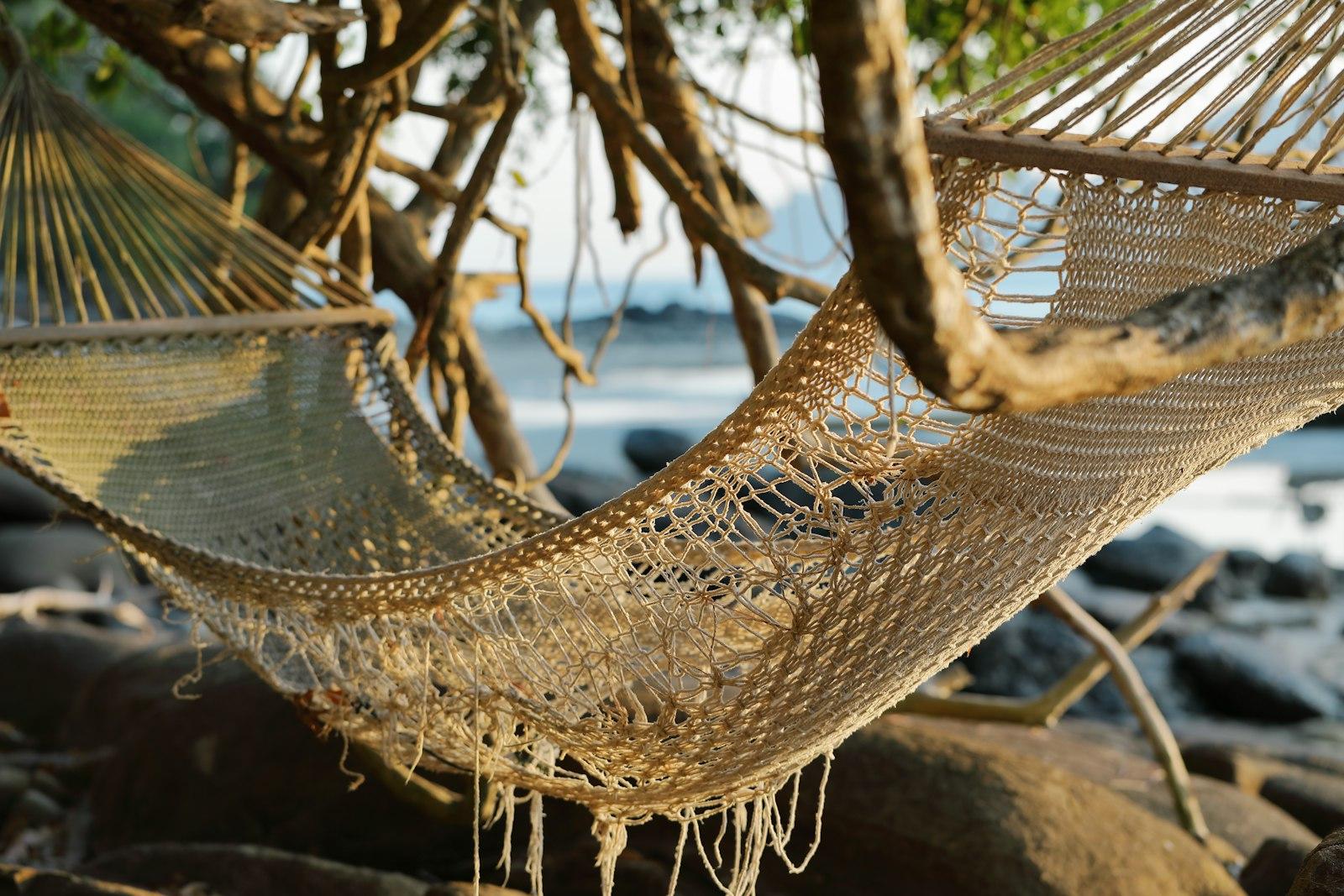
Rope hammocks add airflow, which helps in heat, but the open weave can catch buttons and leave patterns on bare skin. The rope vs fabric hammock post and Brazilian vs Mayan hammock post cover these styles in more depth.
Acrylic and blends
Solution-dyed acrylic is spun from fiber that is colored before it becomes yarn, so the color runs through each strand instead of sitting on the surface. Yellow Leaf uses it in hand-woven hammocks the maker says can stay outside.
Poly-cotton blends sit in between, mixing some of cotton's softness with polyester's durability. The LISS GO Hammock uses a poly-cotton bed on its freestanding frame.
Hammock materials compared
| Material | Weight | Comfort | Outdoor durability | Drying | Best use |
|---|---|---|---|---|---|
| Nylon | Light | Smooth, slight stretch | Fair, UV fades it | Fast | Camping, travel |
| Polyester | Light to medium | Smooth, less stretch | Good in sun | Fast | Outdoor, camping, straps |
| Cotton fabric | Heavy | Soft, breathable | Poor if left wet | Slow | Home, porch, indoors |
| Cotton rope | Heavy | Airy, can press into skin | Fair with care | Slow | Backyard with spreader bars |
| Acrylic | Medium | Soft, woven | Good | Medium | Backyard left outside |
| Poly-cotton | Medium | Soft | Fair to good | Medium | Backyard and stands |
What the D number means
You will see figures like 30D, 40D and 70D on nylon hammocks. D stands for denier, a measure of yarn thickness by weight (grams per 9,000 meters of yarn). Higher denier means thicker yarn.
As a rough guide:
- 20D to 30D: ultralight, often with lower capacity.
- 40D: common middle ground for camping.
- 70D: heavier, more abrasion resistant, common in everyday camping hammocks.
Denier is not the only factor. Weave, coatings and construction all matter, so compare the listed capacity too. Ripstop fabrics weave in a grid of thicker threads that stop small tears from spreading, which is why a light 30D or 40D ripstop can still carry a full-size adult.
Best hammock material for outdoors
For a hammock that lives outside, choose polyester, solution-dyed acrylic or another outdoor-rated yarn, and bring it in during long wet or snowy periods. For camping, nylon or polyester both work, and nylon is the more common choice. Avoid leaving cotton outside for days at a time.
Care by material
How you look after a hammock depends on what it is made of:
- Nylon and polyester: rinse off sand and salt, wash gently with mild soap when dirty, and air dry. Store dry and out of direct sun.
- Cotton fabric: dry it fully before packing away. A damp cotton hammock folded in a bag is how mildew starts.
- Cotton rope: hang it to dry in the open after rain, and bring it in for winter. Check for fraying where the rope meets the bars.
- Acrylic and outdoor yarns: these tolerate weather better, but a covered spot or indoor storage in the off-season still adds years.
- All materials: follow the maker's care label. Some hammocks are machine washable on gentle, others are hand wash only.
Our posts on whether you can leave a hammock outside and whether hammocks are waterproof cover weather care.
Which material should you buy?
Match the material to the place it will hang most:
- Backpacking or travel: nylon, 30D to 70D depending on how much weight you want to save.
- Car camping and parks: 70D nylon or polyester for durability.
- Backyard, left out all season: solution-dyed acrylic or polyester.
- Porch or indoors: cotton or cotton rope for softness and airflow.
- Freestanding stand you move around: a poly-cotton or polyester bed is a reasonable middle ground.
Next step
Compare materials and specs across models with the gear compare tool, or browse the best backyard hammocks and best camping hammocks.
Frequently asked questions
What is the best hammock material?+
It depends on the use. Nylon is the best all-round choice for camping and travel because it is light, strong and dries fast. Polyester and solution-dyed acrylic hold up better in sun for hammocks left outside. Cotton and cotton rope are the softest and coolest for lounging at home but need to stay dry.
Are nylon hammocks good?+
Yes. Nylon is strong for its weight, packs small, dries quickly and is used in most camping hammocks. Its downsides are some stretch, which can add sag overnight, and fading with long UV exposure. Store it out of the sun when you are not using it and it will last for years of trips.
What is the best hammock material for outdoors?+
For a hammock that stays outside, polyester or solution-dyed acrylic are the best picks because they resist sun and moisture better than cotton or nylon. Even these last longer if you bring them in during long rainy or snowy spells. Cotton should not live outside, since it absorbs water and can mildew.
Is a cotton or nylon hammock better?+
Nylon is better for camping, travel and wet conditions because it is lighter and dries fast. Cotton is better for comfort at home: softer, more breathable and cooler on hot days. Cotton is heavier, absorbs water and can mildew, so keep it under cover. Pick by where the hammock will spend most of its time.
Find a hammock-friendly spot near you.