Do You Need a Hammock Stand? Hammock With Stand vs Without
Trees, posts or a frame. How to tell if a stand is worth the money and space, and which hammocks work best without one.
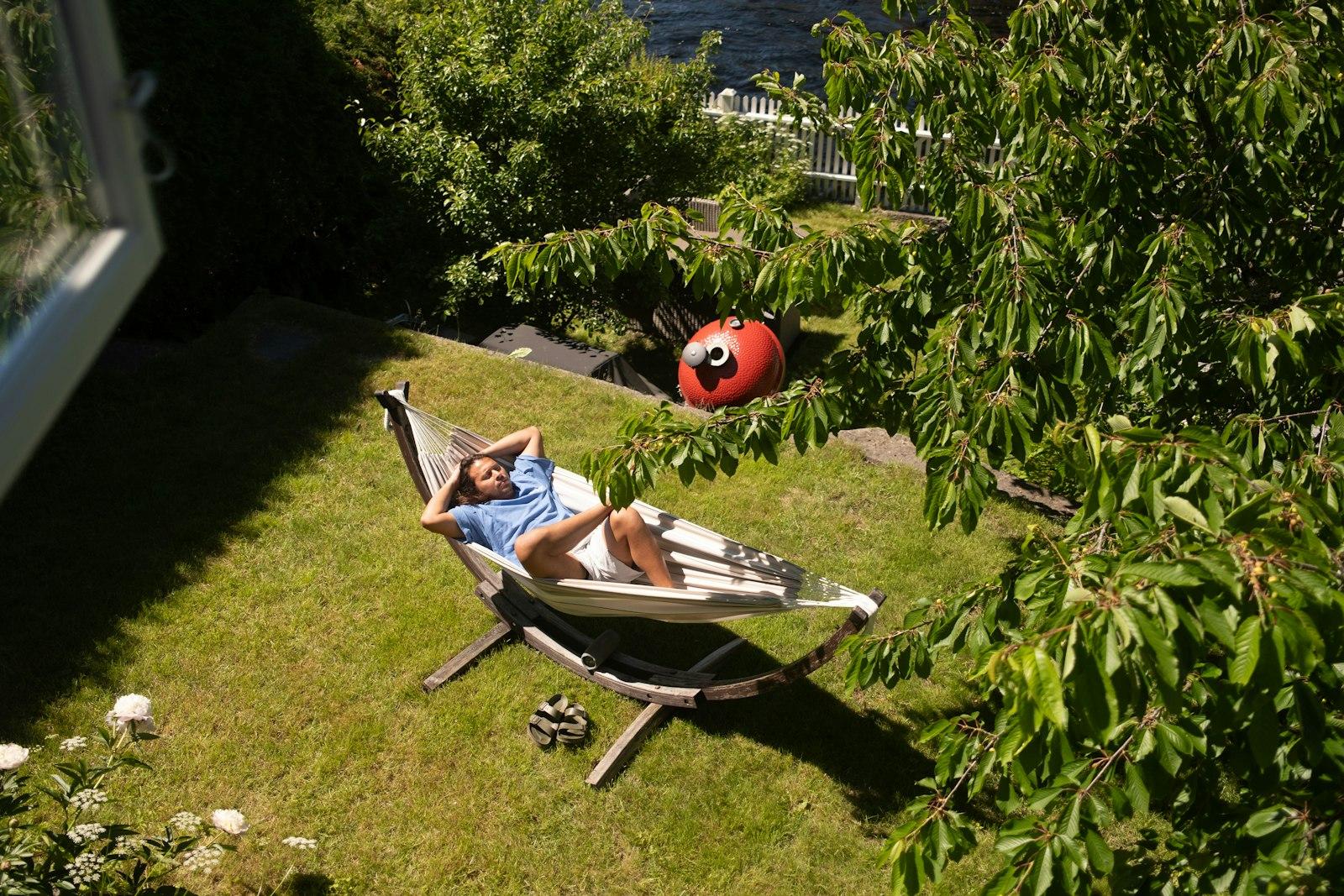
You need a hammock stand only if you do not have two solid anchors, such as healthy trees or sturdy posts, about 12 to 15 feet apart. With good anchors, a hammock with wide straps is cheaper, lighter and more flexible. A stand makes sense on patios, balconies, beaches, rentals and indoors, or anywhere you cannot attach to trees or walls.
What is a hammock stand?
A hammock stand is a freestanding frame that holds a hammock off the ground with no trees or posts. The common designs:
- Steel three-beam stands: a long base with two angled arms. Tool-free, common for backyards.
- Wooden arc stands: a curved wood frame, heavier and decorative.
- Portable camping stands: collapsible frames meant to be moved, though not light.
- Folding all-in-one kits: a frame, hammock bed and carry case sold together.
Every stand lists two numbers that matter: a weight capacity and a hammock length range. Ignore the photos until you have checked both.
Also check the footprint and the height. A stand that fits the hammock can still be too long for your patio, and a low stand can leave a deep-sagging hammock sitting on the ground. Most listings give the assembled length, width and height. Write them down and measure your space with a tape before you order.
Hammock with stand vs without: side by side
| With straps (no stand) | With a stand | |
|---|---|---|
| Needs | Two anchors 12 to 15 ft apart | Flat ground, enough length |
| Cost | Straps from about $30 | About $110 to $400 for the stands in our data |
| Weight | Straps 4 to 9 oz | About 21 lb to 60 lb |
| Portability | Fits in a pocket | Car and carry |
| Placement | Wherever anchors are | Anywhere flat |
| Shade | Trees give shade | Often in the sun unless you plan it |
| Hammock fit | Any gathered-end hammock | Must match the stand's length range |
Prices and weights come from our gear specs. ENO Atlas straps list $29.95 and 9 oz, and ENO Helios straps list 4.3 oz. The Vivere Universal Steel Stand lists $109.99. The ENO SoloPod lists $399.95 at 60 lb. The LISS GO Hammock, a folding frame and bed sold together, lists 20.9 lb.
When you do not need a stand
Skip the stand if you have:
- Two healthy trees at least 6 inches across and 12 to 15 feet apart. You can stretch that to 10 to 20 feet with strap length and height. See trees too far apart or too close.
- Sturdy posts or a pergola with beams that can take the sideways pull. See how to hang a hammock between posts.
- A camping trip in forests, where trees are free and stands are dead weight.
Use straps at least 1 inch wide. They protect bark and many parks require them. The best tree straps page lists options. Our hanging guide shows how to set the 30 degree angle and an 18 inch sit height once the straps are up.
When a stand is worth it
A stand earns its price and space when:
- Your yard has no trees, or the trees are in the wrong place.
- You rent and cannot drill posts or hooks.
- You want the hammock on a patio, deck, balcony or indoors.
- You want to move it with the shade through the day.
- You hang at beaches or campsites where trees are banned or missing. Check local rules with Can I Hang Here.
There is also a quieter reason: setup time. With trees, you adjust straps every time. On a stand, the hammock clips on at the same height and tension every time, which matters if the hammock comes down and goes back up often.
Indoors, protect the floor. Put a rug or felt pads under the stand's feet so steel does not scratch wood or tile. Outdoors on grass, the feet can sink after rain, so check that the stand is still level before you climb in. On sand, a heavy stand can settle at one end. Flat boards under the feet spread the load.
Best hammock without a stand
For hanging from trees or posts, a gathered-end nylon hammock with straps included is the simplest buy:
- Wise Owl DoubleOwl: $39.95, 500 lb listed capacity, 9 ft straps included.
- Grand Trunk Double Deluxe: $49.99, 126 in long, 400 lb, straps included (5 ft, shorter than most premium straps).
- ENO DoubleNest: $74.95, 19 oz, 400 lb, straps sold separately.
For a porch with posts, a rope or woven backyard hammock works without a stand too, as long as the span fits its length. Browse the best backyard hammocks.
Best hammock with a stand
If a stand is the answer, match the stand to the hammock first.
- Spreader bar hammocks need a stand built for their length. A rope hammock 13 ft overall needs a long stand.
- Gathered-end hammocks can hang on many stands, but short stands can over-tension long camping hammocks. Our specs flag this on the Vivere Universal stand, which lists 450 lb capacity and 114 in length.
- Combo kits remove the guesswork. The Vivere Double Cotton Hammock with Stand lists $129.99 and 450 lb. The LISS GO Hammock lists 310 lb capacity at $239 and folds into a carry case. The ENO SoloPod lists 400 lb and works with most ENO hammocks, but not the Sky-series or SuperNest.
The best hammocks with a stand page ranks the options. Before buying, read how to choose a hammock stand.
Stand mistakes to avoid
- Ignoring the footprint. A steel stand can be 9 to 10 feet long. Measure your patio, including room to walk around it.
- Mismatched lengths. A hammock too long sags to the ground. Too short and it hangs drum-tight.
- Uneven ground. Set the stand on level ground so it does not rock.
- Leaving it out all winter. Powder coat helps, but rust starts at chips and joints. Check the maker's care notes.
- Overloading it. Use the lower of the hammock's and the stand's weight ratings.
Setup steps are in how to set up a hammock stand.
One last check after setup: sit in the hammock and look at the stand from the side. The arms should not flex much, the base should sit flat and the hammock should clear the base by several inches with you in it. If your weight pushes the bed onto the crossbar, shorten the chains or hooks.
Next step
Walk your yard with a tape measure. If you find two good anchors 12 to 15 feet apart, buy straps and follow the hanging guide. If not, read how to hang a hammock without trees and pick a stand.
Frequently asked questions
Do you need a stand for a hammock?+
Only if you lack two solid anchors. Healthy trees at least 6 inches across or sturdy posts about 12 to 15 feet apart work with straps, which are cheaper and lighter than a stand. A stand makes sense on patios, balconies, beaches, rentals and indoors, where you cannot attach to trees or walls.
What is a hammock stand?+
A hammock stand is a freestanding frame that holds a hammock off the ground without trees or posts. Common types are steel three-beam stands, curved wooden arc stands, portable camping stands and folding kits that include the frame, hammock bed and carry case. Each lists a weight capacity and a hammock length range.
What is the best hammock without a stand?+
A gathered-end nylon hammock with wide straps included is the simplest choice for hanging from trees or posts. Examples in our gear database include the Wise Owl DoubleOwl with 9 ft straps and the Grand Trunk Double Deluxe with 5 ft straps. Choose a length of 10 to 11 feet for lying flatter.
Can any hammock go on a stand?+
No. The hammock's end-to-end length has to fit the stand's listed range. Spreader bar hammocks need a stand built for their length, and short stands can over-tension long gathered-end camping hammocks. Check both weight ratings and use the lower one as your limit.

Find a hammock-friendly spot near you.