How Are Hammocks Made? From Hand-Woven to Parachute Nylon
Four ways to make a hammock, what each material does well, and how to spot a well-made one before you buy.

Hammocks are made in four main ways. Mayan hammocks are hand woven from thread on a wooden frame. Brazilian and Colombian hammocks are woven as fabric on looms. Rope hammocks are woven from rope and held open by wooden spreader bars. Camping hammocks, often called parachute hammocks, are sewn from lightweight nylon fabric with gathered ends.
What is a hammock made of?
The material decides how a hammock feels, how it handles weather and how long it lasts. These are the common ones:
| Material | Found in | Strengths | Watch out for |
|---|---|---|---|
| Cotton thread or fabric | Mayan, Brazilian, Colombian, rope | Soft, breathable, quiet | Holds water, can mildew and fade |
| Nylon thread | Mayan, chinchorro | Strong, dries fast | Can feel slick, stretches |
| Nylon fabric (30D to 70D) | Camping and travel hammocks | Light, packs small, dries fast | Thin fabric is less abrasion resistant |
| Polyester or acrylic yarn | Some woven and outdoor hammocks | Holds color in sun, low stretch | Can be warm and heavier |
| Natural plant fiber | Traditional pieces (sisal, henequen, moriche palm) | Local, traditional | Rarely sold for daily outdoor use |
| Rope (cotton or synthetic) | Spreader-bar hammocks | Open, airy, classic look | Tippy, cotton must come in for winter |
Some examples from our gear database: the ENO DoubleNest uses 70D nylon, the Kammok Roo Double uses 40D ripstop nylon, and the ENO SuperSub drops to 30D ripstop to save weight. The Yellow Leaf Signature Classic Double is hand woven from solution-dyed acrylic yarn, and the Pawleys Island Original uses 3-ply cotton rope. For a full comparison, read best hammock material.
How is a Mayan hammock woven?
A Mayan hammock is built from long lengths of cotton or nylon thread. The weaver works on a wooden frame, running the thread between the ends again and again and building the mesh by hand, row by row. México Desconocido describes weavers in Tixkokob working on a wooden frame with a wooden or bone needle, and notes that finer thread and a tighter weave take longer.
When the bed is done, the weaver gathers the long end strings at each end and binds them into a loop for hanging. Because the bed is one connected web, a good one spreads your weight across hundreds of strings.
Materials changed over time: tree bark and sisal first, then henequen mixed with cotton during the henequen boom, and nylon thread today.
How are fabric hammocks made?
Brazilian and Colombian hammocks are woven as cloth, not as mesh. The result is a solid bed that feels like a heavy sheet.
- Colombia. In San Jacinto, Bolívar, Radio Nacional de Colombia describes artisans weaving on a vertical loom, a square frame of two uprights and two crossbars, using hand-spun cotton yarn and natural dyes.
- Brazil. Many Brazilian hammocks come from textile towns in the Northeast. A UNESP thesis on Jaguaruana, Ceará describes a hammock industry built around weaving units and local spinning mills.
Once the cloth is woven, makers add the end cords that gather into hanging loops, and often a decorative fringe along each side. For how these compare with Mayan hammocks in daily use, see Brazilian vs Mayan hammock.
What is a parachute hammock?
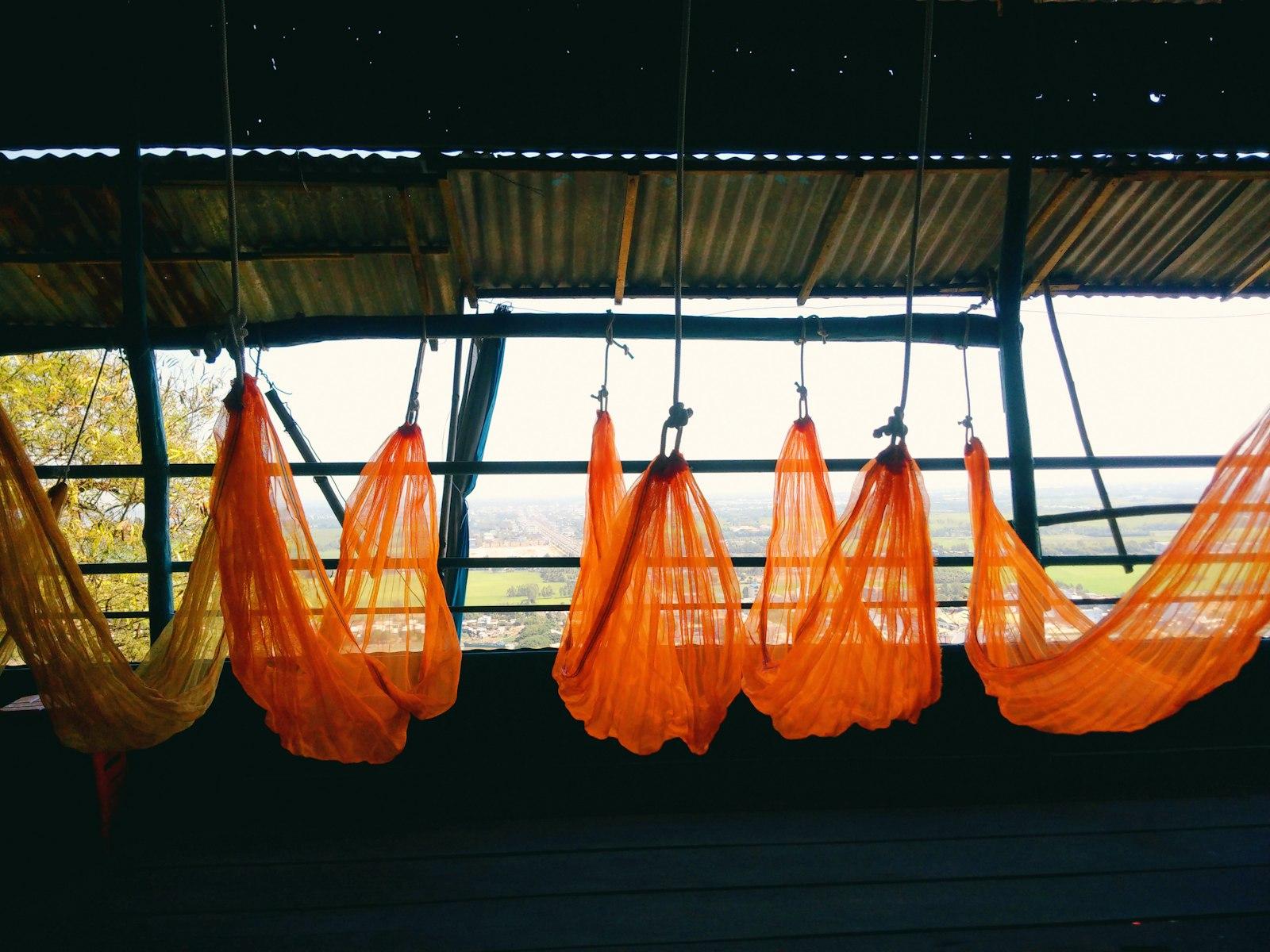
A parachute hammock is a camping or travel hammock made from lightweight nylon fabric similar to what parachutes use. It is cut as a single panel, the long edges are hemmed, and each end is folded into a channel and cinched with cord so it gathers tight. Then a loop, carabiner or toggle is attached for the suspension. Many makers also sew on an attached stuff sack, so the hammock packs into its own pocket and cannot get separated from it.
Two numbers often appear on the label:
- D (denier) is the thickness of the thread. Lower numbers are thinner and lighter. In our database, 30D fabric shows up on ultralight hammocks and 70D on everyday models.
- T is a thread count, used on budget hammocks like the Wise Owl DoubleOwl and Grand Trunk Double Deluxe, which both list 210T parachute nylon.
Ripstop fabric adds a grid of thicker threads so a small hole does not spread. That matters more as fabric gets thinner. Parachute hammocks are the easiest kind to make at home too; see how to make a hammock.
How are rope hammocks made?
Rope hammocks are woven from rope into an open diamond pattern, then fixed to wooden spreader bars at each end. The bars keep the bed flat and wide. Metal rings and lengths of chain or rope connect the bars to the hanging points.
The Pawleys Island Original is a classic example: 3-ply cotton rope, varnished oak spreader bars, a 13 foot overall length and a 450 lb listed capacity, hand woven in the USA. Cotton rope is soft and looks great, but it should come inside for winter or long wet spells.
Handmade vs factory made: what changes
Most hammocks sold today fall into two groups, and both can be good.
Handmade hammocks are woven by a person at a frame or loom. They take time: Yellow Leaf, for example, lists 6 to 7 days of hand weaving for its Signature Classic Double. You pay for that time, and in return you get a softer, more textured hammock with small variations from piece to piece.
Factory-made hammocks are cut and sewn from rolls of fabric. That keeps prices low and specs consistent, which matters when you want a known weight rating, a known packed size and parts that fit a whole system of straps, nets and tarps.
A simple way to decide:
- For lounging at home, a handmade woven hammock is comfortable and lasts if you keep it dry.
- For camping and travel, a sewn nylon hammock is lighter, dries faster and packs smaller.
- For both, some people own one of each.
How to spot a well-made hammock
Whatever the style, these checks catch most problems before you buy:
- Read the weight rating and stay well under it.
- Check the ends. Gathered ends should be tightly whipped or sewn. Woven ends should be evenly bound with no loose strands.
- Look at the stitching. On nylon hammocks, look for straight, tight seams with no skipped stitches.
- Inspect the weave. Mesh should be even with no thin spots. Fabric should have no slubs or runs.
- Check the hardware. Carabiners should be rated for climbing or hammock loads, not keychain clips.
- Ask about care. Some hammocks can be machine washed, others cannot. Check the label before the first wash.
Materials and build quality also decide lifespan, which we cover in how long do hammocks last.
Next step: compare materials, weights and capacities across real models in our gear comparison tool.
Frequently asked questions
How are hammocks made?+
There are four main methods. Mayan hammocks are hand woven from thread on a wooden frame. Brazilian and Colombian hammocks are woven as cloth on looms. Rope hammocks are woven from rope and fixed to wooden spreader bars. Camping hammocks are sewn from lightweight nylon fabric with gathered, cinched ends.
What is a hammock made of?+
Most hammocks are made of cotton, nylon or polyester. Cotton is soft and breathable but holds water. Nylon is light, strong and quick-drying, which is why camping hammocks use it. Polyester and acrylic yarns hold their color in sun. Traditional hammocks have also used sisal, henequen and moriche palm fiber.
What is a parachute hammock?+
A parachute hammock is a lightweight camping or travel hammock made from nylon fabric similar to parachute material. It is a single panel with hemmed edges and gathered ends, packs into a small sack and dries quickly. Labels often list denier, the thread thickness, or a T number, a thread count.
How is a Mayan hammock woven?+
A weaver works on a wooden frame, running cotton or nylon thread between the ends and building the mesh by hand with a wooden or bone needle. When the bed is finished, the long end strings are gathered and bound into hanging loops. Finer thread and tighter weaves take longer.


Find a hammock-friendly spot near you.