How Long Do Hammocks Last?
Why there is no single number, what actually wears a hammock out, and a checklist for when to retire a hammock or its straps.
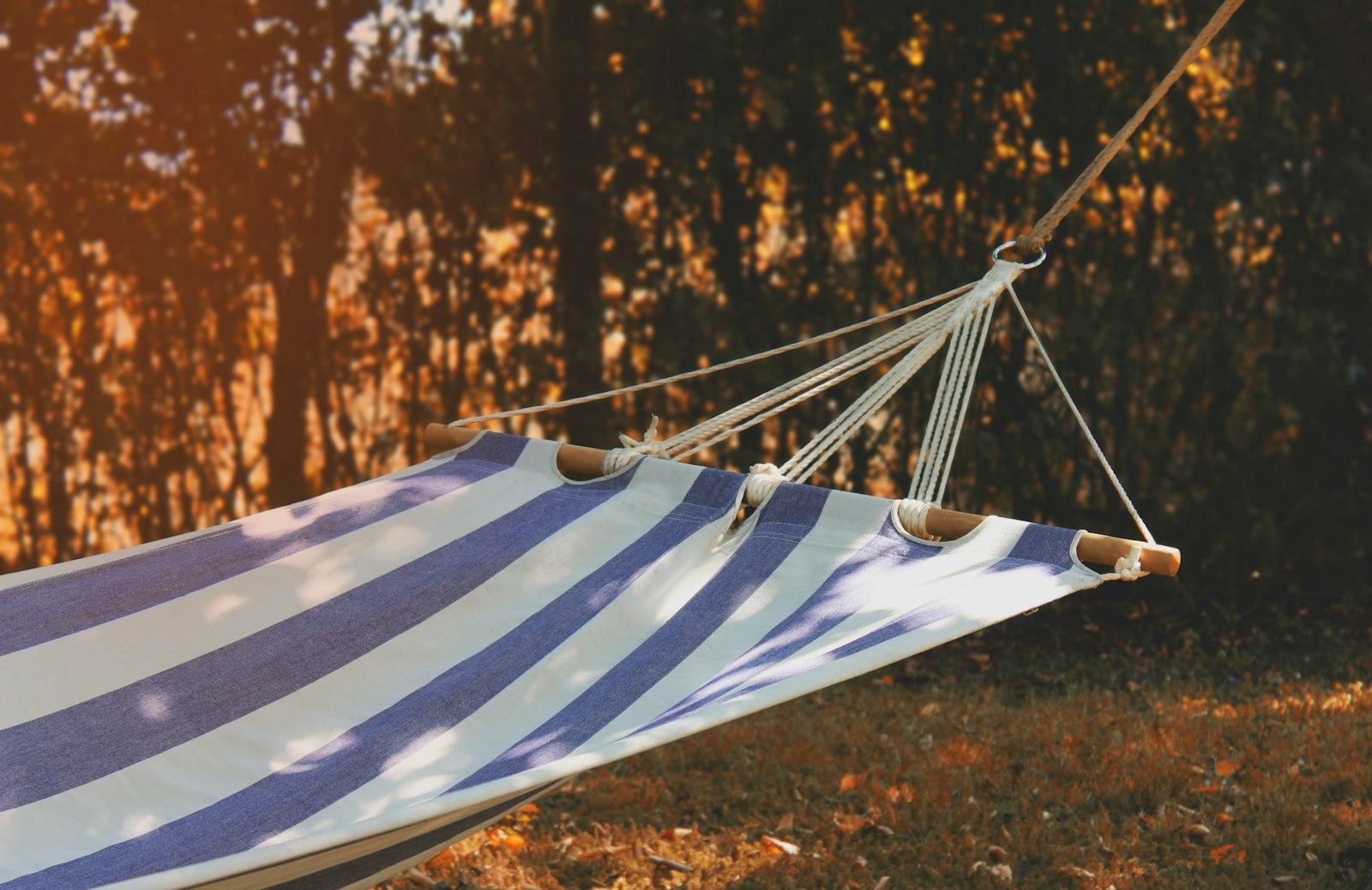
How long a hammock lasts depends far more on how it is used and stored than on its age. A nylon camping hammock that is dried, kept out of the sun and inspected can last many seasons. A cotton hammock left outside year round can be done in one. There is no official lifespan, so judge by condition: fading, fraying, thin spots and worn ends.
Why there is no single answer
Search for a hammock lifespan and you will see numbers everywhere. Most of them are guesses. Makers rarely publish a lifespan, because the answer depends on things they cannot control.
What matters:
- Material. Synthetic fabrics resist rot. Cotton feeds mildew. Solution-dyed acrylic is made for outdoor use.
- Sun. UV slowly weakens nylon and polyester. A hammock hung in shade ages slower than one in full sun.
- Water. Repeated soaking and slow drying grows mildew, which damages cotton.
- Load. A hammock rated for 400 lb used near that limit every day wears faster than one used by a single light sleeper. See hammock weight limits.
- Abrasion. Bark, sand, zippers and pets wear threads.
- Care. Washing, drying and proper storage add years.
How long different hammocks tend to last
Rather than invented year counts, here is how each type usually ages and what to watch.
| Type | What wears out first | Lasts longer if |
|---|---|---|
| Parachute nylon camping hammock | Fading, thin spots, worn end channels | Stored dry and kept out of constant sun |
| Cotton fabric hammock | Mildew, fading, rot near the ends | Brought in during wet weather and winter |
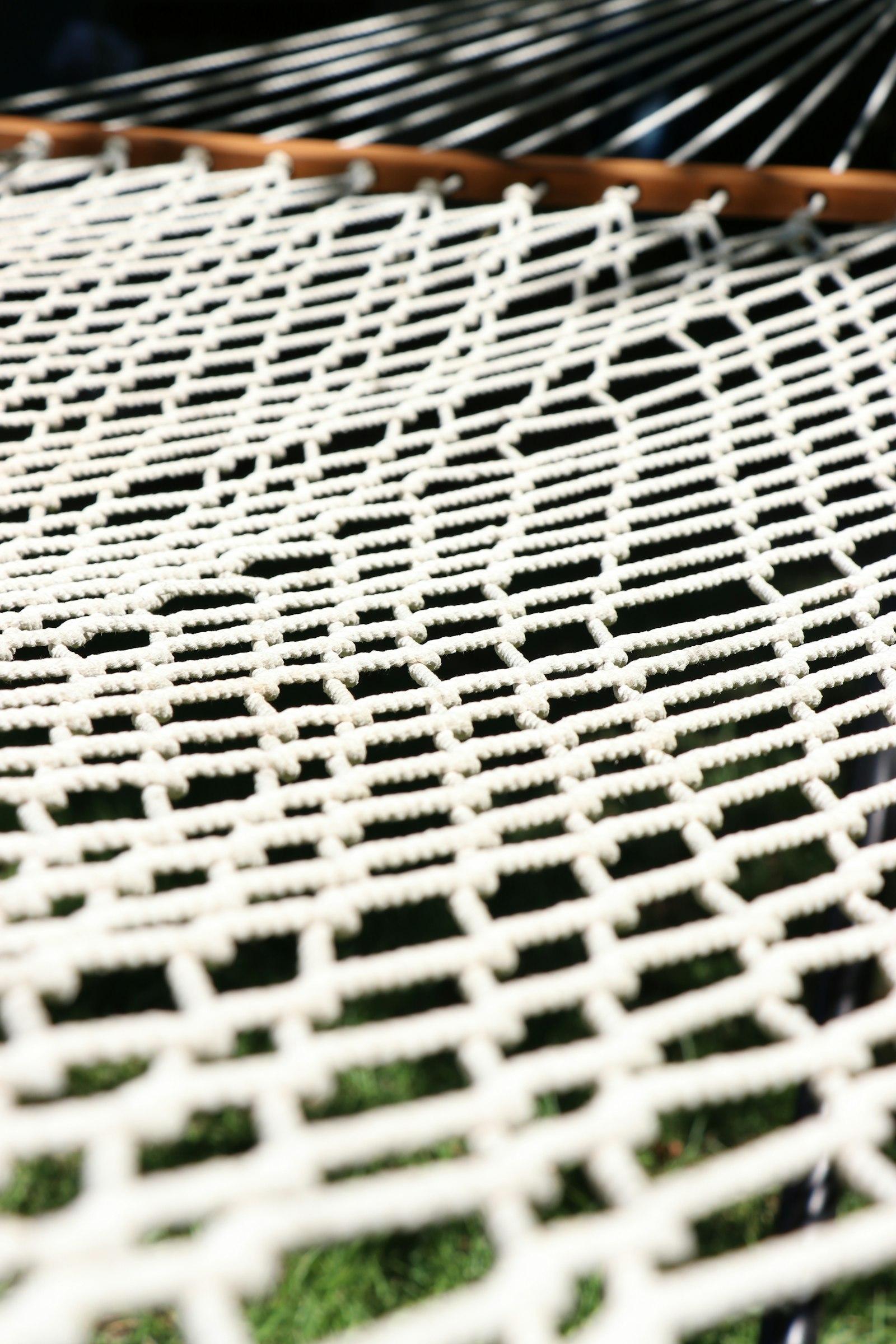
| Cotton rope hammock | Strings fray and snap, mildew in knots | Washed, dried and stored indoors in winter |
| Synthetic or treated rope hammock | UV fading, frayed strings | Stored out of sun in the off season |
| Woven acrylic hammock | End strings and loops | Kept away from chewing pets and sharp edges |
| Tree straps | Fading, fuzzing, stiff webbing | Coiled dry and out of the sun |
Treat every hammock as consumable. Even a well made one is not meant to last forever. Stands usually outlast the fabric they hold, and a good steel stand can carry several replacement hammocks over its life. Many stand makers sell replacement hammocks, hooks and bolts that fit their frames.
Signs your hammock needs replacing
Inspect it at the start of each season and before any trip. Retire it, or at least stop trusting it with your weight, if you see:
- Tears or holes larger than a fingertip, or any tear near the ends.
- Thin, shiny or brittle fabric, often in the area where you sit.
- Heavy fading. Color loss means long sun exposure, and the fibers may have weakened with it.
- Frayed or broken stitching at the gathered ends or the whipping.
- Snapped rope strings, especially more than a few, or strings that break when you pull by hand.
- Mold or mildew that will not wash out, or fabric that feels weak near stains.
- Rust or bent hardware. Carabiners, rings and S hooks should be smooth and straight.
Small holes away from the ends can often be patched. See how to repair a hammock.
When to replace hammock straps
Straps carry the most load and get the most abuse: bark, grit, sun and the occasional campfire spark. Replace them when you see:
- Fuzzing or cut threads along the edges.
- Stiff, faded or chalky webbing.
- Cuts or abrasion at the loops you use most.
- Damage to any stitched loop, even small.
- Melting or glazing from heat.
- Heavy staining from chemicals or fuel.
Straps are cheap compared to an injury. A pair like the ENO Atlas or Kammok Python 10 is a much smaller cost than a fall. Compare options on the best tree straps.
Also replace any knot-based suspension, whoopie slings or ridgelines that look worn. Thin cord fails with less warning than webbing.
A seasonal inspection checklist
Run through this at the start of each season, before a big trip, and after any hard use. It takes five minutes.
- Smell it. Musty means moisture got in. Wash and dry it before anything else.
- Look at it in daylight. Spread the hammock open and look for holes, thin spots and faded patches, front and back.
- Check the ends. Pull hard by hand on the end loops, the whipping and the channel stitching. These carry the most load.
- Run your hands along the straps. Feel for fuzz, cuts and stiff spots. Check every stitched loop.
- Check the cords. Whoopie slings, ridgelines and continuous loops should be smooth, not glazed or flattened.
- Check the metal. Carabiners should snap shut cleanly. Hooks and chains should be straight and free of heavy rust.
- Check the stand. Bolts tight, no cracks at welds, no rust eating through the tubes.
- Test sit low. Hang it with your seat about 18 inches off the ground and sit down slowly before you trust it fully.
If anything fails the check, fix it or replace it before you use the hammock again.
How to make a hammock last longer
These habits add years to most hammocks:
- Hang it in shade when you can, and take it down when you are not using it for a while.
- Dry it fully before packing, every time. See can you put a hammock in the dryer for how.
- Wash it a few times a year, not after every hang.
- Store it indoors in a breathable bag for winter.
- Keep sharp objects out of pockets and keep pets' claws off it.
- Hang at a 30 degree angle. A banana-tight hang adds force to the ends and straps. The hang guide explains why.
Buying for longevity
Look at how the ends are built. Clean, tight stitching and solid whipping at the gathered ends matter more than the logo. On a rope hammock, check that the strings are even and the end loops are protected where they meet the ring. On a fabric hammock with spreader bars, look at how the fabric attaches to the bars, since that is where load concentrates.
If you want a hammock that lasts, look at material and construction before price. Thicker fabric (70D) usually handles abrasion better than ultralight 20D to 30D fabrics. For backyards, weather resistant materials save you from replacing a mildewed cotton hammock every few seasons.
Gear scores on this site are editorial estimates from published specs and review consensus, not long-term tests. Use Compare Gear to look at fabric, weight and capacity side by side.
Next step
Time for a new one? Start with how to choose your first hammock, then compare models on the scores page.
Frequently asked questions
How long should a hammock last?+
There is no fixed lifespan. A nylon camping hammock that is dried after use, stored indoors and kept out of constant sun can last many seasons. A cotton hammock left outside year round can mildew and weaken in one. Judge by condition: tears, thin spots, fading and worn ends mean it is time to replace it.
When should you replace hammock straps?+
Replace straps when the webbing is fuzzy, cut, stiff, faded or chalky, when stitched loops show any damage, or when you see melting or chemical stains. Straps carry the full load and take the most abuse from bark and sun, so inspect them before every trip and replace them at the first clear sign of wear.
Do hammocks wear out in the sun?+
Yes. UV light slowly weakens nylon and polyester and fades color. Fading is often the first visible sign that fabric has had long sun exposure. Hanging in shade, taking the hammock down between uses, and storing it indoors over winter all slow that wear. Solution-dyed acrylic hammocks are made to resist UV.
Can a hammock break while you're in it?+
It can if the fabric, stitching, rope or straps are worn, or if it is overloaded. Most failures start with visible damage at the ends or in the suspension. Inspect your hammock each season, stay under the rated weight limit, hang it low, and replace any part that shows tears, fraying or rust.
Find a hammock-friendly spot near you.