How to Set Up a Hammock Tarp (Shapes, Sizes and Pitches)
A tarp turns a hammock into a shelter. Here is how to pick the shape and size, then pitch it for sun, rain and wind.
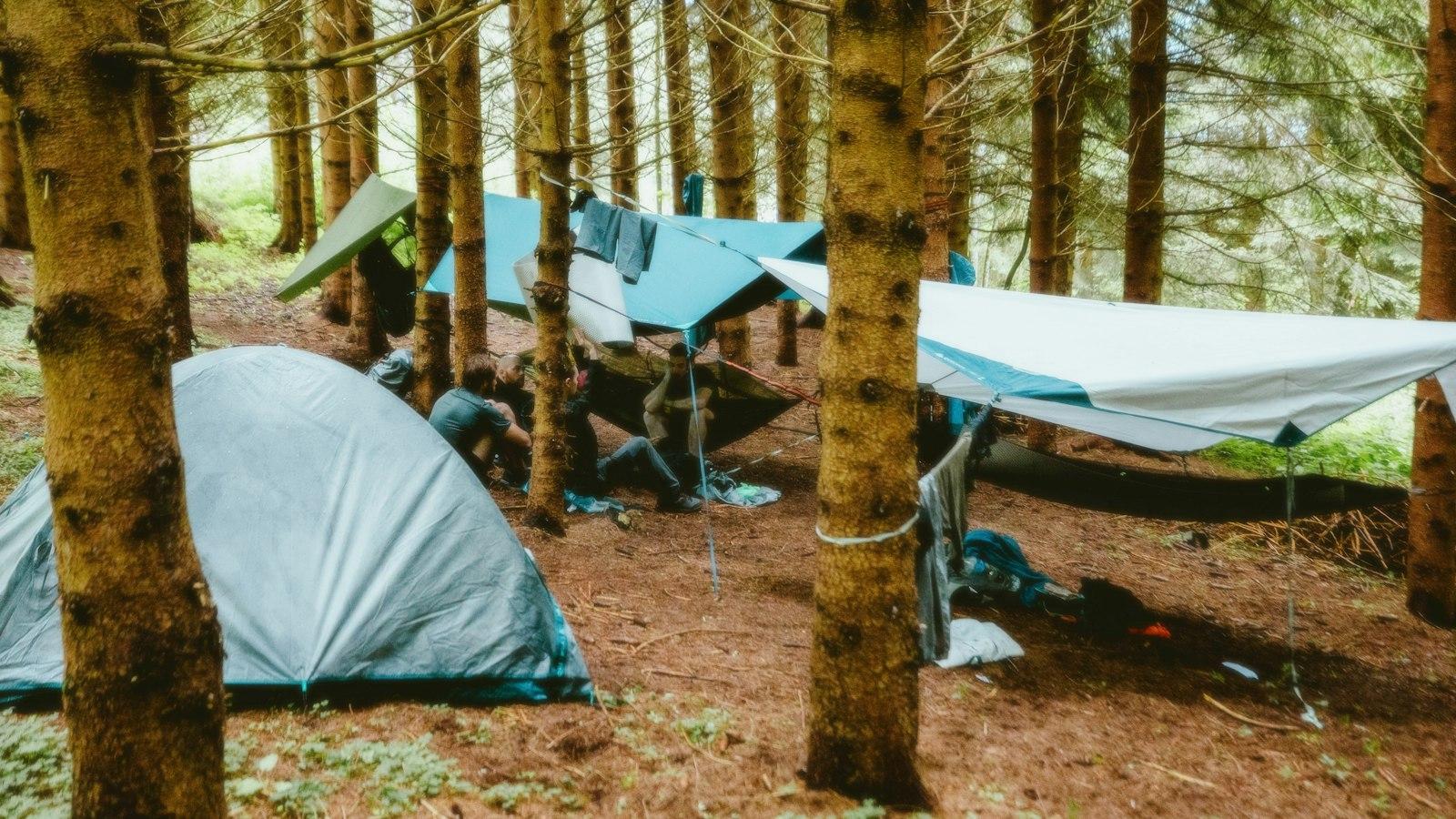
To set up a hammock tarp, hang your hammock first, then tie a ridgeline between the same trees about 1 to 2 feet above the hammock suspension. Drape the tarp over the ridgeline, center it so it overhangs both ends, then stake the sides out and down at roughly 45 degrees. Add a drip line on each suspension so rain does not run into the hammock.
What is a hammock tarp?
A hammock tarp, also called a rain fly, is a sheet of waterproof fabric pitched above the hammock. It keeps off rain, blocks wind and adds a bit of warmth by trapping air around you.
Unlike a tent fly, it is not attached to the hammock. It hangs from its own ridgeline between the same two trees, so you can adjust it without touching your hang. Our hammock camping guide covers where it fits in a full setup.
Hammock tarp shapes
The shape decides coverage and weight. Four are common:
| Shape | Coverage | Weight | Best for |
|---|---|---|---|
| Asymmetric | Minimal, follows a diagonal lay | Lightest | Fair weather, ultralight |
| Hex (or cat-cut) | Good, with angled ends | Light | Three-season all-rounder |
| Rectangle or square | Generous, flexible pitches | Medium | Rain, many pitch options |
| Winter (with doors) | Full enclosure with closable ends | Heaviest | Cold, wind, snow |
Two examples from our gear data: the ENO ProFly Rain Tarp is a hex-style tarp at 10 ft 6 in by 6 ft 4 in. The Kammok Kuhli is a larger 12 by 9 ft tarp with 10 guy-out points.
What size hammock tarp do you need?
Start with ridgeline length. The tarp should extend past each end of the hammock by about 6 inches to 1 foot, so a 10 to 11 foot hammock usually wants a 11 to 12 foot tarp ridgeline.
Width decides side coverage:
- About 6 to 8 feet wide: fine for light rain and fair weather.
- About 9 to 10 feet wide: covers you in driving rain and allows a porch pitch.
- Doors or wide ends: worth it for winter and windy exposed sites.
Longer, wider tarps weigh more but give more room to cook, change and store gear under cover.
Tarp fabric and coatings
Tarp fabrics trade weight against durability and price:
- PU-coated nylon or polyester. Common on mid-priced tarps. The ENO ProFly uses 70D ripstop nylon with a 1000mm PU coating. Heavier denier holds up to abrasion and branches.
- Silicone-coated (silnylon and silpoly). Lighter and slippery, popular for backpacking. Silnylon stretches when wet and may need retensioning in the night. Silpoly stretches less.
- Hybrid coatings. Some tarps combine silicone and PU, like the Kammok Kuhli's 15D ripstop with Sil/PU and DWR, which keeps the tarp alone at 16.5 oz.
- Dyneema composite. Very light and does not stretch, at a high price.
Whatever the fabric, seams are a leak point. Check whether the ridgeline seam is taped or sealed, and seal it yourself if not.
Stakes and guylines
Carry at least four to six stakes, plus spares if the ground is rocky or loose. Reflective guyline makes the lines easier to see at night, so you trip over them less. Tensioners or simple knots such as a taut-line hitch let you tighten lines without retying. In sand or snow, wider stakes or buried "deadman" anchors (a stick or stuff sack buried sideways) hold better.
How to set up a hammock tarp step by step
- Hang the hammock first. Get the sag and height right, then plan the tarp around it.
- Run a ridgeline. Tie a cord between the trees about 1 to 2 feet above where your hammock suspension meets each tree. Some tarps have a built-in ridgeline, others use a continuous ridgeline with prusik knots.
- Drape and center the tarp. Hang the tarp over the ridgeline and slide it so both ends overhang the hammock evenly.
- Tension the ridgeline. Pull it tight so the tarp does not sag in the middle and collect water.
- Stake the sides. Run guylines from the side tie-outs down at about 45 degrees and stake them a few feet out. Tension evenly so the fabric is taut.
- Add drip lines. Tie a short piece of cord or a small strap on each hammock suspension, just inside the tarp edge. Rain running down the straps drips off there instead of soaking the hammock.
- Check the edges. Lie in the hammock and look out. You should not see open sky along the sides.
Best hammock tarp setups (pitches)
You can pitch the same tarp several ways depending on the weather:
- A-frame: standard pitch, both sides angled down evenly. Good in most conditions.
- Storm mode: both sides pitched low and close to the hammock, edges near the ground. Use it in wind and heavy rain.
- Porch mode: one or both sides lifted with trekking poles or sticks to create a covered sitting area. Nice in light rain.
- One side down: windward side low, leeward side high for airflow and a view.
- Diamond: a square tarp hung corner to corner. Light and quick, but less coverage.
- Doors closed: winter tarps close off both ends against wind and snow.
Pitch lower when weather gets worse. Pitch higher and more open when it is warm and dry.
Hammock or tarp: do you need both?
People search "hammock or tarp" when they are deciding how much to carry. For overnight camping, plan on both. A hammock alone leaves you exposed to rain and wind. A tarp alone is a ground shelter, which works but loses the reasons you hang.
On a dry day hang or a backyard nap, skip the tarp. Check the forecast, and remember that mountain weather turns fast. Our hammock camping in the rain post covers wet nights in detail.
Common tarp mistakes
- Ridgeline too low. You end up with fabric on your face and no air.
- Not enough overhang. Rain blows in at the ends.
- No drip lines. Water wicks down your straps into the hammock.
- Loose guylines. Fabric flaps all night and pools water.
- Pitched in the wrong direction. Point one end into the wind so it slices through instead of catching the full side.
Next step
Compare tarps side by side in the best hammock tarps, then build the rest of your kit with the hammock camping gear list. Planning a specific trip? The trip planner helps you pick a spot.
Frequently asked questions
What is a hammock tarp?+
A hammock tarp, or rain fly, is a waterproof sheet pitched on its own ridgeline above your hammock. It keeps rain off, blocks wind and traps a little warmth. It is separate from the hammock, so you can adjust its height, angle and shape without touching your hang. Common shapes are asymmetric, hex, rectangle and winter.
How high should a hammock tarp be above the hammock?+
Tie the tarp ridgeline about 1 to 2 feet above where your hammock suspension meets the trees. That keeps the fabric off your face while letting the sides come down low enough to block rain. Pitch lower in wind and heavy rain, and higher with more open sides when it is warm and dry.
What size tarp do I need for a hammock?+
The tarp should overhang each end of your hammock by about 6 inches to 1 foot. For most 10 to 11 foot hammocks, that means an 11 to 12 foot ridgeline. A width of 9 to 10 feet covers you in driving rain, and a winter tarp with doors helps in cold, windy conditions.
What is the best hammock tarp setup for rain?+
Use storm mode: a taut ridgeline, both sides pitched low and close to the hammock, and one end facing the wind. Add drip lines on both suspension lines so water does not run into the hammock. A rectangle or hex tarp with enough overhang at each end handles most rain.



Find a hammock-friendly spot near you.