Are Hammocks Safe for Babies and Toddlers?
What pediatric safe sleep guidance says about babies, the strangulation hazard behind past hammock recalls, and safe rules for toddlers and kids.
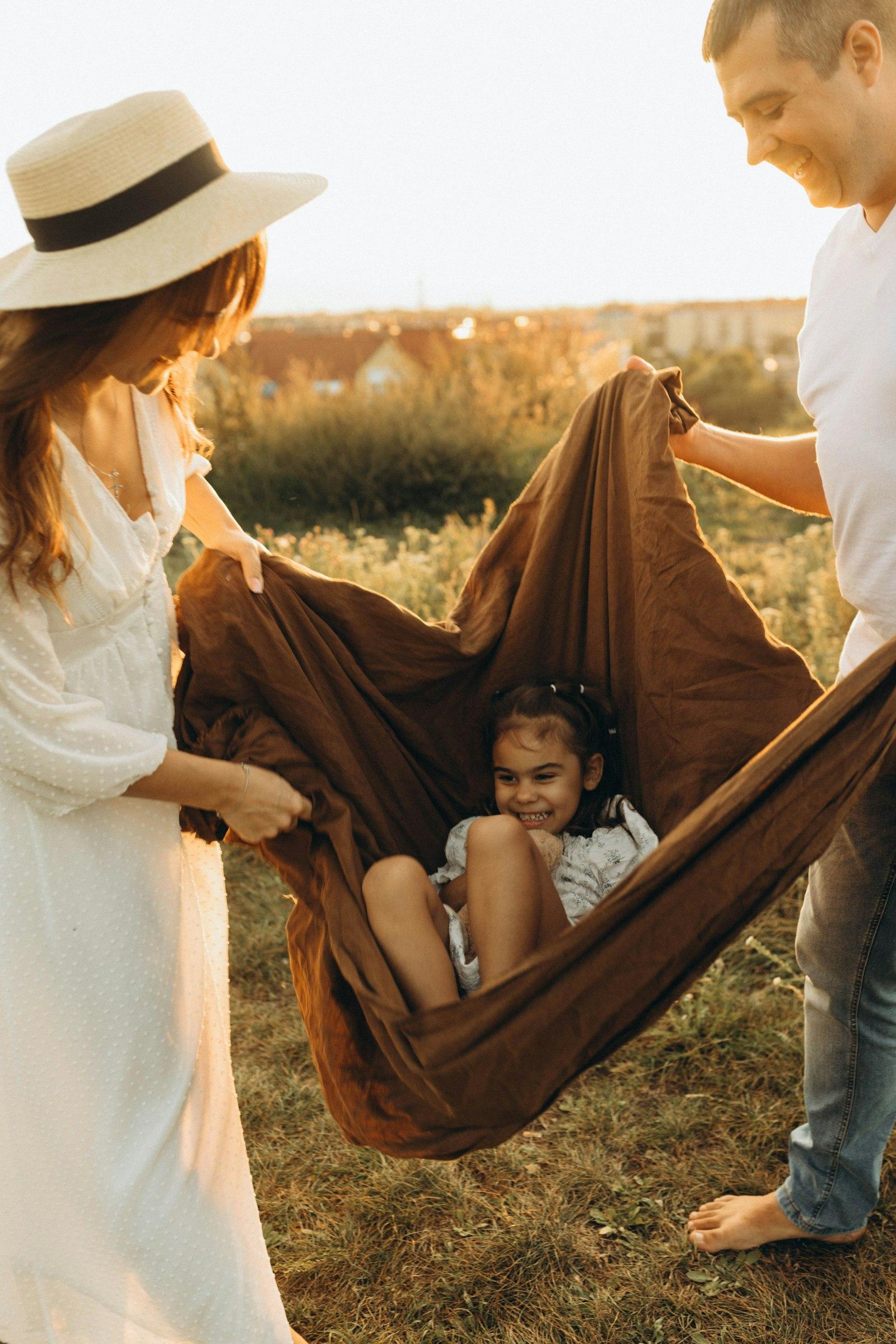
No, babies should not sleep in a hammock. The American Academy of Pediatrics says infants should sleep on their backs on a flat, firm surface, and that any surface inclined more than 10 degrees is not safe for sleep. Toddlers and older kids can enjoy a hammock while awake, with an adult close by, a low hang and a hammock with no loose cords.
This article is general safety information. For anything specific to your child, ask your pediatrician.
Can a baby sleep in a hammock?
No. The AAP's safe sleep guidance says babies should sleep on their backs, on a firm, flat surface that does not indent under them, with nothing in the sleep space but a fitted sheet (AAP, HealthyChildren.org). A hammock curves, sags and moves, which is the opposite of that.
The concern with curved and inclined surfaces is a baby's head falling forward, chin to chest, which can restrict breathing. The AAP puts the line at 10 degrees: any surface inclined more than that is not safe for infant sleep. The U.S. Consumer Product Safety Commission says the same about inclined products like rockers and swings (CPSC Safe Sleep).
Baby hammock: good or bad?
Products sold as "baby hammocks" are a separate question from your adult hammock. The AAP lists hammocks among alternative sleep products and says they are only considered safe for sleep if they meet the federal safety standards for infant sleep products set by the CPSC. If a product does not meet those standards, the AAP's advice is not to use it for sleep.
Many cultures have used cradle hammocks for babies for generations, and it is easy to find people online who swear by them. That history does not change what current U.S. safe sleep guidance says. The AAP and CPSC base their advice on how infant sleep deaths happen, and a curved, soft, moving surface is exactly what that guidance tells parents to avoid.
What to do in practice:
- Never let a baby sleep in an adult hammock, even for a short nap, even with you in it.
- Do not leave a baby lying in a hammock awake either. Babies wriggle toward the low point and can end up face down in the fabric.
- Holding your baby while you sit in a hammock carries the same risk as dozing off with them on a couch. If you feel sleepy, get up and put the baby down in their own sleep space.
- If a baby falls asleep somewhere other than a safe sleep space, the AAP advises moving them to a firm, flat surface on their back as soon as you can.
- Ask your pediatrician before using any baby hammock product, and check the CPSC site for recalls.
Are hammocks safe for toddlers?
While awake and supervised, a low, well-anchored hammock can be fine for toddlers. The risks are falls, tipping and entanglement. Toddlers climb, stand up and swing harder than adults expect, so the hammock has to be set up for that.
| Risk | What happens | How to reduce it |
|---|---|---|
| Falls | Child tips out or climbs over the edge | Hang it low, over soft ground |
| Tipping | Spreader-bar hammocks flip when a child stands or climbs in from the side | Use a gathered-end fabric hammock for young kids |
| Entanglement | Loose fabric, netting or cords wrap around the neck | No net mini hammocks, no loose cords, never leave a child alone in one |
| Anchor failure | A hook or stand gives way | Rated hardware, solid trees, check before every use |
| Rough play | Two kids swinging hard hit trees or each other | One child at a time, gentle sway only |
The strangulation hazard behind past hammock recalls
In the 1990s, the CPSC and ten manufacturers recalled about 3 million net mini-hammocks that had no spreader bars. Without bars to hold the bed open, the hammock could twist around a child's neck as they got in or out. The CPSC had reports of 12 children aged 5 to 17 who died between 1984 and 1995 (CPSC recall notice).
The lesson for parents today: avoid small net or rope hammocks that collapse into a cord when no one is in them, keep kids from wrapping fabric around themselves, and do not leave a child alone in any hammock.
Hammock safety rules for kids
- An adult within arm's reach for toddlers, and in sight for older kids.
- Hang it low. About 18 inches off the ground for adults; lower for little kids. Our hammock safety guide covers the basics.
- Soft ground underneath. Grass or mulch, not concrete or rocks.
- No standing, no flipping, no hard swinging.
- One child at a time unless the hammock is rated and wide enough for more.
- Check anchors and straps before each use. Read hammock injuries and how to avoid them for what fails most often.
Older kids and choosing a family hammock
Kids from about school age up can usually get in and out of a hammock on their own, and most of the risk shifts from tipping to rough play. Set a few house rules early: sit in the middle to get in, no standing, no twisting the hammock into a spin, and no more people than the rating allows.
When you pick a hammock the kids will use, look for:
- A gathered-end fabric hammock rather than a spreader-bar rope hammock. It is harder to flip.
- A clear weight rating that covers an adult plus a child, since parents end up in it too.
- No dangling cords, tassels or netting that can wrap around a neck.
- A stand or solid, healthy trees, set so the hammock sits low.
- Fabric that dries fast, because it will get left out.
Hammock chairs and swing chairs need the same care. Several have been recalled for collapsing or breaking, so check the CPSC hammock recalls page and assemble stands exactly as instructed.
Can toddlers nap in a hammock?
Older toddlers sometimes doze off during a supervised hang. The safest habit is simple: if a young child falls asleep, lift them out and move them to their own bed. Do not leave a sleeping child alone in a hammock, even for a minute.
Are hammocks dangerous for kids? Keeping it in proportion
Most kids who use hammocks have a great time and never get hurt. The rules above cover nearly every serious scenario. For older kids and family setups, a stand-based hammock is easy to keep low and stable; see the best hammocks with stands and how to hang a hammock without trees. For ideas by age, read hammocks for kids.
Next step
Before the next family hang, set it low and check every anchor with our hammock safety guide.
Frequently asked questions
Can a baby sleep in a hammock?+
No. The American Academy of Pediatrics says babies should sleep on their backs on a flat, firm surface, and that surfaces inclined more than 10 degrees are not safe for sleep. A hammock sags and curves. If a baby falls asleep in one, move them to a crib, bassinet or play yard on their back.
Are baby hammocks safe?+
The AAP says products sold as baby hammocks are only considered safe for sleep if they meet the CPSC's federal safety standards for infant sleep products. If a product does not meet them, do not use it for sleep. Ask your pediatrician before using one and check the CPSC website for recalls.
Are hammocks safe for toddlers?+
For awake, supervised play, a low and well-anchored fabric hammock can be fine. Keep an adult within arm's reach, hang it close to soft ground, allow no standing or hard swinging, and avoid net or rope mini hammocks without spreader bars, which have been recalled for strangulation risk.
Are hammocks dangerous for kids?+
Most hammock use by kids is safe with simple rules. The main risks are falls, tipping and entanglement in loose fabric or cords. Hang it low over grass, supervise young children, allow one child at a time and never leave a child sleeping or playing alone in a hammock.
Find a hammock-friendly spot near you.