Can You Hammock in State Parks?
Every state writes its own rules. Here is what a detailed state policy looks like, plus what we found for Devil's Lake and Hocking Hills.
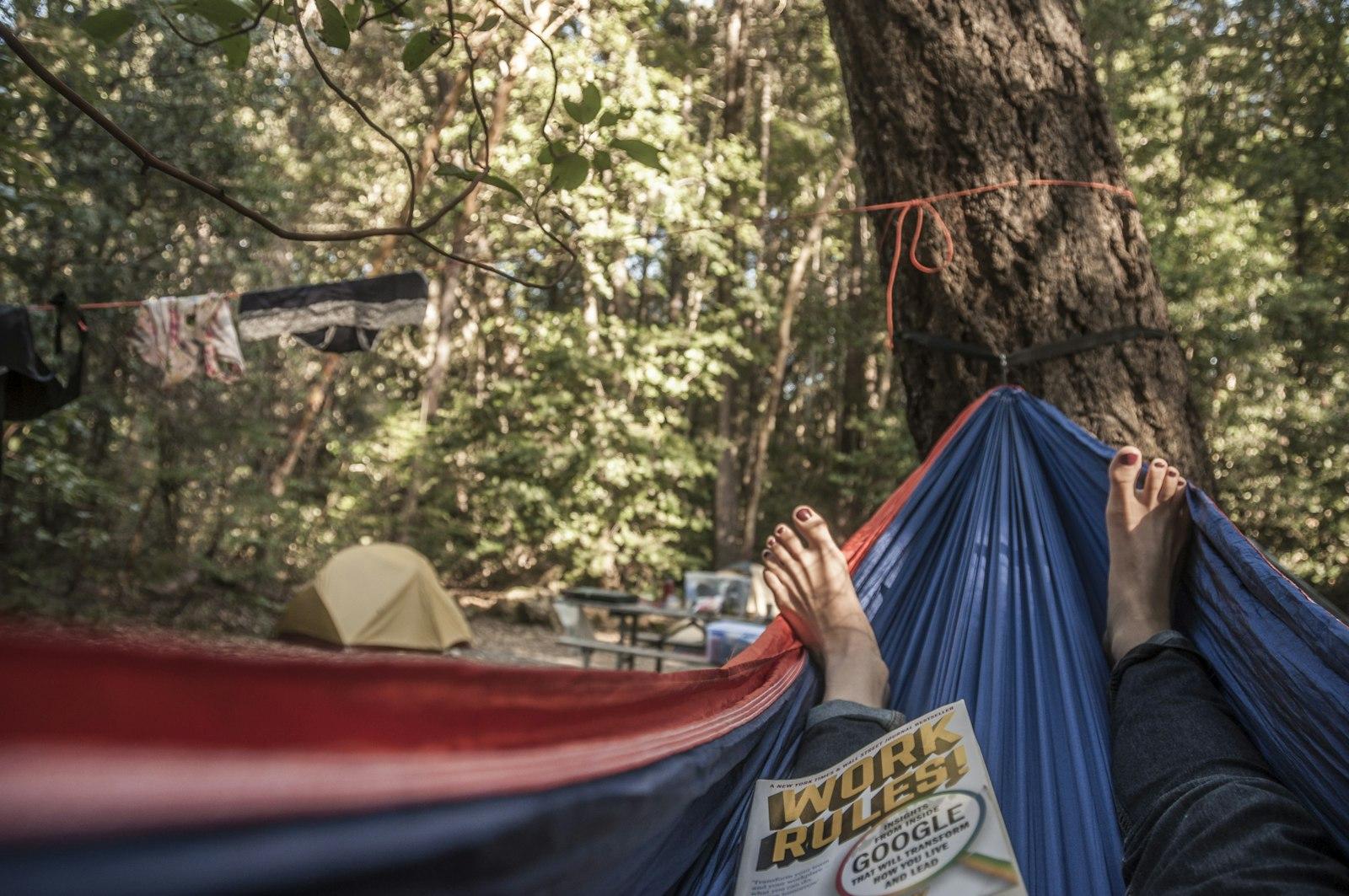
Usually yes, but every state writes its own rules, and parks inside a state can differ. Wisconsin publishes a detailed hammock policy: trees more than 1 foot thick, straps 1 inch or wider with padding, no oak trees, and no hammocks in State Natural Areas. Many other states publish nothing specific. Check the park's rules or call the park office before you hang.
Are hammocks allowed in state parks?
There are 50 state park systems, and they do not coordinate on hammocks. Most fall into one of three groups:
- States with a written hammock policy. These spell out tree size, strap width and where you can hang.
- States with no hammock rule. General rules about damaging trees and plants still apply, and park staff decide case by case.
- Parks with a ban. Some individual parks prohibit attaching anything to trees, even when the state allows hammocks elsewhere.
That is why "can I hammock in parks" has no single answer. The park office is always the final word.
What does a state hammock policy look like?
Wisconsin's is one of the most complete we have found, and it shows the kind of detail you might run into. Wisconsin state parks allow hammocks and slacklines in public areas such as campsites, picnic areas, state trails and other day use areas, under these conditions. (Wisconsin DNR hammock rules)
- Not allowed in any designated State Natural Area.
- Hang over flat, mowed and maintained areas, clear of obstructions. At campsites, hang over the gravel pad.
- Attach only to trees, never to picnic tables, grills or other fixtures.
- Trees must be alive, more than 1 foot in diameter at the attachment point and more than 5 feet tall.
- No oak trees.
- No cutting branches, anchors, screws, nails or tree bracing.
- Straps at least 1 inch wide, flat against padding around the trunk. No rope or paracord.
- One hammock per tree. No stacking and no "wheel spoke" setups with several hammocks on one tree.
- No more than 25 feet long and no more than 3 feet off the ground.
- Never left unattended. Set up and take down the same day, except at a designated overnight campsite.
- Staff may remove any hammock they consider dangerous or harmful.
Even if your state is less specific, following this list keeps you on the safe side almost anywhere. The two rules people break most often are hanging from small trees and leaving a hammock up while they go for a hike. Both are easy to avoid, and both are the kind of thing that leads parks to tighten their rules.
Can you hammock at Devil's Lake?
Devil's Lake is a Wisconsin state park, so the statewide rules above apply. We did not find a Devil's Lake page with extra hammock rules. In practice that means:
- Hang in campsites, picnic areas and other day use areas over mowed ground.
- Use trees thicker than 1 foot, and skip the oaks.
- Use padded straps 1 inch wide or more.
- Take a day hang down before you leave.
Devil's Lake is busy in summer, and parts of the property may include State Natural Areas, where hammocks are banned. Ask at the park office if you are unsure where a boundary is.
Can you hammock in Hocking Hills?
We could not find a published Ohio state park rule that names hammocks, for Hocking Hills or anywhere else in the system. That is a gray area, not a yes. Hocking Hills is crowded, its gorges and cliffs are fragile, and staff can decide what is appropriate on the ground.
If you want to hang there, call the Hocking Hills State Park office first, keep to developed areas like the campground and picnic areas, and use wide straps on healthy trees. Overnight stays need a campsite reservation.
Never hang near cliff edges, in the gorges or across trails, whatever the rules say. Hocking Hills draws big crowds on weekends, and a hammock on a busy path is a hazard for everyone. A weekday morning in the campground is the calmest time to try.
How do state park rules compare?
Here is how Wisconsin's rules compare with a regional park district and the Leave No Trace baseline.
| Rule | Wisconsin state parks | Three Rivers Park District, MN | Leave No Trace |
|---|---|---|---|
| Minimum tree size | More than 1 foot | 12 inches | 6 inches |
| Strap width | 1 inch or more, with padding | 2 inches or more, with bark protection | 1 inch or more |
| Rope allowed? | No | No | Webbing preferred |
| Height | 3 feet max | Not stated | Under 5 feet |
| Oak trees | Not allowed | Not stated | Not stated |
Sources: Wisconsin DNR, Three Rivers Park District, Leave No Trace hammock guidelines, 2025.
The pattern is clear. Thicker trees, wider straps, padding, no rope and hanging low. Pack tree straps that meet the strictest rule you are likely to run into, and you are covered everywhere.
How do you check a state park's hammock rules?
- Search the state park agency's site for "hammock." Many put it under recreation rules or camping rules.
- Read the specific park's page and any campground notices.
- Look at the park map for State Natural Areas or other protected zones.
- Read the signs at the entrance, campground and trailheads.
- Call the park office. Rangers know local exceptions that the website misses.
What if the state park says no?
Bring a stand, or find a different park. Some state parks with strict tree rules may still let you use a freestanding hammock on a campsite pad, so ask.
You also have other public land nearby in most states:
- County and regional parks. Some, like Three Rivers Park District in Minnesota, publish clear hammock rules.
- State forests. These are often managed by a different division with different rules from state parks.
- National forests. Dispersed camping is common, with stay limits that vary by forest. Call the ranger district.
- Private campgrounds. Many advertise hammock friendly sites. Ask before you book.
Day hangs and overnight hangs are also treated differently. Wisconsin, for example, requires day hangs to come down the same day, while campers can leave a hammock up at a designated overnight campsite. If a park says no to day hangs in a picnic area, the campground may still be an option. Read do you need a hammock stand, see how to hang a hammock without trees, or browse hammocks with stands.
For the setup itself, our guide to hammock safety and Leave No Trace covers the habits that keep parks open to hammocks. And do hammock straps hurt trees explains why states care about strap width.
Next step
Look up state parks near you on Find a Hang or the map, and compare with federal land in can you hammock in national parks.
Frequently asked questions
Are hammocks allowed in state parks?+
Usually, but each state and sometimes each park sets its own rules. Wisconsin allows hammocks in campsites and day use areas with trees over 1 foot thick, padded straps at least 1 inch wide and no oaks, and bans them in State Natural Areas. Many states have no written rule. Check the park's site or call the office.
Can I hammock in parks without a permit?+
In most parks that allow hammocks, no separate permit is needed for a day hang. Overnight hangs need a campsite reservation or camping permit. Some cities and park districts regulate hammocks and slacklines more closely, and organized events may need an event permit. Read the specific park's rules, since requirements vary by state and city.
Can you hammock in Hocking Hills?+
We found no published Ohio state park rule that names hammocks, so it is a gray area. Hocking Hills is crowded and its gorges are fragile. Call the park office before you hang, stay in developed areas like the campground and picnic areas, and use wide straps on healthy trees. Overnight stays require a campsite reservation.
Can you hammock at Devil's Lake?+
Yes, under Wisconsin's statewide state park rules. Hang in campsites, picnic areas or day use areas over mowed ground, on living trees more than 1 foot thick, with padded straps at least 1 inch wide. No oaks, no rope, and no hammocks in State Natural Areas. Day hangs must come down the same day.
Find a hammock-friendly spot near you.