Is It Legal to Hammock? Where You Can and Cannot Hang
No law bans hammocks. The rules are about trees and overnight stays, and they change every time the land manager changes.
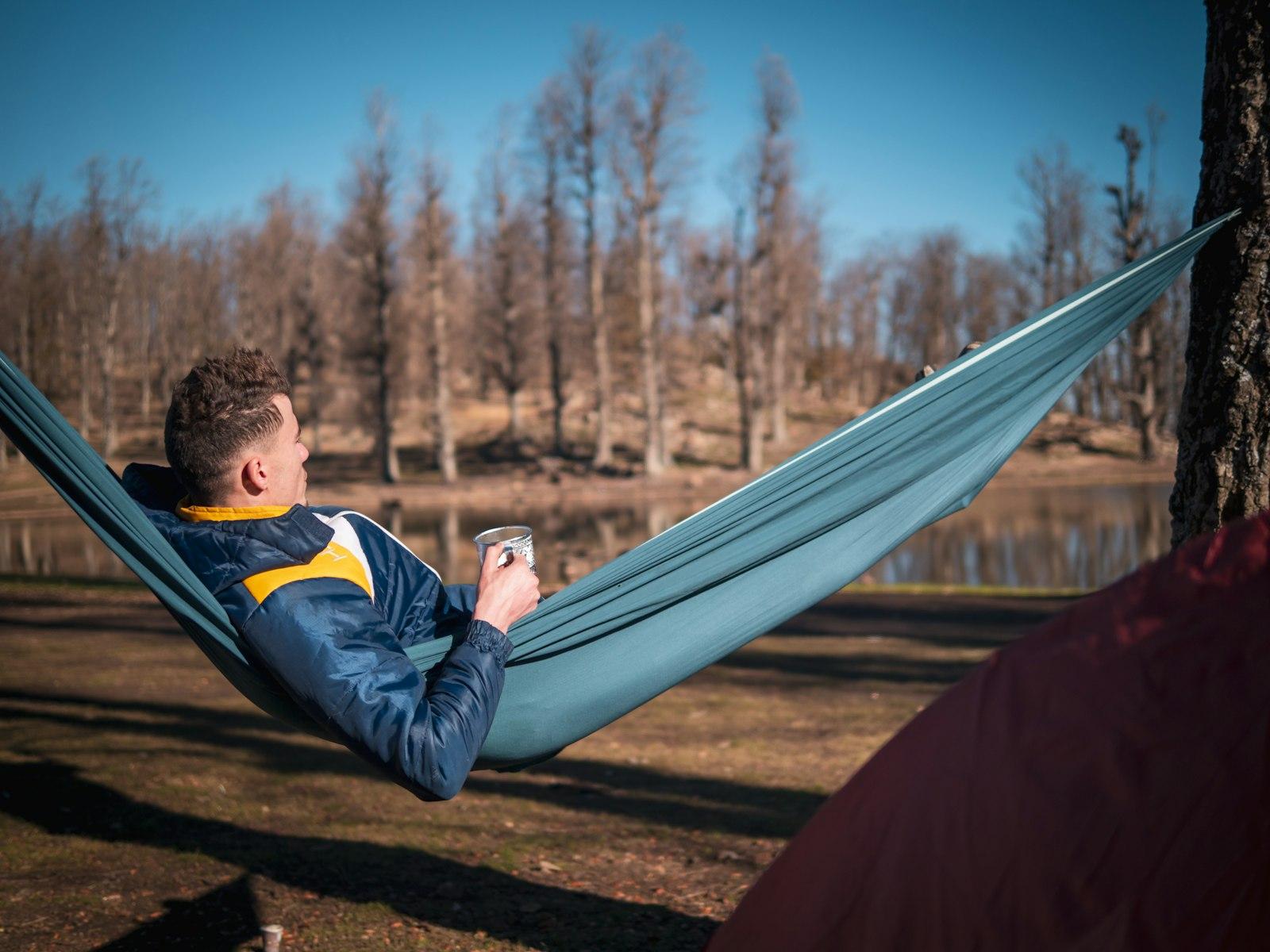
Yes, hammocking is legal in most places, because no US law bans hammocks themselves. What gets regulated is attaching things to trees and staying overnight. The rules come from whoever manages the land: a national park, a state park, a city or a private owner. Some allow hammocks with tree straps, some ban them outright, and many say nothing at all.
So the real question is never "is hammocking legal" in general. It is "who runs this patch of ground, and what did they write down?" This guide shows you where the bans actually are, why they exist, and how to check any spot in a few minutes.
Are hammocks illegal anywhere?
Hammocks are not illegal as objects. You can own one, carry one and sit in one on a stand in your yard. But plenty of land managers ban hanging one, and the bans are real. A few examples from official sources:
- Zion National Park says the use of hammocks and slacklines is prohibited in its campgrounds, and its wilderness rules prohibit hammocks and tree tents too. Nothing can be hung on park trees or structures. (Zion camping regulations, NPS)
- Joshua Tree National Park does not allow hammocks in campgrounds. Elsewhere, hammocks and other horizontal ropes must be tied to rocks and climbing bolts, never to Joshua trees or junipers. (Joshua Tree camping regulations, NPS)
- Forest Park in St. Louis does not allow visitors to hang anything on trees under City Ordinance 68607, but it has a hammock garden with posts north of Post-Dispatch Lake. (Forest Park Forever FAQs)
- Wisconsin state parks allow hammocks in many areas but not in any designated State Natural Area. (Wisconsin DNR hammock rules)
Notice the pattern. Almost every ban is about the tree, not the hammock. That is why a freestanding stand is often fine where tree straps are not.
Why do parks restrict hammocks?
Three reasons show up again and again in park rules.
First, trees. Straps squeeze the bark and the thin living layer under it, and popular trees get used every day. Leave No Trace's hammock guidelines say to use webbing straps 1 inch or wider and a loose hang to limit girdling and bark damage. (Leave No Trace hammock guidelines, 2025) We cover the details in do hammock straps hurt trees.
Second, ground and plants. A hammock between two trees can sit over fragile plants that a tent pad would have avoided. Rocky Mountain National Park only allows hammocks inside the designated campsite footprint and says they may not overhang or damage vegetation. (Rocky Mountain compendium, NPS)
Third, safety and crowding. Lines across a busy area trip people, and dead trees fall. Yosemite allows hammocks in campgrounds as long as they do not create a hazardous condition. (Yosemite campground regulations, NPS)
Is it legal to sleep in a hammock?
Napping in a hammock during the day is treated like any other day use. Sleeping in one overnight is camping, and camping has its own rules: designated sites, permits, stay limits and closing hours.
That means a spot that is fine at 3 pm can be off limits at 11 pm. Forest Park in St. Louis, for example, closes from 10 pm to 6 am. (Forest Park Forever rules) In Grand Canyon National Park, every overnight stay in the backcountry needs a backcountry permit. (Grand Canyon compendium 2026, NPS)
If you plan to sleep in your hammock, check the camping rules first and the hammock rules second.
Can you hammock camp anywhere?
No. You can hammock camp where camping is allowed and where the land manager has not banned hanging. Here is how it usually breaks down in the US.
| Land type | Day hang | Overnight hang | Who sets the rules |
|---|---|---|---|
| National parks | Varies by park | Only in campgrounds or permitted backcountry sites | Each park's Superintendent's Compendium |
| National forests | Often allowed | Dispersed camping is common, with stay limits that vary by forest | The local ranger district |
| State parks | Varies by state and park | Designated campsites | The state park agency and park office |
| City and county parks | Often restricted on trees | Rarely allowed | City code and the parks department |
| Private land | Owner decides | Owner decides | The owner |
National forests are the most hammock friendly public land for many people, because dispersed camping is common. Stay limits are often 14 days but vary by forest, and some areas limit camping to designated sites. Call the ranger district before a trip.
How do you check the rules before you hang?
This takes about five minutes and saves you a ticket or an awkward talk with a ranger.
- Figure out who manages the land. A map app usually shows whether you are in a national park, a national forest, a state park or a city park.
- For national parks, search the park name plus "Superintendent's Compendium." That document holds the park's own rules, and many now include a hammock section.
- Read the campground page and any notices on Recreation.gov. Grand Canyon's Mather Campground, for example, tells campers to take hammocks down when not in use and not to pierce trees.
- Read the signs at the trailhead or campground. Posted rules count.
- Ask a ranger or the park office when the written rules are silent.
- Look the spot up on Can I Hang Here, where we list the rules and sources for each destination we cover.
What can you do where tree hanging is banned?
You still have options.
- Bring a stand. A freestanding frame touches only the ground. Browse hammocks with stands or read how to hang a hammock without trees.
- Use built posts. Some parks provide them, like the hammock garden in Forest Park.
- Use rock anchors where allowed. Joshua Tree permits hammocks tied to rocks and climbing bolts outside campgrounds.
- Pick a different spot. If the rules say no, the next park over may say yes.
How to hang legally where it is allowed
Where hammocks are allowed, these habits keep you inside almost every rule we have read. They follow the Leave No Trace guidelines, and some parks go further.
- Use webbing straps at least 1 inch wide. Glacier National Park requires 1 inch or wider in campgrounds. (Glacier compendium, NPS)
- Pick healthy, living trees. Leave No Trace suggests at least 6 inches in diameter. Great Smoky Mountains requires 10 inches with padding. (Smokies campground regulations, NPS) Wisconsin requires more than 1 foot and no oaks.
- Stay inside your campsite footprint and over bare ground.
- Hang low. Leave No Trace recommends less than 5 feet off the ground.
- Take it down when you leave camp.
- Never hang from shelters, picnic shelters or other park structures unless the rules say you can.
Our guide to hammock safety and Leave No Trace covers the setup side in more detail, and the best trees for a hammock helps you pick anchors.
Next step
Before your next trip, look up the place on Can I Hang Here or browse spots that welcome hammocks on Find a Hang. If it is a national park, start with can you hammock in national parks.
Frequently asked questions
Are hammocks illegal?+
No. Hammocks are not illegal to own, carry or use. Specific places ban hanging them, usually to protect trees. Zion National Park prohibits hammocks in campgrounds and wilderness, and St. Louis's Forest Park bans hanging anything on trees. Many other parks allow them with wide straps. Check the rules for the exact place you plan to hang.
Is it legal to sleep in a hammock?+
Yes, where camping is allowed. Sleeping overnight in a hammock counts as camping, so you need a legal campsite, any required permit, and a place that allows hammocks. Many city parks close at night, and national park backcountry usually needs a permit. Daytime naps follow day use rules, which are usually looser.
Can you hammock anywhere?+
No. Each land manager sets its own rules. Some national parks, state parks and many city parks restrict or ban hanging from trees, while others allow it with straps 1 inch or wider. Private land needs the owner's permission. A freestanding stand gets around most tree rules, but it still has to follow general park use rules.
Can you hammock camp anywhere?+
No. You can hammock camp only where camping is permitted and hanging is not banned. National parks limit camping to campgrounds and permitted backcountry sites. National forests often allow dispersed camping with stay limits that vary by forest, commonly 14 days. Call the local ranger district or park office before you plan an overnight hang.
Do I need a permit to hammock?+
Usually not for a day hang. No national park we have checked requires a separate hammock permit. You need a campground reservation or backcountry permit to stay overnight, and some cities require event permits for groups. Read the specific park's rules, since a few places regulate hammocks and slacklines more closely than others.
Find a hammock-friendly spot near you.