Hammock Camping With a Dog: Where Your Dog Sleeps
Under the hammock, in the hammock or in a tiny tent. How hangers sort out the dog question, plus the parks where dogs are not allowed.
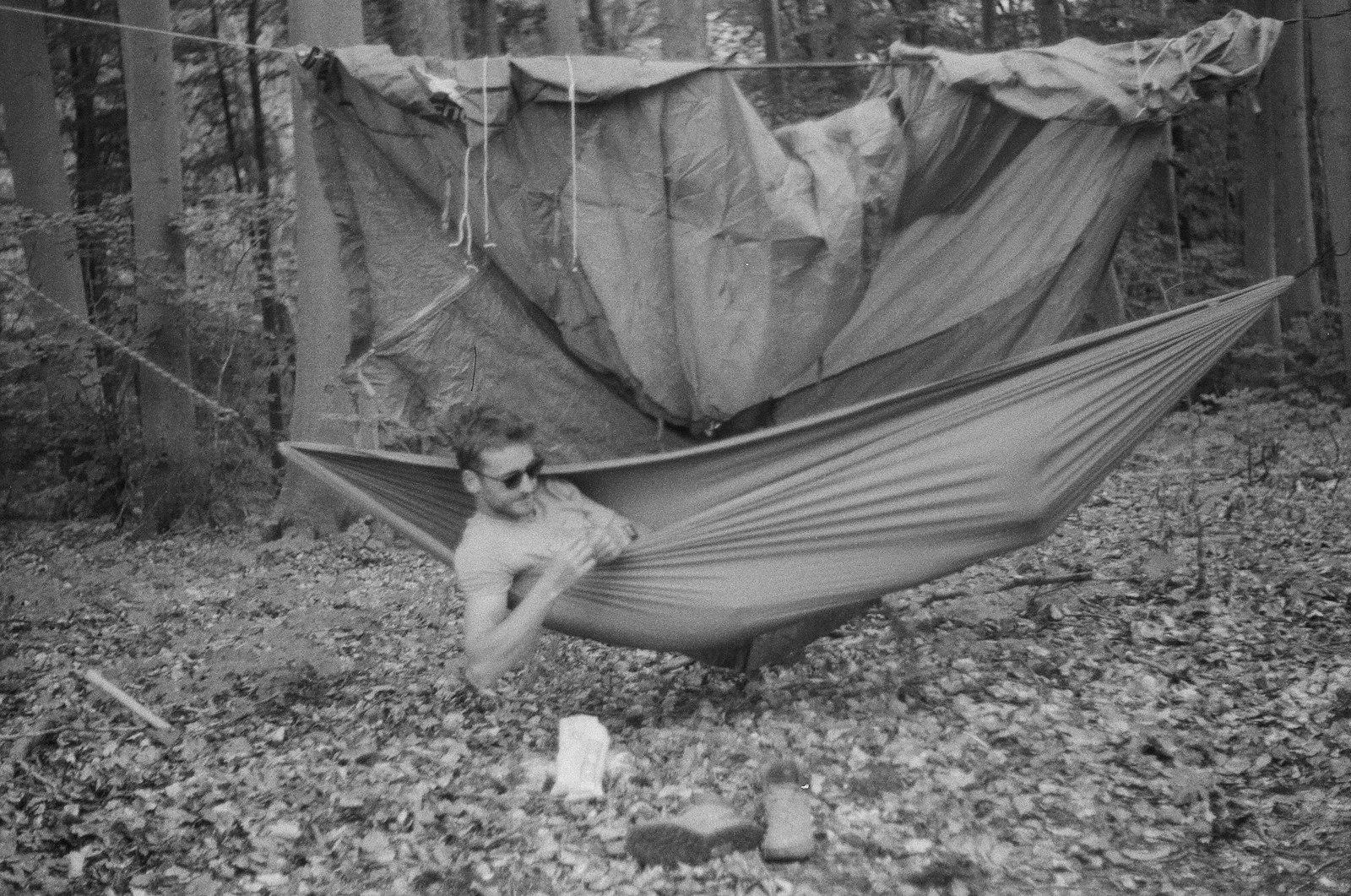
You can hammock camp with a dog. Most hangers put the dog on an insulated pad on the ground under the hammock, inside the tarp's footprint, clipped to a short tether. Small, calm dogs can share the hammock. Big dogs usually sleep below or in a small shelter. Check park rules first, because some parks ban dogs on trails entirely.
Where does your dog sleep when you hammock camp?
There are four common setups. Which one fits depends on your dog's size, coat and temperament, and on the weather.
| Option | Best for | Pros | Cons |
|---|---|---|---|
| Pad under the hammock | Most dogs, mild weather | Simple, your dog stays close and dry under the tarp | Cold on frozen ground without good insulation |
| Dog bed or dog bivy under the hammock | Cold nights, short-coated dogs | Warmer and drier than a bare pad | Extra weight to carry |
| In the hammock with you | Small dogs, roughly under 25 lb | Shared warmth, dog feels secure | Claws, wiggling and tipping, cramped |
| Small tent next to the hammock | Big dogs, wet or cold weather | Most protection for the dog | Most weight, dog may not settle away from you |
The pad-under-the-hammock setup is what most owners in hammock forums describe. Lower the hammock so it hangs about 18 inches (45 cm) above the dog, and pitch the tarp a little lower and wider than usual so both of you stay dry.
Can dogs sleep in a hammock?
Some can. Small dogs often curl up in the crook of your knees or by your feet and stay there all night. Owner stories range from easy to chaotic, including the familiar post about a dog who "forgets" how much he weighs.
If you want to try it:
- Practice at home first. Hang the hammock low in the backyard and let your dog get in and out on a leash.
- Trim nails. Ripstop nylon is tough, but a scrambling dog can puncture thin fabric or a bug net.
- Check the weight rating. Add your weight and your dog's. Check your hammock's limit, and see hammock weight limits if you are close.
- Hang it low. If your dog jumps out at night, a short drop is safer for both of you.
- Keep the bug net zipped so your dog does not launch through it.
Large dogs rarely work in a single hammock. A double or a bridge hammock gives more room, but most big-dog owners find it easier to put the dog below.
How to keep your dog warm under a hammock
Your dog loses heat to the ground the same way you lose heat to the air under a hammock. A few practical fixes:
- Use a closed-cell foam pad or an insulated dog bed. A bare tarp on cold dirt is not enough.
- Bring a dog jacket for short coats and cold nights.
- Pitch the tarp low on the windward side.
- Feed your dog a normal dinner and keep water available.
If your dog is a puppy, a senior or has a health condition, ask your vet whether overnight camping in cold weather is a good idea.
Leashes, tethers and wildlife
At night, a dog that sees a deer or hears a raccoon may bolt. Clip your dog to a short tether attached to a strap or a tree trunk below your hammock, long enough to lie down and turn around but not long enough to wrap around the straps or reach the trail. Keep dog food sealed and stored with your own food, since it attracts the same animals. In bear country, follow the same storage rules for dog food that you follow for yours. See is hammock camping safe around bears.
Which parks and trails allow dogs?
This is the part that ends many trip plans. Rules vary a lot:
- Great Smoky Mountains National Park does not allow dogs on park trails except two short trails, and says no dogs or other pets may be carried into the backcountry. See the park's backcountry rules.
- Yosemite does not allow pets on trails or in wilderness, even if carried, with a few exceptions such as the Wawona Meadow Loop. See the Yosemite pets page.
- Baxter State Park in Maine, home of the northern end of the Appalachian Trail, says pets are not allowed anywhere in the park. See the Baxter camping page.
National forests are often more open, usually with leash rules. Rules change, so always check the specific park before you go. Our Can I Hang Here? tool and pages like Pisgah National Forest are a good start, and can you hammock in national parks covers the hammock side of park rules.
Shelters and shared campsites
On trails with shelters, such as the Appalachian Trail, the Appalachian Trail Conservancy suggests dog owners plan to tent and keep dogs leashed, on a short leash near shelters. A hammock counts as your own shelter, which makes it easy to camp a little apart from other hikers. More on that in our guide to hammock camping on the Appalachian Trail.
Practice nights before the real trip
Dogs settle faster when the setup is familiar. Owners who have good first trips usually rehearse first:
- Backyard night. Hang the hammock, lay out the dog's pad under it and spend an evening there. Let your dog sniff the straps, the tarp and the bug net.
- Reward lying down. Treats and praise when your dog settles on the pad teach it that this is its spot.
- Practice the tether. Clip the tether before dark so your dog learns its range while it can see.
- Try one night in a campground. Other dogs, smells and noises are a bigger test than the backyard. If your dog barks at every sound, it is better to find out near the car.
- Then go farther. Once your dog sleeps through a campground night, a hike-in site is a small step.
Expect the first night to be lighter sleep for both of you. That is normal. Most dogs relax by the second night, once they learn that you are right above them.
A short packing list for your dog
- Insulated pad or packable dog bed
- Short tether and a regular leash
- Collapsible bowl and enough food, sealed
- Dog jacket in cold weather
- Booties if the terrain is rocky or icy
- Poop bags and a trowel
- A few treats to make settling in a positive thing
Your next step
Find a dog-friendly spot to try your first night with Find a Hang, and use our Leave No Trace guide to keep the site in good shape for the next hiker and their dog.
Frequently asked questions
Can dogs sleep in a hammock?+
Small, calm dogs often can. They curl up by your knees or feet and stay put. Trim their nails first, hang the hammock low in case they jump out, and add their weight to yours to stay under the hammock's rating. Large dogs rarely fit well in a single hammock and usually sleep on a pad below.
Where does a dog sleep when you hammock camp?+
Most owners put the dog on an insulated pad or a packable dog bed on the ground under the hammock, inside the tarp's footprint, clipped to a short tether. The dog stays close and dry. In cold or wet weather some owners carry a small tent or dog bivy instead.
Are dogs allowed on the Appalachian Trail?+
On most of it, yes, usually on a leash. But dogs are not allowed in the Great Smoky Mountains National Park backcountry, and Baxter State Park in Maine does not allow pets anywhere in the park. Plan for a kennel or a dog sitter for those sections, and check current rules before you go.
How do you keep a dog warm when hammock camping?+
Put the dog on a closed-cell foam pad or insulated dog bed, not bare ground. Add a dog jacket for short-coated breeds, pitch the tarp low on the windward side, and keep your dog fed and watered. Ask your vet first if your dog is very young, old or has a health condition.
Find a hammock-friendly spot near you.