How to Find Great Hammock Spots Near You
A practical scouting method, the tools that speed it up, and what separates a decent hang from a great one.
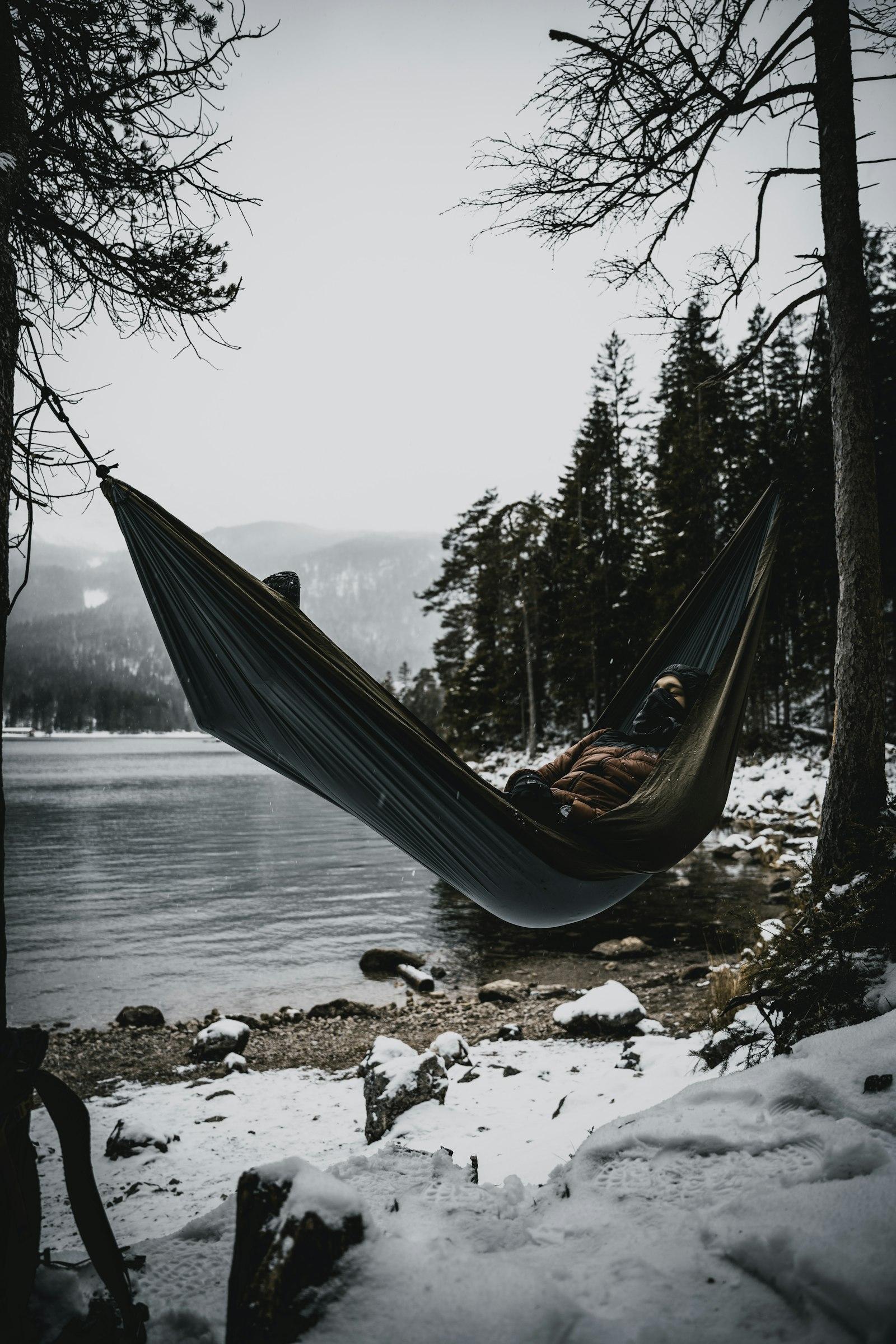
The fastest way to find a hammock spot near you is to start with land that allows it: campgrounds, state parks with a hammock policy, and city parks that permit tree straps. Use Find a Hang or the map, check the rules page for the spot, then look for two healthy trees about 12 to 15 feet apart, with shade, a view and level ground.
Where can I hammock near me?
Most people have more options than they think. Here is where to look, roughly from closest to farthest.
| Place | Good for | Watch out for |
|---|---|---|
| Your yard or a friend's | Daily hangs, stands | Tree health, neighbors |
| City parks | Quick after work hangs | Many ban tree hanging |
| County and regional parks | Bigger trees, quieter | Rules vary by district |
| State parks | Lakes, rivers, campsites | Tree size and strap rules |
| National forests | Overnight hangs, solitude | Stay limits, fire rules |
| National parks | Bucket list views | Park by park rules, permits |
| Private campgrounds | Easy overnight trips | Owner's rules |
City parks are the closest, but they are also the most likely to ban tree straps. Read can you hammock in city parks before you head to the one down the street.
How do you use the site's tools to find a spot?
We built a few tools for exactly this question.
- [Find a Hang](/find-a-hang) suggests destinations based on what you want: beach, forest, lake, mountain and more.
- [The map](/map) shows every destination we cover, so you can see what is close to you.
- [Can I Hang Here](/can-i-hang-here) gives a yes, no or maybe for each place, with the rules and the official sources behind them.
- [The trip planner](/trip-planner) helps you build a route when the best spot is a drive away.
Start with Find a Hang or the map, then confirm on Can I Hang Here before you pack the car.
What makes a great hammock spot?
A decent spot has two trees. A great one has most of this list:
- Two healthy trees 12 to 15 feet apart. Thick trunks, no dead branches overhead. More in best trees for a hammock.
- Shade that lasts. Look at which way the sun moves. Afternoon shade matters most in summer.
- A view. Water, a valley or a sunset line. This is what turns a nap into a memory.
- Level, durable ground. Bare dirt or gravel, not fragile plants.
- A breeze, not a gale. A light wind keeps bugs down. Strong wind makes you cold.
- Few bugs. Moving water and open air beat still ponds at dusk.
- Some privacy. A little distance from the trail or the playground.
- Rules that allow it. The best view in the world is no good if you get asked to leave.
How do you scout hammock spots on a map?
Satellite view in any map app is the best scouting tool you already have.
- Look for tree lines along water. Lake shores and riverbanks often have mature trees and a view. Stay at least 200 feet from water where Leave No Trace guidance or park rules ask for it.
- Zoom in on campgrounds. Wooded sites show up as dark green with small clearings.
- Check the edges of meadows. You get trees for anchors and open sky for the view.
- Avoid dense young forest. Lots of skinny trees, little light and few clear gaps.
- Note the parking. A great spot 3 miles from the car is a different trip than one 300 feet away.
Then visit once without your hammock if you can, or bring it and treat the first visit as a scouting run. Bring your straps either way, so you can test the tree spacing on the spot.
On that first visit, pay attention to timing. A lakeside spot that is quiet on a Tuesday morning can be packed on a Saturday afternoon. Morning light is soft and bugs are often lower, while evenings bring sunsets and, near water, mosquitoes. Note where the sun is at the time you are most likely to hang, and whether the shade will still be there an hour later.
Keep a short list of spots that work for different moods:
- A 10 minute spot for a quick after work hang.
- A half day spot with water and a view for weekends.
- An overnight spot at a campground or national forest for when you want a real trip.
- A rainy day spot with good tree cover and room for a tarp.
Having options means you always have somewhere to go when the weather or the crowds change your plans.
How do you check the rules before you go?
This is the step people skip, and it is the one that ends a hang early.
- Find out who manages the land.
- Look up the place on Can I Hang Here.
- If we do not cover it yet, search the park or city site for "hammock."
- Read the signs when you arrive.
- Ask a ranger or staff member when in doubt.
Our guide is it legal to hammock explains how the rules differ between city, state and federal land.
What if there are no trees near you?
Use a stand. A freestanding hammock works on lawns, patios, rooftops and beaches, and it gets around tree rules in many parks. It also opens up spots you would never consider with straps: an open meadow with a view, a beach with no palms, or a lake shore where the only trees are too small.
Some parks provide built anchors. Forest Park in St. Louis, for example, has a hammock garden with posts north of Post-Dispatch Lake. Search your city's parks site for "hammock garden" or "hammock posts" to see if there is one near you. See hammocks with stands, read how to hang a hammock without trees, or check how to choose a hammock stand.
How do you keep a good spot good?
Great spots stay great when people treat them well.
- Use straps 1 inch wide or wider. Never rope on trees.
- Hang low, and take it down when you leave.
- Pack out everything you bring.
- Rotate trees if you visit the same spot often.
- Share the spot. If someone is waiting, give them a turn.
- Do not post exact locations of fragile spots. A quiet grove can get trampled fast once it goes viral.
Our hammock safety and Leave No Trace guide has the full checklist.
Next step
Open Find a Hang and pick a spot for this weekend. Want something bigger? Our list of places to hammock before you die is a good place to dream.
Frequently asked questions
Where can I hammock near me?+
Start with places that allow it: your yard, campgrounds, state parks with hammock policies, regional parks and national forests. Many city parks ban hanging from trees, so check first. Use our Find a Hang tool or the map to see destinations near you, then confirm the rules on Can I Hang Here before you go.
What are the best hammocking spots near me?+
The best spots have two healthy trees about 12 to 15 feet apart, lasting shade, a view of water or a valley, level ground, a light breeze and rules that allow hanging. Lake shores, riverbanks and meadow edges in state parks and campgrounds often tick most boxes. Scout on a satellite map, then visit to confirm.
How do I find hammock spots without trees?+
Bring a freestanding hammock stand. It works on lawns, patios, decks and beaches and avoids tree rules in many parks. Some parks also provide posts, like the hammock garden in St. Louis's Forest Park. Check the park's general rules on lawns and gatherings, since a stand still has to follow those.
How far apart should trees be for a hammock?+
About 12 to 15 feet apart works for most hammocks, with straps wrapped around the trunks and the hammock hung with a gentle sag. Closer trees mean a tighter, higher hang, and farther trees need longer straps. Pick healthy trunks at least 6 inches across, and thicker where local rules require it.
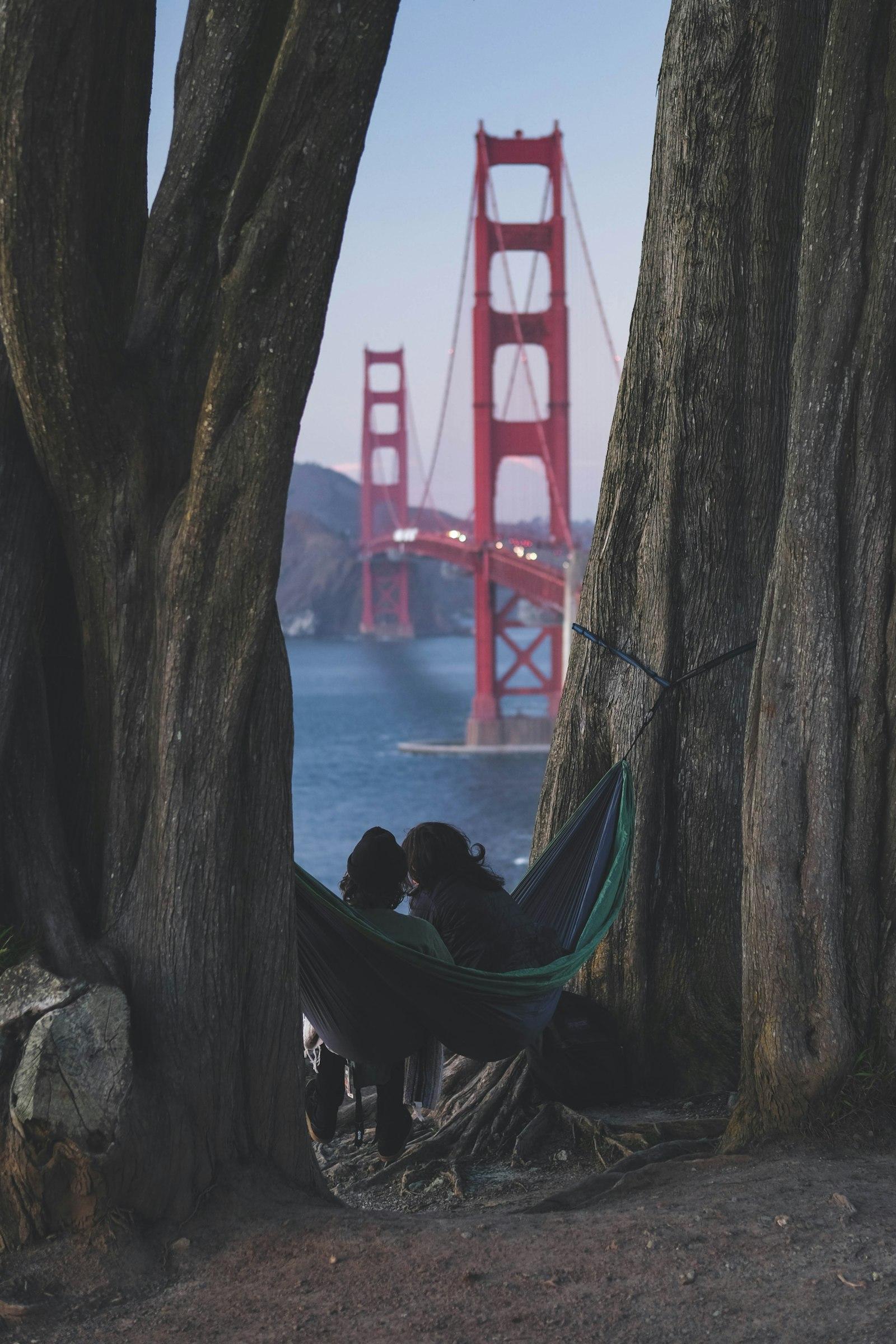
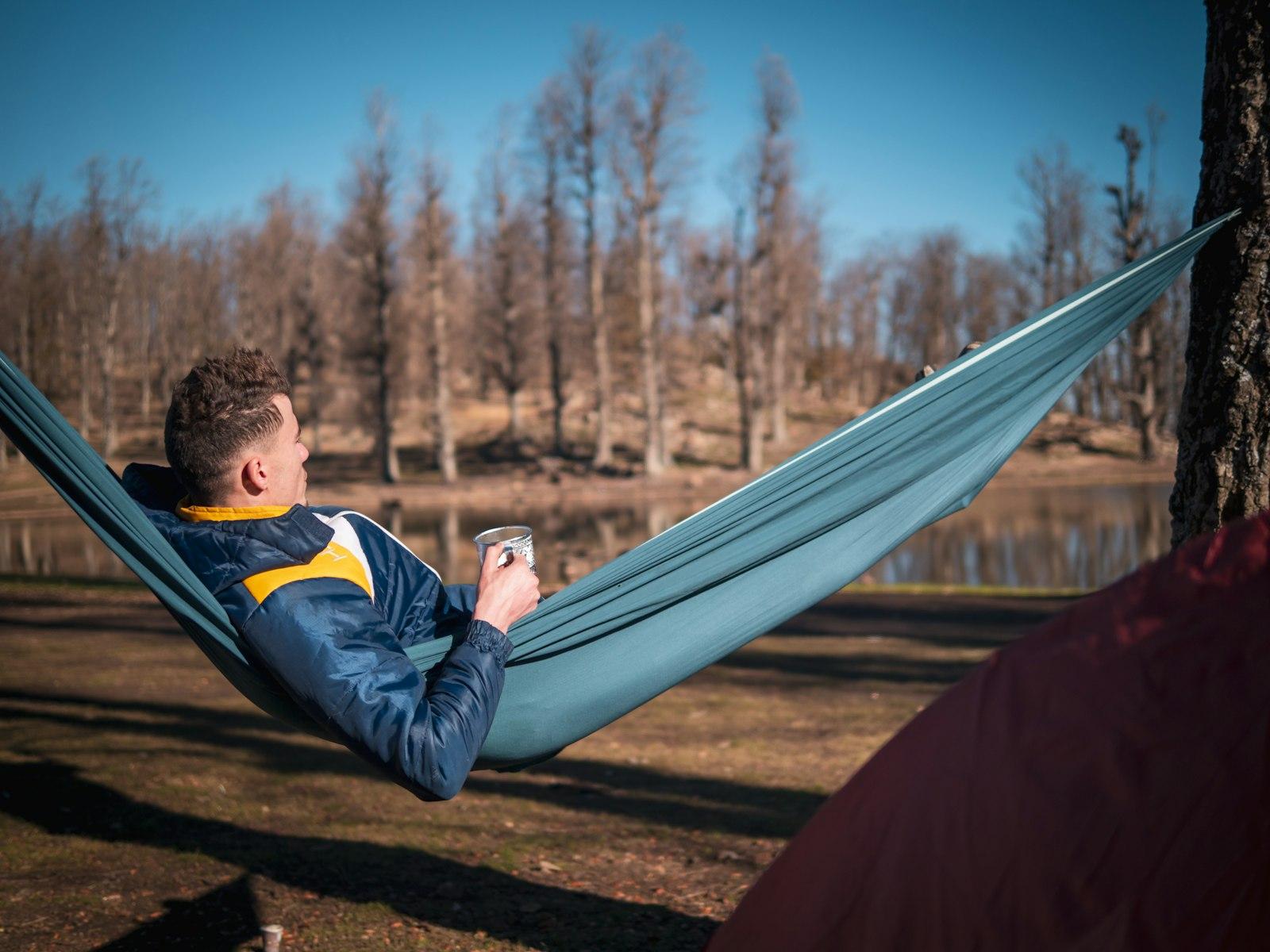
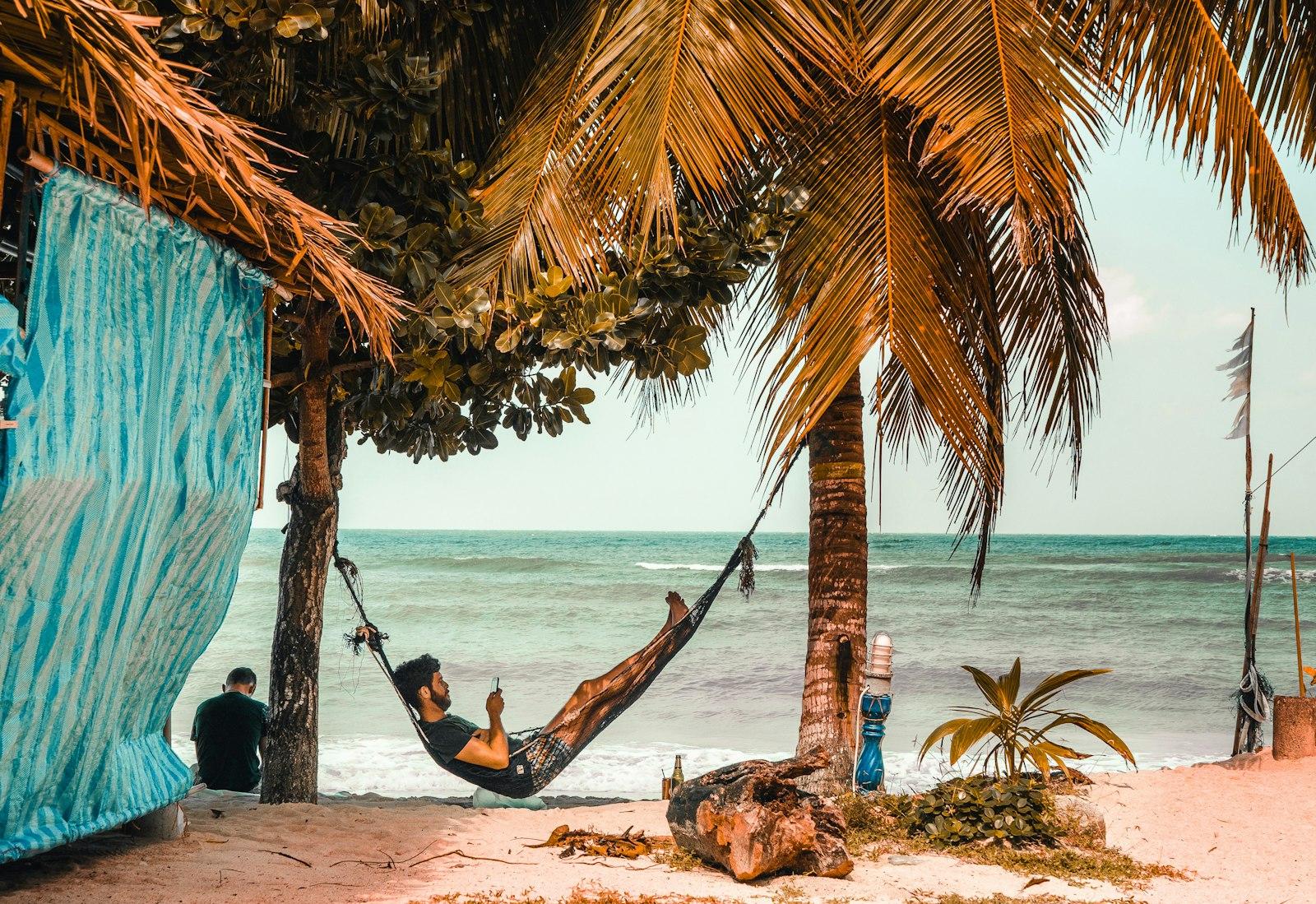
Find a hammock-friendly spot near you.