12 Hammock Camping Mistakes First-Timers Make
Most bad first nights in a hammock come from the same handful of errors. Here they are, with the fix for each one.
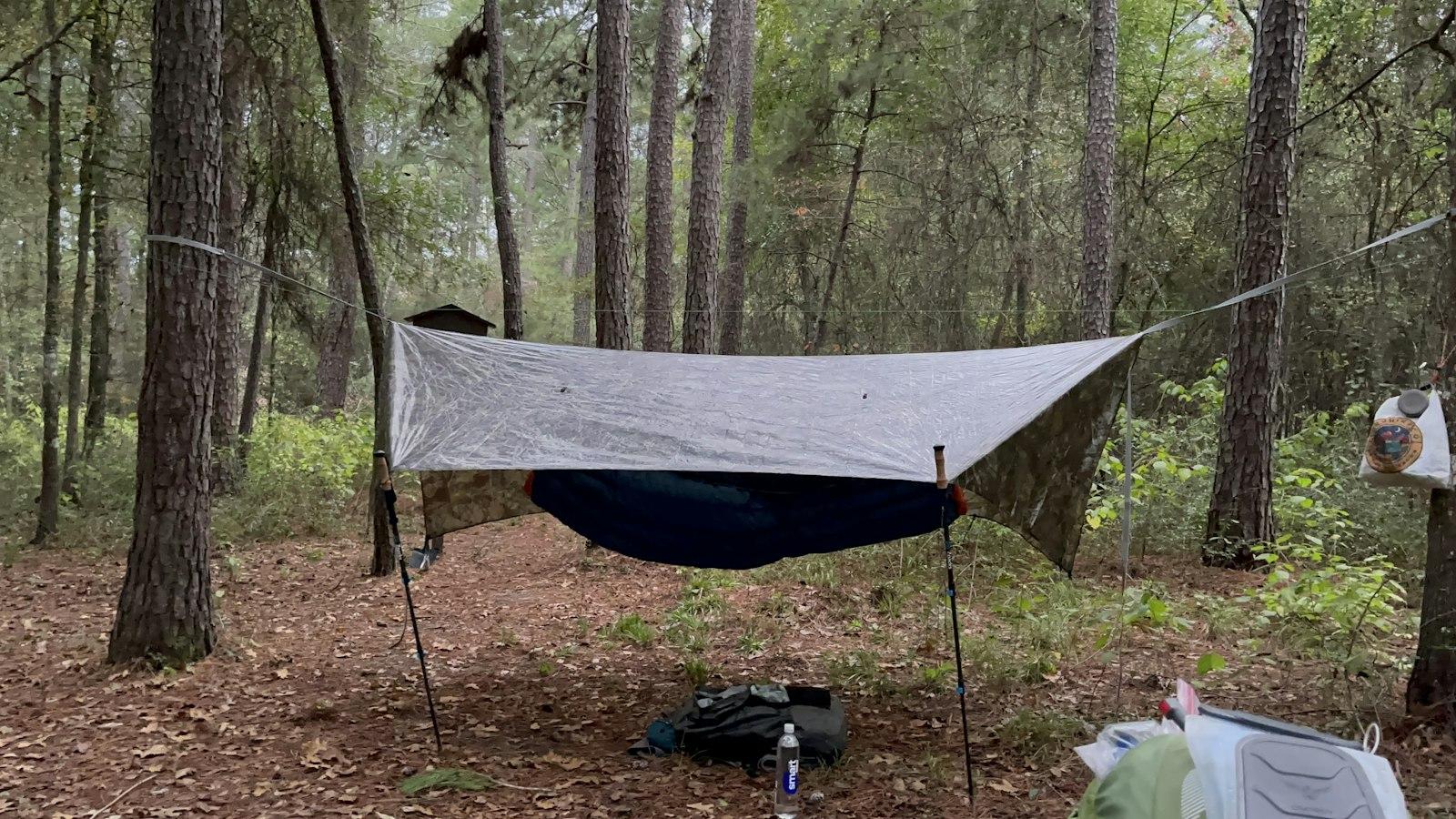
The biggest hammock camping mistakes on a first trip are hanging the hammock too tight, lying straight down the middle, skipping insulation underneath, putting the tarp up last, and picking a dead tree. Fix those five and most first nights go well. The other seven on this list are smaller, but they are the difference between sleeping fine and sleeping great.
Why first hammock nights go wrong
Hammock forums are full of posts with titles like "first time sleeping in a hammock, worst camping trip" and "ill prepared hammock trip." Read a few and the same causes repeat. None of them mean hammocks are bad. They mean the setup was off. Here are the 12 mistakes, roughly in order of how much they hurt.
Comfort mistakes
Mistake 1: Hanging it tight like a banana
A tight hammock squeezes your shoulders and curls you into a banana. Hang it with a deep sag and straps at about 30 degrees from horizontal. That slack is what lets you lie flat. More in how to hang a hammock.
Mistake 2: Lying straight down the middle
Lie at an angle, head toward one side and feet toward the other. In a 10 to 11 foot gathered end hammock, the diagonal lay is how you get flat. Raise your feet end a few inches higher than your head so you do not slide down the hammock overnight. If your calves feel pressure from the edge of the fabric, or your knee hyperextends, shift a little more diagonal or add a small pillow under the knees. See how to sleep in a hammock for more on getting the lay right.
Mistake 3: Skipping insulation underneath
This is the most common cause of a miserable night. Your sleeping bag crushes flat under you and stops insulating, and air moving under the hammock pulls heat away. Many people feel cold below about 70 F (21 C) without insulation underneath. Bring an underquilt or a sleeping pad. Read how to stay warm in a hammock.
A related mistake is bringing insulation but letting it slip. An underquilt that hangs too loose leaves a cold gap along your back or under your feet. Adjust it while lying in the hammock, not before you get in.
Weather and site mistakes
Mistake 4: Putting the tarp up last
If rain starts while you are hanging the hammock, everything gets wet. Put the tarp up first, then hang the hammock under it. Our guide to hammock camping in the rain covers the full order and drip lines.
Safety and rules mistakes
Mistake 5: Hanging from a dead tree
This one is about safety, not comfort. Dead trees and dead limbs can fall without warning, and owners regularly post photos that remind everyone why. The Leave No Trace hammock guide says to hang only on living trees at least 6 inches across and to check above you for dead branches. Look up before you unpack.
Mistake 6: Using rope on bark
Thin rope cuts into bark and damages the living layer underneath. Use tree straps at least 1 inch (2.5 cm) wide. They are kinder to trees and easier to adjust. See do hammock straps hurt trees.
Mistake 7: Trees too close or too far apart
The sweet spot for most camping hammocks is 12 to 15 feet between trunks. Closer and you sit on the ground. Farther and you run out of strap. Our guide to trees too far apart or too close for a hammock shows the workarounds.
Mistake 8: Hanging too high
You do not need to be at eye level. A seat height around 18 inches (45 cm) is easy to get into, safer if a strap slips and keeps you closer to calmer air. If you do fall, a short drop is much better than a long one, so lower is safer.
Preparation mistakes
Mistake 9: Never practicing at home
Setting up a tarp and hammock for the first time in the dark, in rain, after a long hike, is how a fun trip turns bad. Hang everything in the backyard or a local park once. Then do it again with a headlamp. That single rehearsal fixes half the mistakes on this list.
While you practice, sleep in it for a few hours too. An afternoon nap tells you more about sag, pillow height and foot position than any video. Write down your strap positions and ridgeline length so you can repeat a setup that works.
Mistake 10: Camping in a cold sink
Cold air flows downhill and settles in valley bottoms and low meadows. A site a little way up a slope can be several degrees warmer than the creek bed below. Also avoid low spots where rain runoff collects. Wind matters too. An exposed ridge or open lakeshore may look great at sunset and feel very different at 3 a.m. A little tree cover between you and the prevailing wind makes a cold night far easier.
Mistake 11: Ignoring the rules
Some parks only allow hammocks in designated sites, some limit what you can attach to trees, and some do not allow hanging at all. Check before you go. Our Can I Hang Here? tool covers popular spots, and each park's own website has the final word.
Mistake 12: Leaving the small things at home
Little items make a big difference at 2 a.m.:
- A headlamp clipped to the ridgeline, not buried in your pack
- A small pillow or clothes bag for your neck
- Earplugs, because a hammock moves with every gust
- A dry pair of sleep socks
- A bug net from spring to fall
- A small sit pad to stand on when you get in and out at night
- A short piece of cord for drip lines and a spare guyline
None of these are expensive or heavy. Forgetting them is what makes the night feel worse than it should.
A quick first-trip checklist
Before your first night out, make sure you can answer yes to all of these:
- Have you hung the hammock at home at least once?
- Do your straps reach around a big tree with room to spare?
- Do you have insulation underneath rated below the forecast low?
- Can you put up the tarp in under 10 minutes?
- Have you checked the rules for the place you are going?
- Will you look up for dead limbs before hanging?
Your next step
Read the full how to hammock camp guide, then pull your kit together with the hammock camping gear list. If you are still choosing a hammock, start with best camping hammocks.
Frequently asked questions
What is the most common hammock camping mistake?+
Skipping insulation underneath. A sleeping bag crushes flat under your body, and air moving under the hammock pulls heat away, so many people feel cold below about 70 F. An underquilt or sleeping pad fixes it. Hanging the hammock too tight is a close second, because it causes the banana shape.
How do you sleep comfortably in a hammock the first time?+
Hang it with a deep sag and straps at about 30 degrees, lie on the diagonal, and raise the foot end a few inches above the head end. Put insulation underneath, use a small pillow and wear earplugs if wind or noise bothers you. Practice once at home before the trip.
How far apart should trees be for hammock camping?+
About 12 to 15 feet apart works for most camping hammocks. Closer than that and you may sag to the ground. Farther and you need longer straps or extensions. Choose healthy living trees at least 6 inches across, and look up for dead branches before you hang.
How high should a camping hammock be off the ground?+
About 18 inches at the lowest point when you are in it is a good target. That height is easy to sit into, limits the fall if something slips and keeps you out of the wind. Hang the straps around head height on the tree to get there.
Is hammock camping good for beginners?+
Yes, if you practice the setup at home and bring insulation for underneath. Hammocks remove the hunt for flat ground and many people sleep better hanging. Start with a hammock that has a built-in bug net and ridgeline, and pick a first trip close to your car.

Find a hammock-friendly spot near you.