Hammock Camping in the Rain: How to Stay Dry
Tarp first, drip lines on, gear off the ground. The wet-night routine that keeps a hammock bone dry.
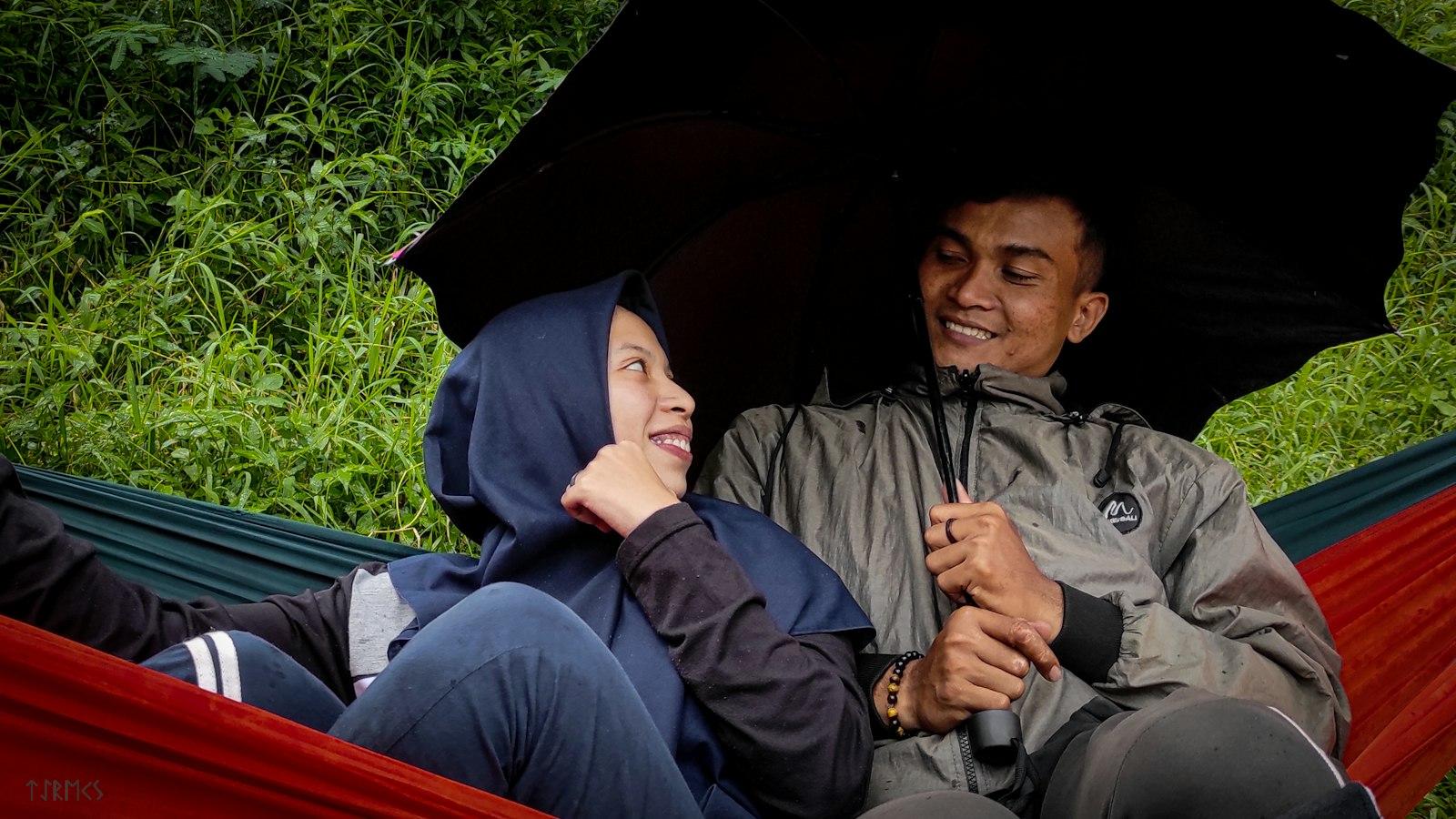
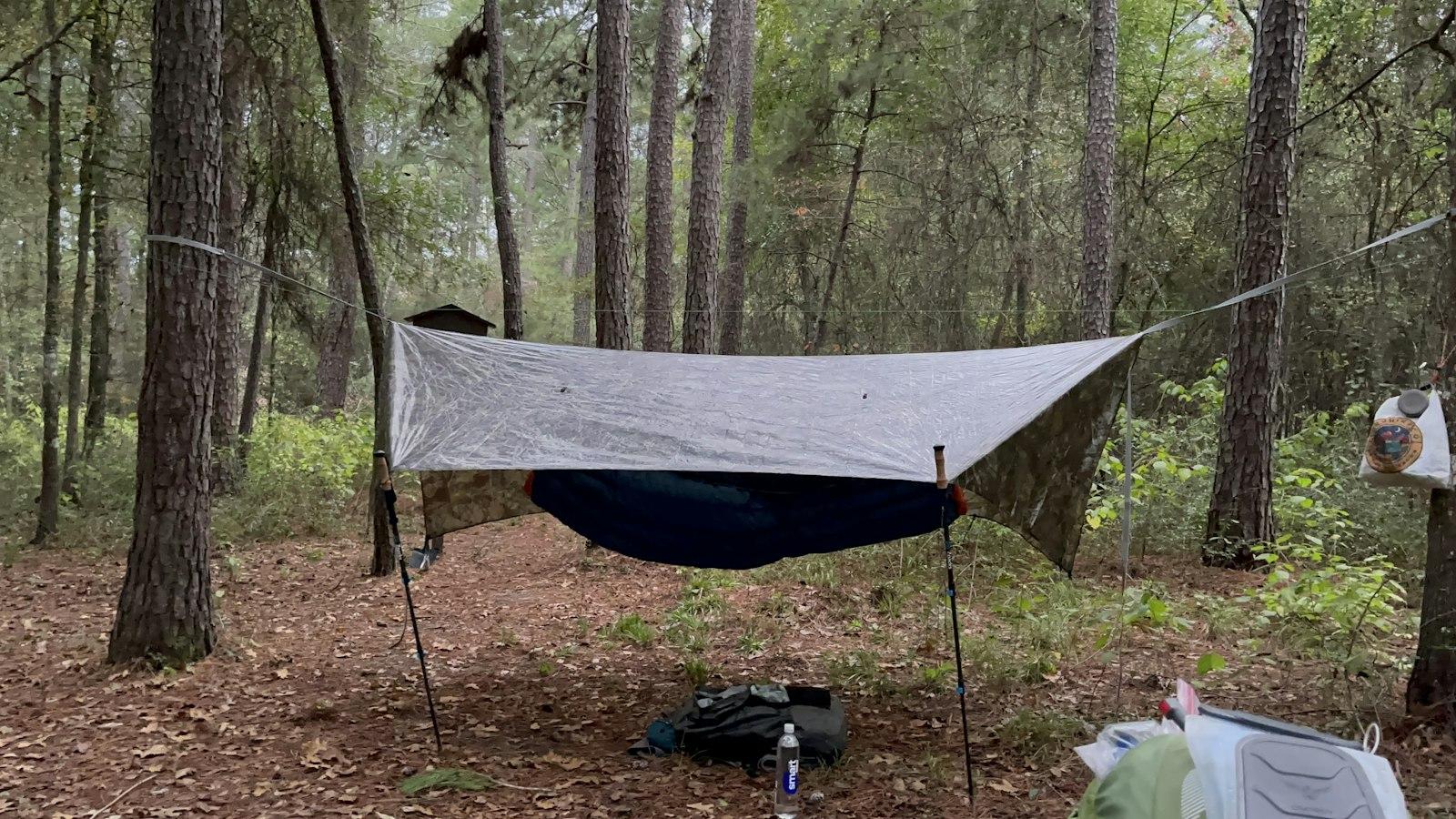
You can stay completely dry hammock camping in the rain. Hang a tarp that reaches at least 6 inches (15 cm) past each end of the hammock, put it up before the hammock, pitch it low and steep, and tie a drip line on each suspension line so water running down the straps falls off before it reaches the fabric. Most wet nights come from skipping one of those steps.
How to hammock in the rain: set up in this order
Order matters more than gear. If you hang the hammock first and then fight the tarp, the hammock is soaked before you finish. Do it this way:
- Pick the trees and hang the tarp ridgeline first. Run it a few inches above where the hammock straps will go.
- Pitch the tarp and stake it out. Now you have a dry room to work in.
- Pull the hammock out under the tarp. Keep it in its stuff sack or snakeskins until it is fully covered.
- Hang the hammock below the tarp. Aim for the usual 30 degree strap angle and a seat about 18 inches (45 cm) off the ground.
- Add drip lines on both ends. More on this below.
- Move your pack and shoes under the tarp, off the ground if you can.
When you pack up in the morning, reverse it. The hammock comes down and goes into its bag while the tarp is still up. The tarp comes down last.
How big a tarp do you need for heavy rain?
Your tarp needs to be longer than your hammock, measured on the tarp ridgeline. Most camping hammocks are 10 to 11 feet long, so a tarp with an 11 to 12 foot ridgeline covers both ends with room to spare.
| Tarp shape | Typical coverage | Good in | Watch out for |
|---|---|---|---|
| Asymmetric | Smallest, angled to match an asym hammock | Calm summer showers, ultralight trips | Little margin when rain blows sideways |
| Hex (cat cut) | 10 to 12 ft ridgeline, cut-in sides | All-round three-season use | Ends are narrow, so pitch it lower |
| Rectangle | 10 to 12 ft long, 9 to 10 ft wide | Wind-driven rain, porch mode, cooking under it | Heavier and more fabric to manage |
| Tarp with doors | Full rectangle plus end panels that close | Storms, cold rain, winter | Most weight and the most condensation |
For scale, the ENO ProFly is a hex at 10 ft 6 in by 6 ft 4 in and 22 oz, and its maker suggests the XL for longer hammocks. The Kammok Kuhli is a 12 by 9 foot rectangle at 20.5 oz with stakes and guylines. See all the options side by side on best hammock rain tarps.
Drip lines: why your straps are wet in the morning
Owners post the same question every wet season: the tarp held, but the hammock ends are soaked. That water did not come through the tarp. It ran down the tree, along the strap and into the fabric, because webbing wicks water like a wick in a lamp.
A drip line breaks that path. Here is how to add one:
- Cut a 12 inch (30 cm) piece of paracord, bank line or even a shoelace.
- Tie it around each suspension line between the tree and the hammock, under the tarp.
- Let the tail hang down. Water runs to the knot and drips off the tail onto the ground.
- If your tarp ridgeline runs to the same trees, add a drip line on it too.
Some hammocks and straps come with drip rings or small toggles that do the same job. A twist tie or a hair tie works in a pinch.
Storm mode vs porch mode
How you pitch the tarp should change with the forecast.
Porch mode is for light rain or a dry night with a chance of showers. Prop one long side up with a trekking pole or a stick and a guyline. You get airflow, a view and somewhere to sit out of the drizzle.
Storm mode is for steady or wind-driven rain. Drop both sides close to the hammock, about 12 to 18 inches (30 to 45 cm) below the hammock edge, and stake the sides at a steep angle so water sheds fast. A flatter pitch lets water pool on the fabric and drip through the seams.
Two more tips for heavy rain:
- Turn the narrow end of the setup into the wind so rain hits the tarp edge, not the open side.
- If the wind keeps shifting, pitch lower on the windward side and close any doors you have.
Where to hang when it is going to pour
Site choice is half of staying dry. Look for:
- Slightly higher ground. Low spots and flat valley floors collect runoff and cold air.
- Healthy trees with no dead limbs overhead. Wet soil and wind bring branches down. The Leave No Trace hammock guide also says to avoid trees in wet areas, because they can uproot.
- A spot at least 200 feet (60 m) from lakes and streams, which is also the Leave No Trace standard.
Thunderstorms are a different problem. A tarp keeps rain off but does nothing for lightning, and the National Weather Service puts it plainly: "There is no safe place outside when thunderstorms are in the area." Check the forecast before you go, avoid ridgetops and isolated tall trees, and follow the NWS lightning safety advice.
Keeping the inside dry: condensation, gear and insulation
Rain is not the only water you fight. Your breath and the damp air condense on the underside of the tarp, and on a still night it can drip back on you.
- Leave at least one end of the tarp open on mild nights so air moves.
- Keep a small pack towel on the ridgeline to wipe the tarp in the morning.
- Line your pack with a trash compactor bag. Pack covers leak where the straps sit.
- Hang wet clothes outside the hammock, under the tarp, on a separate cord.
Damp air also makes hammocks feel colder. If your underquilt is down, keep it well under the tarp, since wet down loses loft. Synthetic insulation holds warmth better when damp. Read how to stay warm in a hammock if rain nights tend to leave you chilled.
After the trip: dry everything
Do not leave a wet hammock or tarp in its bag. Hang it in the garage or over a shower rod within a day of getting home. Mildew starts fast in nylon left balled up and damp. If you already have spots, here is how to get mold out of a hammock, and for the bigger question of the fabric itself, see are hammocks waterproof.
Your next step
Practice the tarp-first routine in your backyard once, then do it in the dark. Our walk-through on how to set up a hammock tarp covers the knots, and the full hammock camping guide covers everything else.
Frequently asked questions
How do you hammock camp in the rain?+
Hang your tarp first, then the hammock under it. Use a tarp at least 6 inches longer than the hammock on each end, pitch it low and steep, and tie a drip line on each suspension line so water running down the straps drips off before reaching the fabric. Keep your pack and shoes under the tarp too.
What are drip lines on a hammock?+
Drip lines are short pieces of cord tied around each hammock suspension line, under the tarp. Webbing wicks water from the tree toward the hammock. The drip line gives that water a lower point to run to, so it falls on the ground instead of soaking the ends of your hammock.
Is it safe to sleep in a hammock in a thunderstorm?+
No. A tarp keeps rain off but gives no protection from lightning, and the National Weather Service says there is no safe place outside when thunderstorms are in the area. Check the forecast, camp away from ridgetops and isolated tall trees, and change plans if storms are expected.
What size tarp do I need for hammock camping in heavy rain?+
Pick a tarp with a ridgeline 1 to 2 feet longer than your hammock. For a 10 to 11 foot hammock that means about 11 to 12 feet. In heavy or windy rain a rectangular tarp, or one with doors, gives more side coverage than an asymmetric or hex tarp.
Can you leave a hammock in the rain?+
A synthetic camping hammock can get wet without damage, but it should dry fully before you pack it away or mildew can start. Cotton and rope hammocks hold water longer and rot faster if left out. If a storm is coming, take the hammock down or keep it under a tarp.
Find a hammock-friendly spot near you.